A Phone You Didn’t Order Arrived, and Now They Want It Back
After a 'free upgrade' call, a real phone arrived and a caller sent a return label. What is happening, what to do if you already shipped it, and the bill.

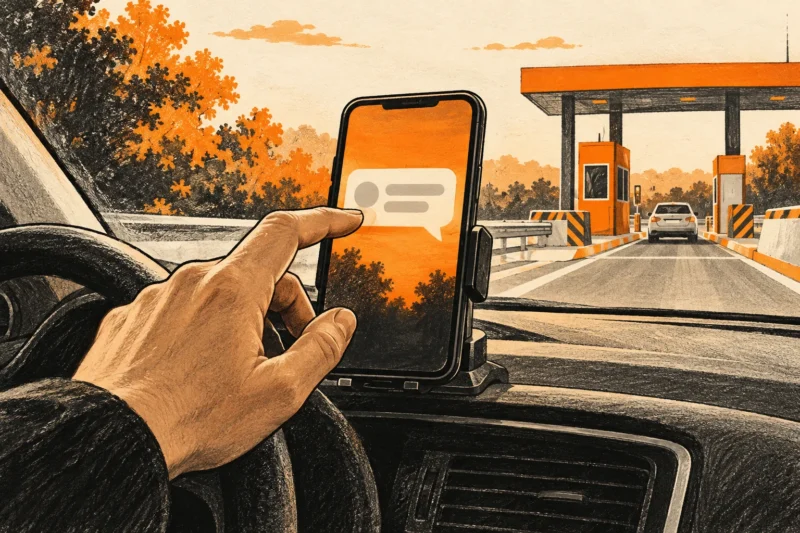
A caller said you were overpaying and offered a free upgrade. A day later a brand-new phone arrived in real carrier packaging. Then the same person, or a “colleague,” called back: it was the wrong model, please send it back with this label. If that sounds familiar, the phone is real, the order is on your account, and the return address belongs to someone else.
On November 5, 2026, Malwarebytes researcher Pieter Arntz described this pattern in a post on phone return scams. Its summary is blunt: “the shipping label is the real trick.” The device arrives through a legitimate delivery, which makes everything feel genuine, and the return label sends it to an address the criminals chose. The person whose account placed the order can be left with a contract, a financing agreement or monthly payments for a phone they no longer have.
The post quotes warnings from the Canadian Anti-Fraud Centre, and the same pattern has reached US customers. In April 2026, WMC and WLOX reported on a Mississippi family that took a call from someone posing as AT&T, was offered a new iPhone and a gift card, received a phone by UPS the next morning, and was asked to ship it to a specific address. Their next bill was almost $2,000. AT&T removed the charge. The Mid-South BBB told the station it had logged 34 reports of similar calls over 18 months.
How it unfolds, day by day
| When | What happens | What is really going on |
|---|---|---|
| Day 1 | A call offers a loyalty reward, a lower bill or a free upgrade. The caller ID may show your carrier | Malwarebytes says the number is spoofed. The caller collects personal and account details, which can be enough for a credit check |
| Day 1 | You get an email or text that looks like a promotion confirmation | In the WLOX case the email came from a domain unrelated to the carrier |
| Day 2–3 | A real phone arrives from the carrier, with tracking | Malwarebytes says the order is placed in your name, on your account |
| Day 2–3 | A second call: wrong model, duplicate shipment or a mistake that needs “fixing” | The caller supplies a label or QR code that ships to their address, not the carrier’s |
| Weeks later | A bill or financing statement shows the device | The carrier never received a return, so the charge stays unless you dispute it |
Don’t ship it, don’t open it, and don’t use the label or QR code you were sent. Keep the phone and the packaging until your carrier, reached through a number you looked up yourself, confirms what it wants you to do.
Call your carrier, and what to say
Use the number on your bill, the carrier’s app, or a store. Not the number that called you, and not one from the promotion email. Then say something close to this:
“I think I’m the victim of a phone return scam. Someone called offering an upgrade, a device was ordered on my account that I did not knowingly order, and a caller asked me to ship it to an address they gave me. Please open a fraud investigation, tell me every order and change on my account in the last 30 days, and tell me how to return the device to you.”
Then ask these follow-up questions while you have them on the line:
- Which orders, new lines or upgrades are on the account, and when were they placed?
- Was my account PIN, password or authorized user list changed?
- Can you add or change a passcode, and flag the account so that new device orders need extra checks?
- Will the device charge and any installment plan be suspended while the fraud claim is open?
- What is the claim or reference number, and will I get the outcome in writing?
Malwarebytes also advises changing any password or PIN you shared, through the carrier’s official channels, and checking for transactions you did not make. If you read a one-time code to the caller, assume they used it to sign in. Our guide on verification codes read to a stranger explains why those codes matter.
If the phone is already gone
Many people only realize after the box has left. That does not end your options, but it changes the order of the steps.
- Tell the carrier the device was shipped to a scammer. Give them the tracking number from the label you used and the address it went to. Malwarebytes recommends keeping the messages, emails, shipping label, tracking details, order confirmations and bills, and writing down a timeline of the calls.
- Tell the shipping company. If the parcel is still in transit, ask whether it can be stopped or held. Have the tracking number ready.
- Report the identity theft. The FTC notes that identity thieves may open a phone account in your name. File at IdentityTheft.gov, which gives you a recovery plan and an identity theft report the carrier may ask for.
- Consider a fraud alert or credit freeze. If the caller collected details for a credit check, a free one-year fraud alert placed with one bureau is passed to the other two, and a freeze at each bureau stops new credit accounts being opened.
- File a police report if your carrier asks for one, and keep the report number with your claim.
- Report the scam to the FTC at ReportFraud.ftc.gov.
Check your next two or three bills line by line. Look for anything else that was added while the caller had access, such as another device or a new line. Our page on a phone that suddenly shows No Service is worth reading too, because a person who can order phones on your account may also try to move your number.
Why it felt real
Almost every piece of this is genuine: the carrier’s packaging, the tracking number, the order on your account. The only false parts are the caller and the return address. Being fooled by a real box from your own carrier says nothing about your judgment. It is the reason the scheme works on people who would never fall for a fake text. A related trick, where unexpected parcels arrive with a code to scan, is covered in our guide to brushing packages with QR codes.
For the future, a short rule is enough: a carrier “loyalty” call you did not expect is a reason to hang up and call back yourself, and any return should go through a label you get from the carrier’s own app, site or store.
Sources
- Malwarebytes, Phone return scams: where a real delivery and a fake return end up in a bill for you (November 5, 2026)
- WLOX, Fake AT&T promo call leads to thousands in charges; BBB warns of spike (April 6, 2026)
- FTC, What to know about identity theft
- FTC, IdentityTheft.gov
- FTC, ReportFraud.ftc.gov
Found a factual error or a source that has changed?
Send a correction →