A stranger sent you money on Venmo. Do not create a second payment to return it
An unexpected payment may be a genuine mistake. The safe correction still belongs with Venmo support, not a new transfer arranged by the sender.
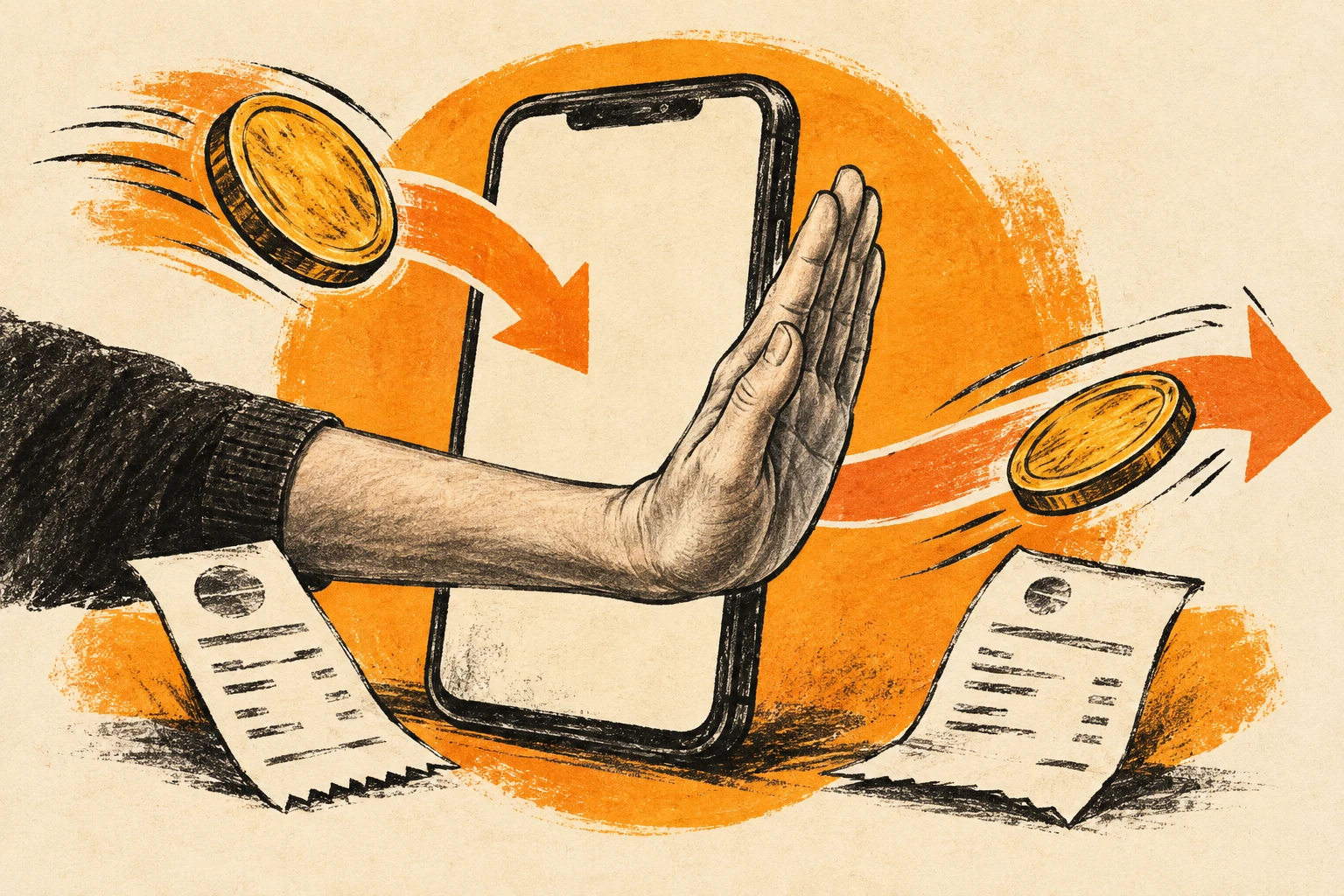
Money appears in your Venmo account from someone you do not know. A message follows: they typed the wrong username, the funds were meant for a friend, and they urgently need you to send them back. You want to do the right thing. Keeping someone else’s money feels wrong, so returning it seems obvious.
There is another option: leave the funds untouched and let Venmo handle the correction through its support process. That is not an attempt to keep the money. It is a way to avoid turning an uncertain incoming transaction into a separate outgoing payment you authorize.
An unexpected payment can be a genuine mistake. It does not automatically mean the sender is a criminal or your account has been compromised. You do not need to decide either question yourself before choosing the safer correction route.
What Venmo tells recipients
Venmo’s guidance for a payment from a stranger says not to return the payment yourself or move the money. It directs recipients to contact support. The same page explains that similar usernames can lead to genuine mistakes and that an unexpected payment alone is not proof of account compromise.
This is specific to Venmo’s documented process. Other payment services may have different controls and terminology. If the unexpected payment came through another service, open that provider’s official help center rather than assuming every app handles reversals in the same way.
The practical lesson is about transaction ownership: the provider can examine the original payment and the relevant accounts. You cannot reproduce that review by creating a new transfer based on a stranger’s explanation.
An unexplained incoming payment is not a windfall to use.
A new transfer is a new action, not necessarily a reversal.
Ask the provider to handle the original transaction.
First check whether money actually arrived
Open the Venmo app or website independently. Do not rely on an email, text message or screenshot saying that you received money. Look for the transaction in your own account and distinguish a payment from a request.
A request asks you to pay. A notification that resembles a payment can still concern a request, and an external email can be fraudulent. Read the actual in-app record rather than acting on the sender’s description.
If there is no corresponding transaction, do not send money to “correct” the notification. Report the suspicious message through the appropriate route. You should not have to log in through a link supplied by the person asking for the return.
If the payment is present, note the date, amount, username and transaction information available in the app. Keep the funds untouched while contacting support.
Why a separate refund changes the problem
From a human perspective, receiving an amount and sending the same amount back looks like a neat cancellation. Payment systems do not necessarily treat two separate transfers as one reversible pair.
An incoming payment may later be reviewed, disputed or otherwise corrected. A new outgoing payment can have its own status and rules. You should not assume that one event automatically cancels or protects the other.
That is why the sender’s request to return the money to a different account, a different app or a friend deserves particular caution. Even if the original mistake was genuine, moving the correction elsewhere makes the relationship between the transactions less clear.
| Action | What it does | Why it matters |
|---|---|---|
| Leave the payment untouched | Preserves the current position while support reviews it | Avoids creating an additional transaction |
| Contact official support | Gives the provider the original record | Uses the documented correction route |
| Send a new payment | Creates an outgoing transaction you authorize | May not be treated as reversal of the incoming one |
| Transfer to another app | Moves money into a different system | Adds another provider and recipient |
| Spend the balance | Uses funds whose status is unresolved | Can create a problem if the payment is corrected |
The table is a conceptual explanation, not a determination of liability in an individual case. Provider terms and the transaction facts control what happens.
How to contact support without following the stranger
Use the help controls inside the app or the official Venmo help center opened independently. Venmo’s current guidance describes reaching support through the app’s help and chat options. Menu labels may change, so rely on the provider’s current instructions rather than a phone number sent by the other party.
Tell support: “I received an unexpected payment from someone I do not know. I have not moved or returned it. Please advise how to handle the original transaction.” Provide the date, amount and username through the secure support channel.
Ask for a case reference if one is available and keep it with your private record. Do not post the full transaction or personal account details publicly to prove you are cooperating.
If the sender says support has already authorized a particular action, ask support yourself. A forwarded screenshot of a supposed agent’s instruction is not an independent instruction to you.
A polite boundary does not need a long argument
If you choose to respond, you can say: “I have contacted Venmo support and will follow its process for the original payment.” You do not need to debate the sender’s intentions or disclose your bank details.
A genuine sender may be frustrated or worried. You can acknowledge that without accepting a new payment route. Their urgency does not give them access to your account, and your desire to be helpful does not require you to bypass the provider.
If the person repeatedly contacts or threatens you, preserve relevant messages and use blocking or reporting controls. Do not engage in a public accusation based solely on an unfamiliar payment. You may not know who controls the displayed account or whether another person’s identity is involved.
The goal is a documented correction, not a confession.
What if you were the person who sent it?
The sender’s problem has its own official guidance. Venmo’s page for accidentally paying a stranger directs the sender to support and asks for the transaction and intended-recipient details. It notes that completed payments generally cannot simply be cancelled, while some pending payments to unregistered contact details have different options.
Do not pressure the recipient to use an unfamiliar account or make threats. Give support the accurate record and follow its instructions. A recipient who refuses to create a new transfer may be following Venmo’s published advice, not trying to steal the money.
Before future payments, check the recipient using the service’s available confirmation features and an established conversation with the person you intend to pay. A familiar display name alone can be ambiguous.
This section is not a promise that support can recover a mistaken payment. It is the appropriate starting point for determining the options.
If you already sent the “refund”
Stop any further transfers and contact support promptly. Explain both transactions separately: the unexpected incoming payment and the outgoing payment you made in response. Include whether the recipient or payment service changed.
Do not describe the outgoing transfer only as “a reversal” unless the provider actually processed it that way. Accurate wording helps the support team understand the sequence. Preserve the messages that requested the return and any promise that it would settle the matter.
If you used another payment service, contact that provider too. A Venmo report does not automatically open a case in a different app or bank. Ask each institution about its own process and what documentation it needs.
If the person now asks for a fee to release or recover money, do not continue. Our recovery-scam guide covers the pattern of turning an initial loss into another payment.
Review account security only where the facts call for it
An unexpected incoming payment alone is not evidence that someone signed in as you. Look for actual unauthorized activity: unfamiliar outgoing transactions, changed contact information, devices or other account changes visible through the provider’s controls.
If you followed a login link, shared a password or approved a code, explain that additional action to support and secure the account through its official settings. That is a different exposure from merely receiving money.
Do not install a remote-support tool or share a screen with a stranger claiming to be a payment agent. Legitimate support should be reached through the provider, not through a contact who appears in response to the incident.
A proportionate response protects the account without turning every uncertainty into a full-device emergency.
A small habit that prevents a bigger tangle
Keep incoming corrections tied to the original provider and transaction. This habit is useful beyond payment apps. In a job equipment check scam, for example, apparent incoming funds can be used to justify an outgoing payment before the first transaction is reliable.
The systems are different, so the remedies are not identical. The shared question is whether you are being asked to solve someone else’s claimed payment problem by creating a new obligation yourself.
You can be honest, cooperative and cautious at the same time. Leaving the funds untouched, documenting the issue and contacting support is a constructive response—not passive avoidance.
Where this leaves you
The finish line is not a message from the stranger saying everything is settled. It is a resolution through the provider’s documented process, with records of what happened and no unexplained extra transfers.
Sources: Venmo: Payment from a Stranger and Venmo: I accidentally paid a stranger. This article explains the distinction between transactions; it does not decide ownership, reimbursement or legal rights in a specific dispute.
Found a factual error or a source that has changed?
Send a correction →