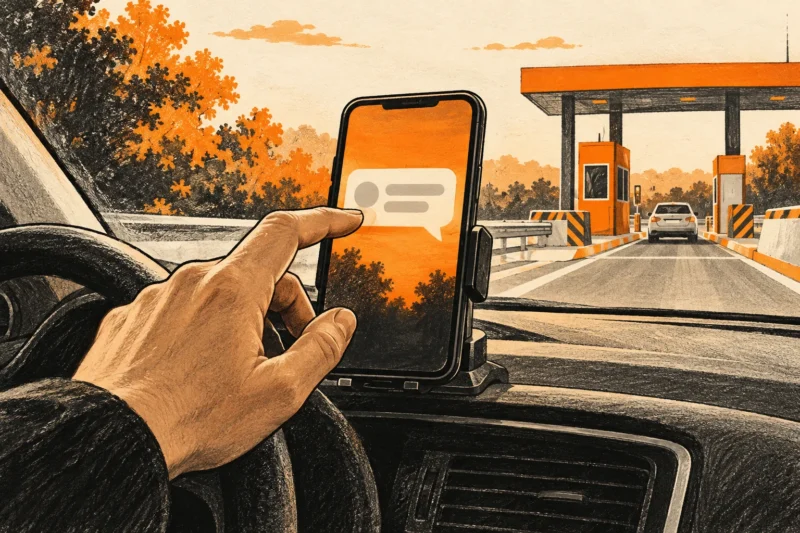
A Traffic-Hearing Notice Arrives by Text: Do Not Let the QR Code Choose the Court
Fake hearing notices combine case numbers, official-looking seals, and a pay-now QR code. Verify the alleged citation independently before sharing information.
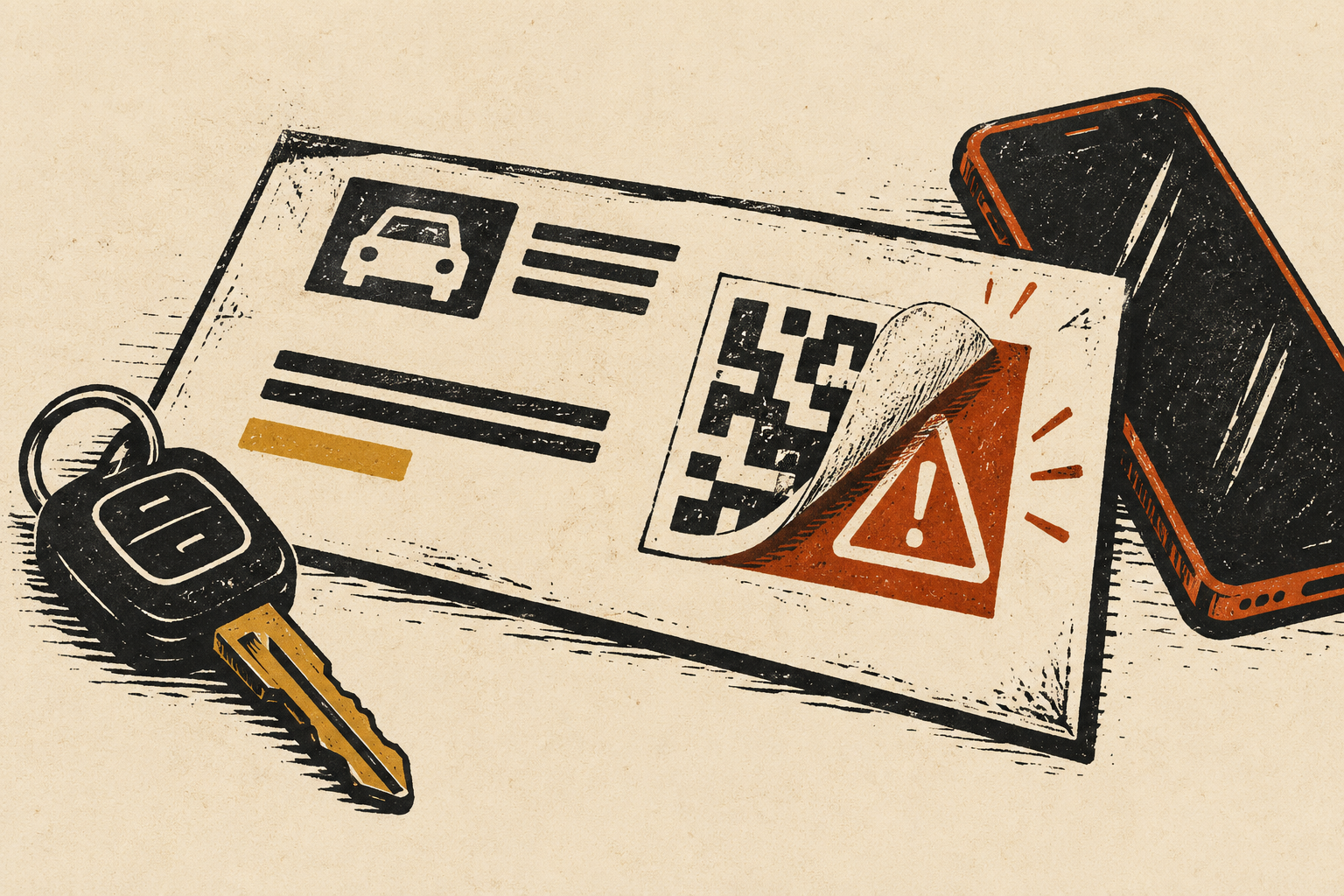
The message does not simply say you owe money. It shows a document: a seal, a case number, a hearing date, and a choice between appearing in court or paying now. A QR code makes the second option look quick and easy.
That is the scenario described in the FTC’s April 2026 warning about traffic-violation texts. The agency reported a rise in reports at the time of that warning. That dated observation should not be treated as a measurement of how many messages are circulating today.
The immediate task is to establish whether a real citation or hearing exists without using the payment route embedded in the notice. A frightening document can be fabricated; an authentic-looking case number is a claim to check, not proof of a court record.
Why the hearing date makes the message persuasive
A specific date and time can make an invented problem feel administratively complete. The recipient is encouraged to imagine the consequences of missing a hearing rather than ask whether the hearing exists. Threatened penalties add urgency to that mental picture.
The pay-now option then looks like a way to avoid disruption. The small convenience of scanning a code can conceal a large change in trust: a stranger has selected the website where you will enter identity or payment information.
Do not negotiate with the sender about the amount or deadline. That leaves the same unverified contact in control of the process. Move the inquiry to the institution supposedly responsible for the case.
Find the court or agency independently
Use established state or local government navigation to locate the named court, traffic authority, or motor-vehicle agency. USA.gov’s state motor-vehicle directory can help locate official motor-vehicle services, but not every traffic matter is handled by a DMV. Follow the actual jurisdiction and institution involved.
Use a number or case-lookup service from the independently reached official site. Explain that you received an unexpected notice and want to verify whether the case and instructions are genuine. Do not rely on a number printed in the suspicious image.
If you already know about a real ticket, retrieve its original documentation. A real citation does not authenticate a later text that changes the payment route. Compare the case details and ask the responsible authority about any discrepancy.
| Detail in the text | What to verify separately |
|---|---|
| Court or agency name | Whether it exists and handles the alleged matter |
| Case or citation number | Whether it corresponds to your case in the official system |
| Hearing date | The actual schedule and response instructions |
| Amount due | The verified balance and accepted payment options |
| QR code or payment address | The authorized payment route published by the institution |
What the QR code does—and does not—tell you
Before calling, make a short verification note: the institution named, the alleged incident location, the reference number, and the date the message arrived. Ask the independently reached office where this type of matter should be checked. Record the office’s answer and the next step it recommends. This keeps the inquiry focused on the supposed case rather than on arguing with the sender. If the office is closed, retain the notice and use its published contact options; do not let the text’s countdown choose an alternative payment destination. A trusted person can help locate the official office without posting your identification documents or case details in a public forum.
A code can encode a website address. It does not validate the website’s owner, the truth of the notice, or the appropriateness of the requested payment. Even a page using an encrypted connection can be operated by an impersonator.
There is no need to scan the code just to investigate the claim. If the court has a legitimate online-payment process, you can reach it from the court’s independently located site after confirming the case.
If you already scanned but did not enter anything, close the page and review what happened next. Did it download a file, ask for a browser permission, or redirect to a login? Record those actions accurately. Scanning alone is not the same as submitting a card number or installing software.
If you entered card or identity details
Contact the card issuer or bank through its app or a known number. Tell it what information was entered and whether a payment was authorized. Ask what account protection or transaction review is appropriate. Do not wait for a supposed court representative to approve your report.
If you supplied an identification document, Social Security number, or other sensitive personal information, consult IdentityTheft.gov for a response matched to the exposure. Keep this separate from checking whether an actual citation exists.
A compromised password also needs its own response. Change it through the real account provider and review reuse elsewhere. Never provide an authentication code to the person who says they can reverse the traffic charge.
If money was sent
Preserve the amount, recipient, transaction reference, original message, and any receipt. Contact the payment provider promptly and ask what options remain. The answer depends on the payment method and circumstances; a refund is not guaranteed.
The FTC’s scam-response guide organizes next steps by how the money moved. Use that as a starting point rather than accepting a new caller’s offer to recover funds for an advance fee.
Report the lure without ignoring a real case
Use your messaging app’s reporting controls and report suspected fraud to ReportFraud.ftc.gov. The impersonated court or agency may also want a copy through its verified reporting route.
After reporting, retain the evidence needed for your case and avoid interacting with the sender. If independent verification reveals a genuine ticket, handle it through the authority’s official process. Refusing the text’s payment link does not mean ignoring a real obligation.
Different road stories, the same route problem
A hearing notice and an unpaid-toll text invoke different institutions. Do not use a toll account to investigate a court summons or assume a court can resolve a private parking charge. Identify the actual claim before selecting the official route.
Small payment requests also appear in delivery-fee impersonations. The amount may be small while the information collected is not. Verify the organization first, then decide whether any payment is genuinely required.
Found a factual error or a source that has changed?
Send a correction →