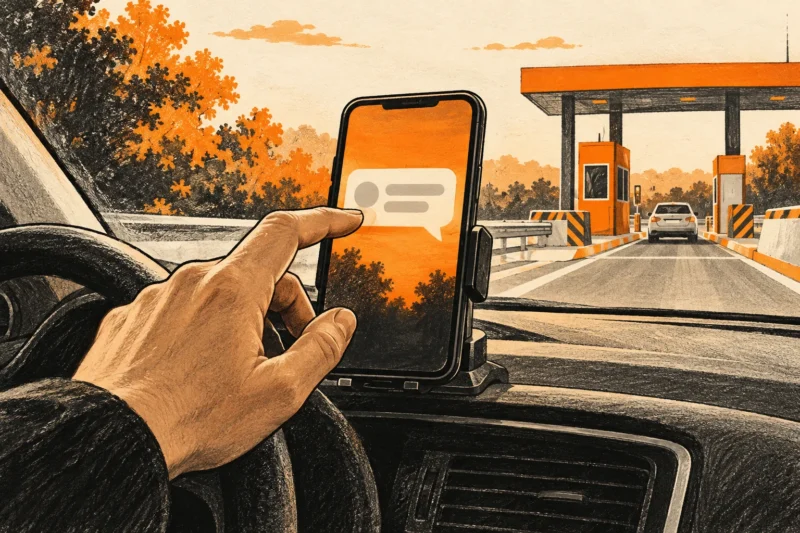
An Unpaid-Toll Text After a Road Trip: Coincidence Is Not Verification
A recent journey makes a toll message plausible, not authentic. Check the actual operator, vehicle, and account before using a payment link.
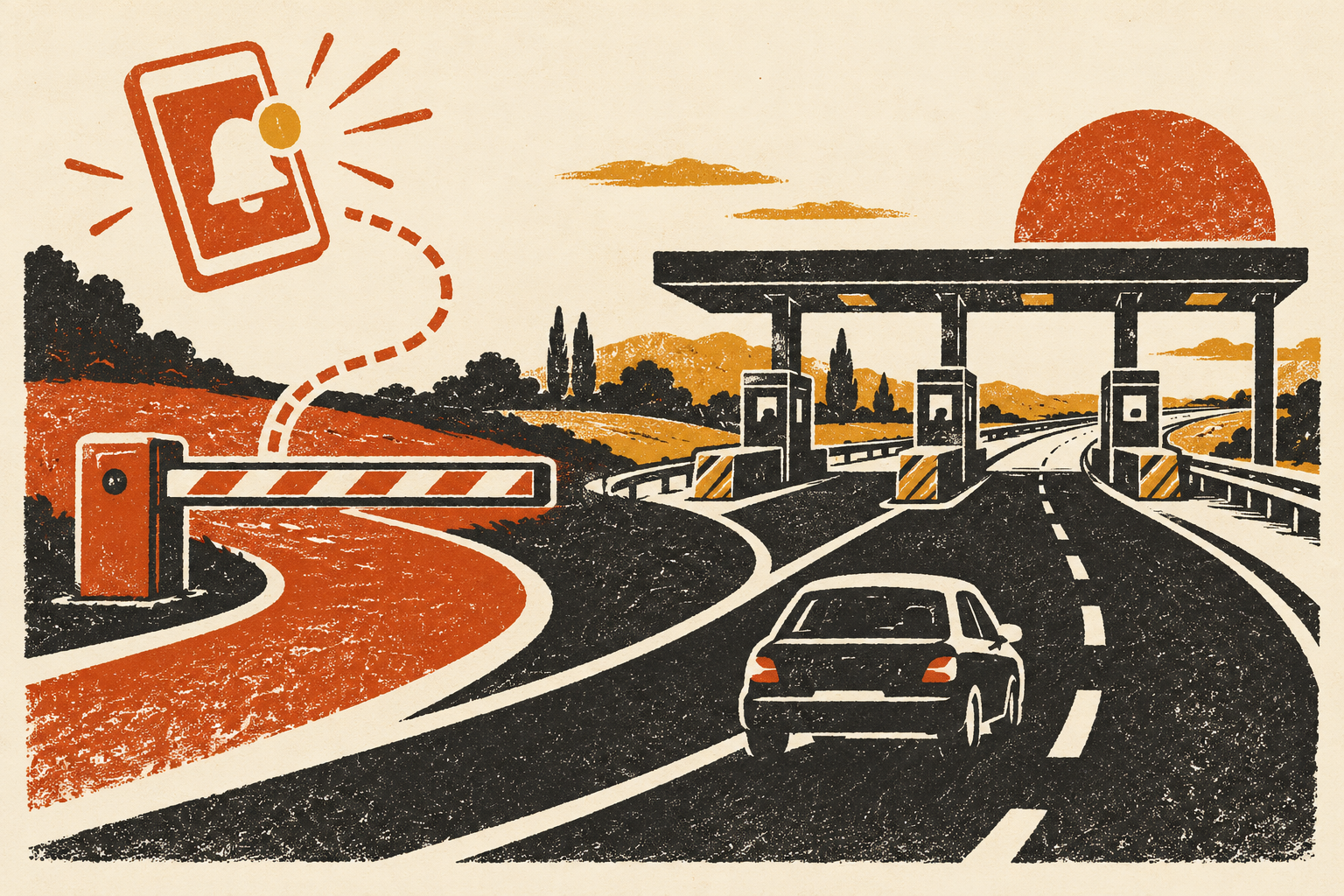
You really did take a toll road last week. That makes the text feel different from ordinary spam: perhaps the transponder failed, the plate was read incorrectly, or the rental company passed on a charge. The message’s timing seems to explain why it arrived.
Timing is not authentication. The FTC’s unpaid-toll warning describes unsolicited messages that claim a balance is due and send recipients to pages collecting payment and personal information. A generic message can happen to reach someone who recently drove a toll road.
Investigate any real toll through the operator’s known account, app, or official site. You can check the balance without following the route selected by the text.
Identify which operator could actually bill you
A road trip can cross several systems. The agency that issued your transponder may not be the operator of every bridge or road you used. A rental vehicle may involve an additional company process. Start with the trip and vehicle records you already have.
Open your established toll account or the operator’s site independently. Compare the vehicle, date, location, and any balance shown there. If you cannot locate the right operator, use the relevant state’s transportation resources rather than the message’s callback number.
Do not assume a single national toll-payment website handles every road. A familiar abbreviation in a domain name does not establish affiliation with the operator you need.
Do not rely on “agencies never text” as a universal rule
Notification practices differ. For example, the New York Thruway Authority’s Tolls by Mail information describes an option to receive a text when tolls are available to pay. The existence of legitimate notification services is one reason that simply seeing a text is not a complete test.
At the same time, MassDOT has warned about messages impersonating EZDriveMA and advises recipients not to use unsolicited payment links. Those are operator-specific facts, not conflicting reasons to trust a random message.
The common safe action is to return to the account or operator through a route you already know. Even if you enrolled in genuine notifications, you can check the balance independently instead of deciding whether this particular text looks authentic.
| Your situation | Independent check |
|---|---|
| You have a transponder account | Open the known app or saved account site and review relevant activity |
| You drove without a transponder | Find the operator’s official plate-billing instructions |
| You used a rental car | Review the rental agreement and contact the rental company through its established channel |
| You did not use a toll road | Do not engage with the text; report it through the appropriate messaging controls |
| The record is unclear | Ask verified customer service about the specific vehicle and trip |
Why a small amount can carry a larger risk
A modest unpaid balance may feel cheaper to pay than to investigate. The payment page, however, can ask for a card number, billing address, identification details, or account login. The immediate amount is not the full measure of the exposure.
A message may also threaten escalating penalties, a registration problem, or legal consequences. Do not evaluate those threats through the same unverified sender. If a genuine balance exists, the operator can explain its actual process through its official channel.
Repeated messages do not make the claim more reliable. Nor does a text displaying the correct state or a plausible vehicle detail prove it came from the agency. Treat those details as facts to compare with your records.
If the official account shows a balance
Use the payment route provided inside the independently reached official account. Check the vehicle and transaction carefully before paying. Keep the confirmation and do not then return to the unsolicited link to “close” the case.
If the official amount differs from the text, ask the operator about the discrepancy. Do not send the difference to a second recipient simply because the message calls it a processing charge.
A real balance and a fraudulent text can coexist. Paying the real operator does not validate the text; refusing the text does not erase the real balance. Keeping those two facts separate prevents both overpayment and accidental neglect.
If you already entered information
List exactly what you supplied. If it was a card number, contact the issuer through a known route and ask about protection or replacement. If it was a toll-account password, change it through the real account and review other places where you reused it.
If you shared a driver’s-license image or other sensitive identity information, use official identity-theft guidance appropriate to your location. In the US, IdentityTheft.gov can help identify next steps based on the information involved.
Do not provide a verification code to a caller who says they are investigating the toll text. That caller needs independent verification too. The original exposure does not create a reason to trust subsequent contact automatically.
If a charge appeared
Contact the bank or payment provider promptly with the amount, date, recipient, and message record. Explain whether you authorized a payment after being misled or noticed a charge you did not authorize. The distinction matters to the provider’s process.
Ask about dispute, reversal, and account-protection options without assuming recovery is certain. Preserve receipts and reference numbers. Do not pay a stranger an advance fee to recover a small toll charge; that can create a second loss.
Report and reset the habit
The FTC recommends using your phone’s report-junk function or forwarding unwanted texts to 7726 where supported. You can also report suspected fraud to ReportFraud.ftc.gov and notify the impersonated toll operator through its official route.
For future travel, save the official toll account or operator information before you need it. Keep rental agreements and payment confirmations together. A small amount of preparation reduces the appeal of a convenient but unverified text after a tiring journey.
If the message instead claims a court hearing, use the traffic-notice verification guide. If it claims a delivery fee, the parcel-fee checklist addresses that different institution. In every case, a plausible recent event is context—not permission to trust the attached link.
Found a factual error or a source that has changed?
Send a correction →