Someone says they found your missing pet. Verify the animal before sending money
A hopeful message can become a reward demand, fake veterinary emergency, or paid search pitch. Keep the real search moving while checking each claim independently.
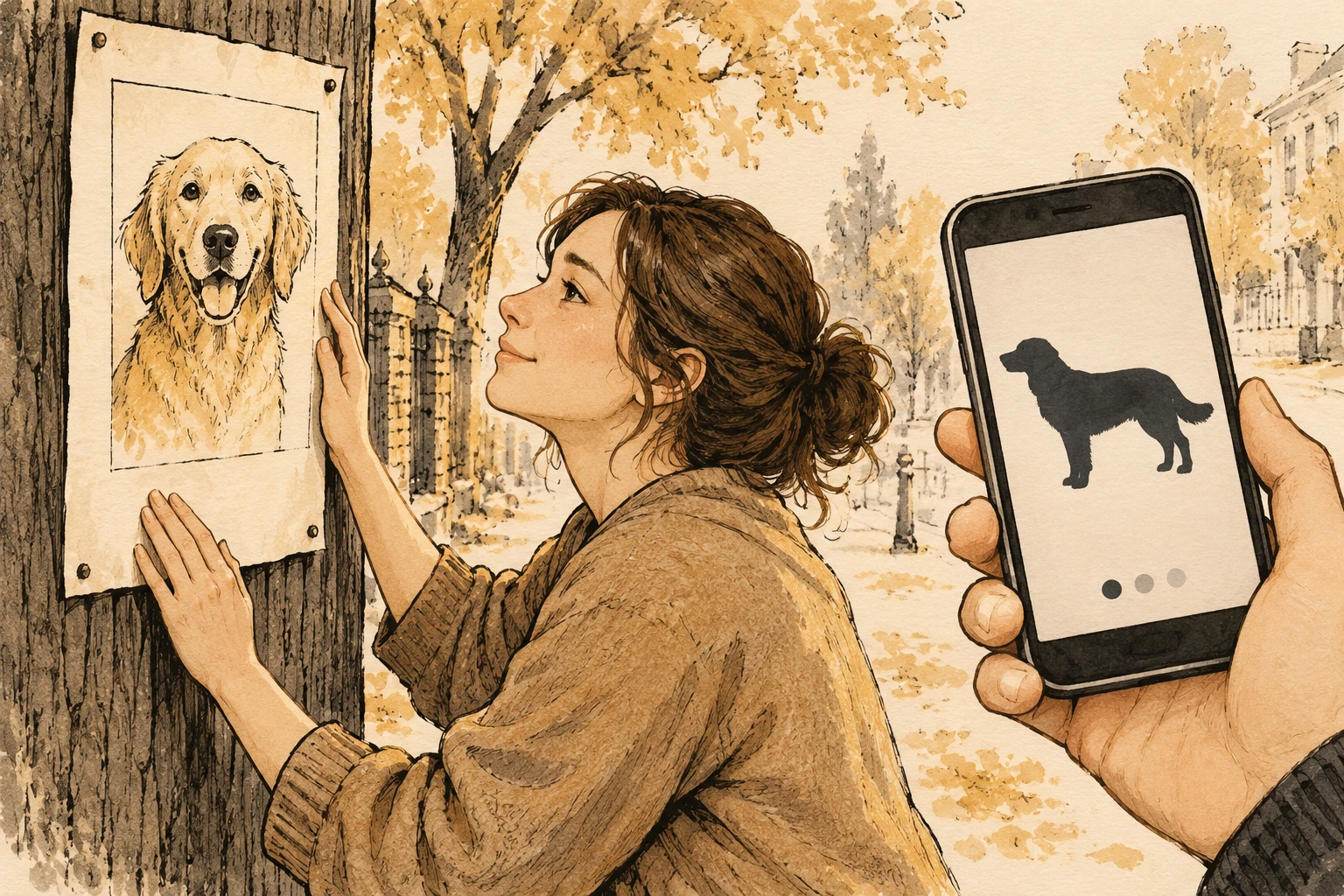
You have posted everywhere and checked your phone hundreds of times. Then a message arrives: “I have your dog.” For a moment, the search is over. The next message asks for money before a photograph, a meeting, or the name of the veterinary clinic where the animal supposedly is.
It is possible for someone to find a missing pet, and it is possible for a real clinic to have fees. The safety question is whether this person has your animal and whether the proposed payment belongs to a verifiable situation. Hope is a reason to investigate promptly, not a reason to skip the investigation.
Keep the search active while you check the message. An unverified claim should not cause you to stop contacting shelters or following credible sightings elsewhere.
Ask for evidence that is not already in your post
Start with a current photograph or live view, the location, and a description of the animal. A picture copied from your public notice is not new evidence. Ask a question about a detail that was not included publicly, where you have one, but do not treat a correct answer as an absolute guarantee.
Images can be reused or manipulated, and an honest finder may not be able to take a perfect photograph immediately. Look for a combination of evidence and a safe, practical way to reunite the animal with its owner. Repeated excuses followed by an immediate transfer demand should not become your only lead.
The BBB’s lost-pet warning describes false finder messages and unverified paid search services. It also distinguishes a suspected scam from an actual stolen animal, which may require police assistance. Do not assume every troubling message means the sender physically has your pet.
“I found your pet” needs evidence beyond the public poster.
Call the real veterinary practice using independently found details.
Preserve the message and seek police advice; do not arrange a confrontation.
Separate a finder, a clinic, and a search service
| Who the person claims to be | What to verify | A risky shortcut |
|---|---|---|
| An individual finder | The animal, location, and safe handover arrangements | Paying before receiving meaningful evidence |
| A veterinary clinic | The actual practice and whether it has your animal | Paying an unrelated personal account supplied by text |
| A shelter or animal-control service | Its official contact and intake information | Calling only the number in the message |
| A paid search operator | Business identity, method, area, terms, and local references | Buying a guaranteed recovery from an unsolicited profile |
| Someone threatening harm | The exact threat and any credible evidence | Going alone to confront or pay the sender |
The distinction matters because the next action is different. A clinic can be called through its own published number. A private finder can arrange a safe verification and handover. A search business should provide a service agreement, not merely promise that payment will reveal a location.
The emergency-vet story
A caller may say the pet has been injured and treatment cannot begin without an immediate deposit. Ask for the practice’s full name and location, then end the call and contact it independently. Explain that someone claims your animal is there and ask how the practice can verify the case.
Do not send a photograph of your bank card or identity document to an unknown messaging account. If the real practice confirms the animal and a payment is necessary, use its established payment process. Genuine urgency does not require an unverified intermediary to control the money.
If you cannot confirm the practice or patient, keep pursuing the check rather than accepting a threat that hesitation proves you do not care. The person making that accusation has not established custody of the animal.
The reward question
If you offered a reward, someone may use your own wording to make a payment demand feel agreed in advance. A reward for the return of a pet is not the same as sending money to an unverified claimant before seeing the animal.
Discuss safe handover arrangements and involve local authorities or a shelter where appropriate. Do not meet alone in an isolated location or carry a large amount of cash because the sender insists. If the animal may have been stolen, ask police for advice before negotiating.
Avoid threatening the sender or publishing their claimed address. It may be false or belong to someone uninvolved. Keep screenshots privately, including the account or number used, timestamps, and payment requests.
Do not give away an account while trying to prove ownership
Another message may ask you to repeat a code to show you are a real person. A login or verification code is not evidence that you own a pet. It can authorize a different account process entirely.
Read the message that delivered the code and do not share it with the supposed finder. Our marketplace verification-code guide explains the same boundary in a buying-and-selling context. The emotional setting changes, but the code still belongs to the service that issued it.
Keep the real search organized
The ASPCA’s lost-pet guidance recommends local searching and contact with shelters, veterinary hospitals, animal-control agencies, and community networks. Check that microchip registration contact details are current. A microchip is an identification tool, not a live GPS tracker by itself.
Assign a trusted person to record leads if you can. Note the time, location, evidence, and follow-up for each report. That reduces the chance that one persuasive caller absorbs all your attention while a credible local sighting gets lost in messages.
Public posts need enough detail to help people recognize the animal, but avoid adding unnecessary household schedules or personal documents. Keep ownership records available for verified shelters or authorities rather than posting them to prove your sincerity to strangers.
If you already sent money
Contact the payment provider promptly and explain what was promised, what evidence was supplied, and why you now suspect deception. Save receipts and the conversation. Ask about the options for that payment method without assuming that recovery is guaranteed.
Report the account or listing to the platform. If there are threats, suspected theft, or evidence of animal harm, contact the appropriate local authorities. Do not pay another person who appears in your messages claiming they can recover the payment or locate the scammer for a fee.
The pet-shipping payment guide explores another situation in which concern for an animal is used to justify escalating charges. In both cases, compassion is not the mistake. The risk comes from allowing an unknown person to make themselves the only route to helping.
You can remain hopeful while maintaining a payment boundary. A useful lead produces verifiable information or a safe path to the animal. It does not require you to keep buying the next piece of the story.
Found a factual error or a source that has changed?
Send a correction →