The puppy needs another shipping payment. Stop the fees and check the animal
A crate upgrade, insurance deposit, or urgent vet bill can keep a nonexistent pet in transit forever. Verify the animal and the carrier separately before another payment.
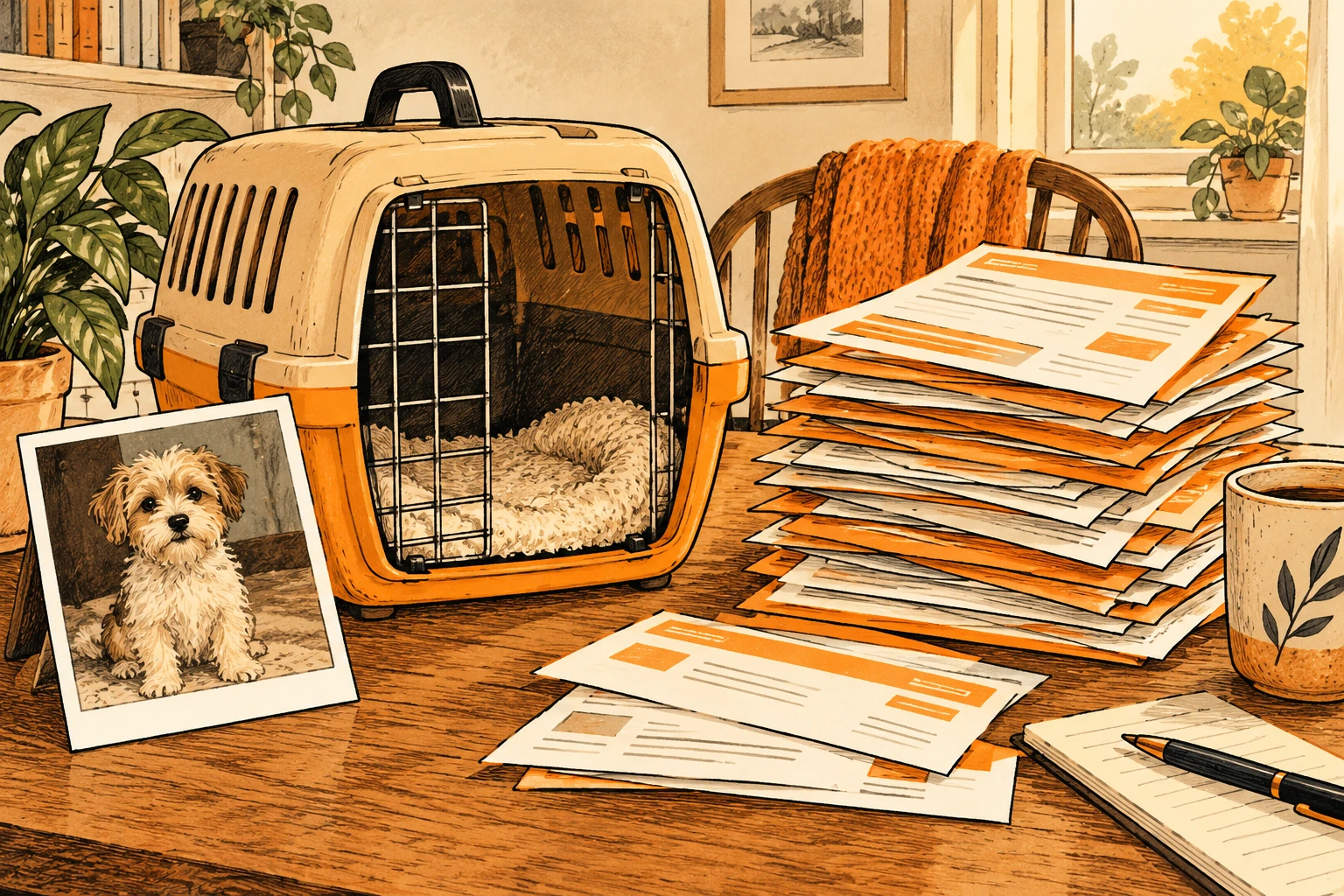
You have chosen a name. There is a bed waiting by the sofa. The seller has sent videos, answered questions about temperament, and promised delivery today. Then a transport company contacts you: the crate is unsuitable, insurance is missing, or the puppy needs an urgent clearance payment.
The pressure is no longer about buying an animal. It is about rescuing an animal you already feel responsible for. That is why another fee can seem easier to pay than to question.
Pause the payment chain. A claim that a pet is stranded needs independent verification, not another transfer to the people making the claim. Genuine animal transport has costs and welfare requirements. That does not authenticate this seller, this shipment, or this unexpected invoice.
If the caller says an animal is in immediate danger, ask which independently identifiable facility has it. Contact that facility through a number you find yourself. Do not use a stranger’s payment link as the welfare check.
The invoice can be more convincing than the advertisement
A pet advertisement is easy to approach cautiously. A document naming your chosen puppy, your address, and a flight date feels more concrete. Yet those details may simply have come from your own messages. Personalization can demonstrate that someone read the conversation without demonstrating that a shipment exists.
The Michigan Attorney General’s puppy-scam guidance specifically identifies additional demands involving transport, special crates, insurance, and health issues. The warning concerns a pattern of advancing payments for an animal that may never arrive, not a rule that every transport charge is fraudulent.
A second website does not necessarily provide an independent witness. The seller may direct you to a supposed carrier whose tracking page repeats the same story. Instead of asking whether the tracking looks realistic, ask how you established that the carrier is a real business and that it has this particular booking.
Separate three claims
1. The animal exists and is available to this seller
A photograph establishes neither ownership nor availability. A live conversation and current video can provide more context, but they are not absolute proof. An in-person visit arranged safely, a known local rescue, or a breeder you can independently investigate may offer a stronger basis for a decision.
Do not send your own passport to an unknown seller to obtain proof of the puppy. That exchanges your real identity information for another unverified document. If a legitimate organization needs identification, first establish who it is and how it handles the information.
2. The transport arrangement exists
Ask for the carrier’s full business name and booking reference. Locate the carrier independently, then ask whether the reference is valid and what charges are actually outstanding. If the seller says you must communicate only through its appointed agent, that restriction is itself important information.
A genuine company may be unable to discuss a booking with someone not listed on it. That limitation does not prove the seller is honest or dishonest. It means the seller must arrange an appropriate, verifiable way to confirm the transaction before you assume the financial risk.
3. This particular fee is your responsibility
Compare the demand with the agreement you made. Who was responsible for shipping? Was an extra crate or insurance charge disclosed? Who is billing you, and where does the money go? Do not let an urgent phone call replace the written terms with a completely new arrangement.
| Demand | Question to resolve independently | Boundary to keep |
|---|---|---|
| “Refundable insurance” | Which insurer issued the policy, and what are its terms? | A promise of a later refund does not make a present transfer safe |
| Special transport crate | Which real carrier requires it for this booking? | Do not pay solely on a forwarded photograph of a crate |
| Emergency veterinary charge | Which veterinary practice is treating which animal? | Contact the practice through its own published details |
| Government clearance | Which agency, process, and official payment route apply? | A government logo in an email is not authority |
| Penalty for abandoning the animal | Who has custody and what is the actual situation? | Threats do not remove your right to verify |
Why people keep paying
An important audience question in this January 2026 discussion is not “why believe a random photograph?” It is how a buyer should react after paperwork and videos have already made the purchase feel real. The post is an unverified personal account, not evidence about the scale of pet fraud. It illustrates the emotional gap a useful checklist must address.
Once money is gone, stopping can feel like deciding that the entire purchase failed. Another payment offers a way to postpone that conclusion. It may also come with a moral accusation: if you care about the animal, you will pay now.
Try asking a different question: if this were the first message you had received, would you pay this unknown company this amount on this evidence? The earlier payment does not strengthen the new invoice. It only makes refusing it more painful.
Bring in a trusted person who has not been part of the conversation. Give them the payment timeline and the actual demand, not just the puppy photographs. Ask them to help you make calls and keep records, rather than to decide whether you were foolish. Shame is unhelpful and can keep the payment chain hidden.
A practical stop-and-check sequence
- Save the advertisement, seller profile, agreement, payment receipts, carrier messages, and exact website addresses.
- Stop sending additional money while the animal, carrier, and fee remain unverified.
- Contact the payment provider through its official channel and explain what was purchased and what changed.
- Independently check any named carrier, veterinary practice, rescue, or breeder. Do not call numbers supplied only in the disputed message.
- Report the listing to the platform. If there are threats or a credible welfare concern, contact the appropriate local authorities with factual records.
Avoid arguing with the sender about whether the documents are fake. You do not need their agreement before asking your bank for help. Do not travel to a private address found in a message to confront anyone; that address may belong to an unrelated person.
The FTC’s pet-purchase warning recommends researching sellers and considering local shelters or rescues. Its reporting advice is US-focused. Readers elsewhere should use their country’s consumer-protection and police reporting routes, while still contacting the payment provider quickly.
If a refund now requires one final payment
A cancellation charge, release fee, or recovery service can continue the same manipulation after you recognize the original problem. Ask the payment provider what it can actually attempt. Do not pay a stranger who claims to control a refund.
Our recovery-scam guide explains why “we found your money” is a new claim to verify, not good news to fund. The related free-piano delivery trap uses a different emotional promise but the same practical weakness: the desirable thing remains out of reach while payment requests become increasingly real.
Before trying again
Keep the disappointment separate from the next decision. Replacing a failed purchase immediately can make another hurried offer attractive. Decide in advance which evidence you need, which payment methods you will consider, and whether you can meet the animal safely before committing.
You are allowed to step away from a seller who will not answer reasonable questions. Caring about an animal does not require accepting every story told in its name. The meaningful protection is a verifiable relationship with a real animal and a real organization, not a growing folder of impressive documents.
Found a factual error or a source that has changed?
Send a correction →