When a Loved One’s Voice Sounds Urgent: A Calm Check for AI Voice-Cloning Scams
A familiar voice on an emergency call is not identity proof. Here is a fast, human way to verify the person, interrupt pressure, and respond safely if money or account access was shared.
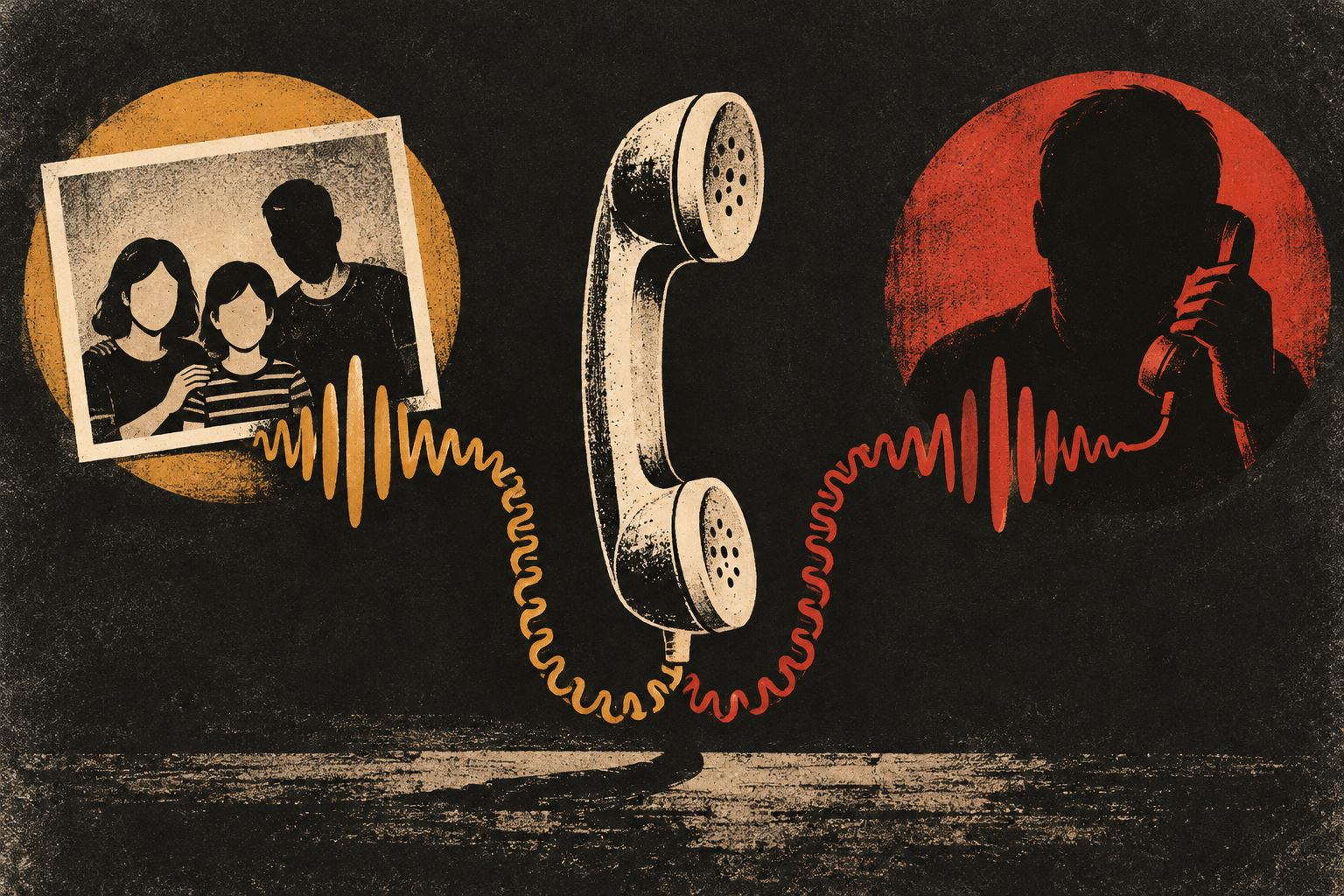
A call arrives from a family member who sounds frightened. They say there has been a crash, an arrest, a medical emergency, or a lost phone. They may ask for money immediately and insist that you do not call anyone else. The voice sounds right, and the caller knows a few personal details. That can feel like proof. It is not.
Scammers can use short audio samples, impersonation, or voice-generation tools to make a call feel familiar. The FBI has warned that criminals use AI-generated audio to imitate relatives and request urgent financial help. The practical lesson is not to become a voice-detection expert. It is to move the conversation to a verification channel the caller does not control.
Quick answer: Do not send money, share a one-time code, or stay on a call that forbids verification. End the call if it is safe to do so, then contact the relative using a number already saved in your phone or another trusted route. Ask a question your family agreed on in advance. If you cannot reach them, contact another trusted person near them and independently verify the emergency.
Why a familiar voice is not enough
People often judge a caller by several cues at once: voice, caller ID, urgency, and knowledge of family details. Those cues can be copied, manipulated, or gathered from public posts and prior data exposure. Caller ID can be spoofed, and a real-sounding voice does not tell you who controls the phone at the other end. Even a live video call is not a guarantee of identity.
The caller may not need a long recording. A few seconds of public audio can be enough to make a short imitation plausible, while a human impersonator can also sound similar under stress. Do not try to decide whether a voice is technically generated. Treat an unexpected high-pressure request as unverified until you reach the person independently.
The point is not that every emergency call is fake. Real emergencies happen. A good safety rule protects both possibilities: take the claim seriously, but verify it before acting in a way that cannot easily be undone.
The pressure pattern to notice
Many distress-call scams combine a convincing identity cue with a narrow deadline. A caller may say they are in custody and need bail, have been injured and need a transfer, or lost access to their phone and need you to contact a “lawyer.” A second voice may enter the call as a supposed attorney, officer, hospital employee, or friend. You may be told to pay by wire, payment app, gift card, cryptocurrency, or cash courier—or to keep the call secret.
Secrecy and payment instructions are more useful warning signs than accent, emotion, or sound quality. A person can be genuinely distressed and still welcome you calling them back, contacting another relative, or confirming through a hospital or agency’s published number. A demand that you must not verify is a reason to pause.
| What you hear | Why it is not proof | Safer next move |
|---|---|---|
| “It’s me—don’t call my usual number.” | The caller may control the current channel or caller ID. | Hang up and use the number saved before the call. |
| “Send money in the next few minutes.” | Urgency is designed to prevent a second opinion. | Do not transfer; call another trusted relative. |
| “The police/doctor says you can’t talk to anyone.” | An unknown caller cannot establish an official rule. | Contact the named organization through a number you find independently. |
| “Read me the code that just arrived.” | The code may authorize access to your own account. | Never disclose it; contact the service directly if concerned. |
A 60-second verification routine
- Break the tempo. Say, “I care about you. I’m calling you back on your saved number now.” You do not need to debate whether the voice is real.
- Call a known route. Use a saved contact, the number on an existing family group, or a trusted person already near the relative. Do not use a callback number supplied by the caller.
- Ask the agreed question. A family passphrase is most useful when it is private, memorable, and not posted online. Do not invent a question based on public biographical details such as a pet’s name or school.
- Check the emergency independently. If the story names a hospital, jail, school, or law-enforcement office, find its official contact details yourself. Do not rely on a second person who joined the original call.
- Keep another person involved. Put a trusted family member on a separate call. Scammers often try to keep a target isolated and continuously engaged.
Prepare before the phone rings
Choose one family verification phrase and agree that no one will ask for it in a public post, family photo caption, or group message. Make a simple contact sheet with current phone numbers for close relatives and one out-of-area contact. Discuss what the family would actually do in an emergency: who to call, how to verify a hospital visit, and whether any legitimate payment would ever be requested over an unexpected call.
Reduce public audio and personal details where practical. This is not a promise that a private account prevents imitation; it only limits what a stranger can easily collect. Review privacy settings and think about old public videos, voicemail greetings, interviews, and social posts that reveal relationships or routines. Most importantly, rehearse the response. A short sentence like “I’m calling you back” is easier to use under pressure than a complicated checklist.
People who have already encountered a scam sometimes receive a second message from someone offering to “recover” money or identify the caller for a fee. Treat unsolicited recovery offers as another unverified request. Our first-steps guide explains how to start with your bank, payment service, or account provider based on what happened.
If you already sent money or shared a code
Act promptly, but do not let embarrassment delay the call. Contact the bank, payment app, gift-card issuer, or wire service using its official app or the number on your card. Explain that the transaction was induced by impersonation and ask whether it can be stopped, recalled, or disputed. Keep the transaction ID, timestamps, usernames, phone numbers, emails, and screenshots of messages. A transfer may not be recoverable; a quick report still gives the provider its best chance to act.
If you disclosed a bank password, email password, or one-time code, contact that institution through a trusted device and its official website. Change a reused password, check sign-in activity and recovery details, and revoke unknown sessions or connected apps where the service offers those controls. Do not let the caller guide you through “securing” the account, and never install remote-access software at their request.
If the relative’s account may have been compromised, notify them through a separate route and alert people who could receive similar messages. For a suspected crime in the United States, report it to the FBI’s Internet Crime Complaint Center at IC3.gov. If money moved, also report to the FTC. Reporting is not a guarantee of recovery, but it creates a record and can help authorities identify patterns.
What not to use as your only test
- Do not assume a familiar voice, caller ID, local area code, or video image proves identity.
- Do not ask only questions whose answers are visible on social media.
- Do not send a small “test” amount. A scammer can use it to keep the conversation moving.
- Do not follow instructions to stay on the line, hide the call, or move money to a “safe” account. That last pattern is also covered in our guide to bank callers who ask you to move money.
Frequently asked questions
Can I identify a cloned voice by listening closely?
Not reliably. Audio quality, background noise, emotion, and short clips make confident judgments difficult. Verification through a separate, known channel is safer than trying to spot artifacts.
What if the caller says the emergency is real and time-sensitive?
Call back through the saved number and contact another person who can verify the situation. If you believe someone is in immediate danger, contact local emergency services through their official number. Verification does not mean ignoring the emergency; it means not letting an unknown caller dictate the only route.
Should I create a family code word?
A private phrase can help, especially if everyone knows not to post or share it. It is one layer, not a replacement for calling back on a known number.
Sources and further reading
- FBI IC3: Criminals Use Generative Artificial Intelligence to Facilitate Financial Fraud — describes voice-cloning scenarios and recommends a family secret phrase.
- FBI IC3 2025 Annual Report — reports distress-scam complaints and losses as reported to IC3; these figures are not a complete census of all victims.
- FTC: How to Avoid a Scam — practical signs and reporting routes.
Found a factual error or a source that has changed?
Send a correction →