The clearance sale in your social feed: check the store beyond the ad
A familiar logo and a paid placement do not verify a retailer. Check who takes the payment, what happens after checkout, and what to do if you already ordered.
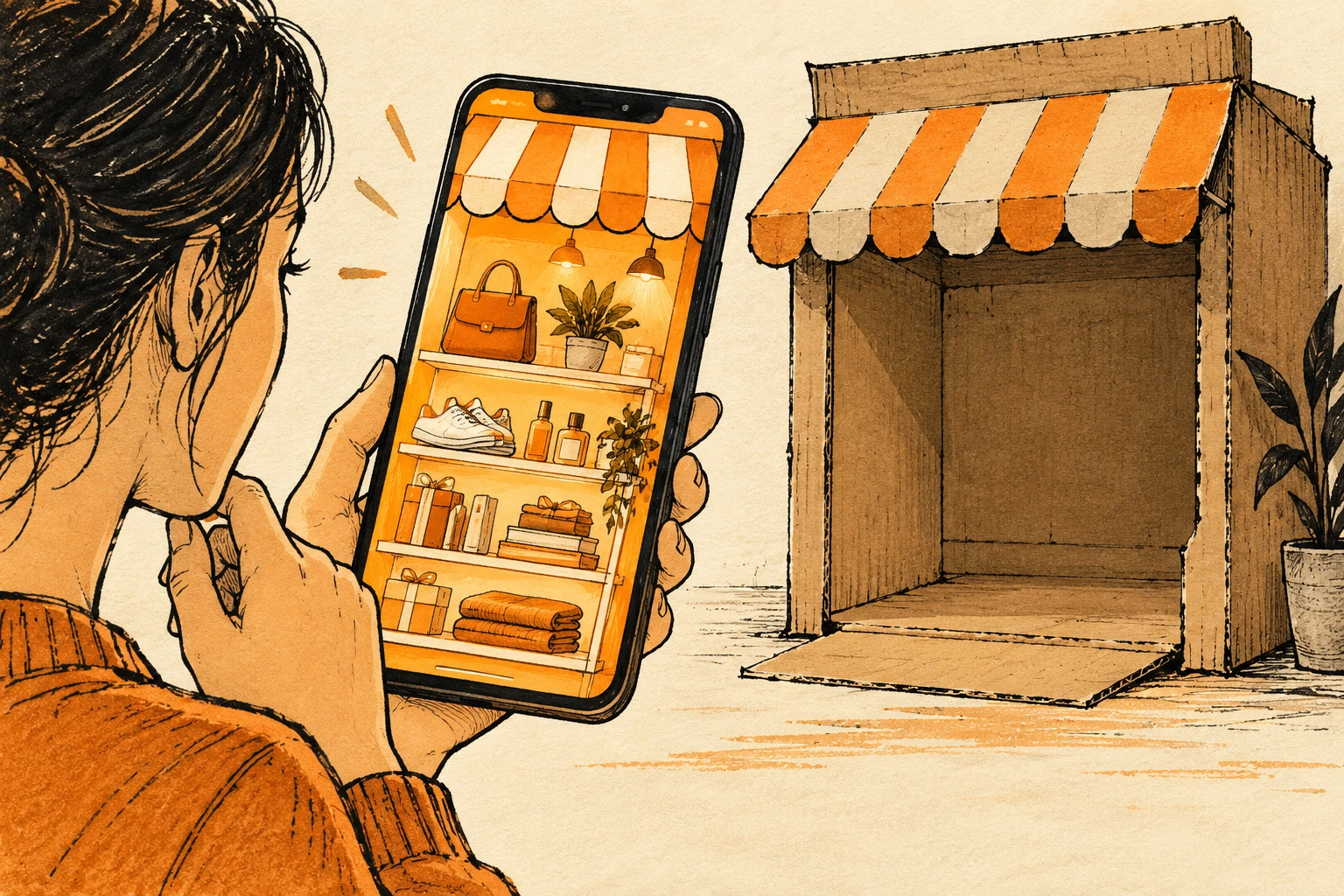
The ad knows exactly what you were looking for. A jacket you saved last week, a kitchen appliance you nearly bought, or a suitcase just before a trip appears with a closing-down price. The page looks busy. Comments thank the shop. A timer suggests that thinking about it will cost you the deal.
The useful question is not whether the advertisement looks professional. It is which business will receive your money, and whether you can establish that identity without relying on the advertisement. A convincing product page can be assembled around someone else’s photos and reputation.
This is not merely a problem with obscure corners of the internet. In its August 2026 warning about social advertising, the US Federal Trade Commission explains that platform advertising is not always thoroughly vetted. Being allowed to buy an ad is not the same as being endorsed as a trustworthy seller.
Identify the actual seller outside the ad.
Keep the offer, receipt, promised delivery date, and payment record.
Do not fund a second payment just to release a questionable first purchase.
Treat the ad as an introduction, not a reference
Imagine an advertisement for a warehouse clearance by a familiar outdoor brand. The photograph and logo match what you remember. After tapping, however, you reach a domain with the brand name followed by several additional words. The footer names a different company. Checkout sends payment to a third name.
This illustrative example does not prove fraud by itself. Retailers use payment processors, trading names, and authorized resellers. It does show that you have three identities to reconcile before buying. A genuine commercial relationship should have an explanation that survives a visit to the brand’s independently located website.
Open a separate tab. Find the brand through a previously saved address, its product packaging, or another established source. Look for the sale and any authorized-store information there. Do not use the ad’s support chat to ask whether the ad is genuine: that is asking the same unknown party to vouch for itself.
If you cannot establish the relationship, leave the item in the cart. Missing a discount is an acceptable outcome. You do not need to prove a criminal operation before deciding that a purchase is too uncertain.
A checkout inspection that goes beyond the padlock
| What you notice | What it establishes | What remains unanswered |
|---|---|---|
| The page uses HTTPS | Your connection to that site is encrypted | Whether the business is honest or affiliated with the brand |
| A familiar product photograph | Someone obtained a recognizable image | Whether the seller has that product |
| Hundreds of enthusiastic comments | Comments are displayed on this page | Whether they describe genuine purchases from this seller |
| A clear business name and return address | You have details you can investigate | Whether those details belong to the operator |
| A card payment option | A particular payment route is offered | Whether the goods exist or any dispute will succeed |
| A delivery tracking number | A number has been supplied | Whether it represents your actual order and destination |
No single row is a verdict. The point is to avoid promoting a limited technical or visual signal into a guarantee it cannot provide.
The FTC’s warning about discounted brand-name ads describes impersonated stores that send counterfeits or nothing. Its practical advice includes investigating the seller, comparing prices, and considering the protections available through card payment. Those checks help most when made before the first purchase, not after several unexplained delays.
Check the terms as if something will go wrong
A good return policy is not simply the sentence “returns accepted.” Find out where goods must be returned, who pays the postage, what period applies, and whether exclusions cover the very item you want. A bargain can become expensive even when a seller delivers something.
Look for a contact method that identifies the business, rather than only a web form. Search the exact domain and legal name separately. A business with a common name can benefit from reviews belonging to an unrelated company. Conversely, a small new shop may have few reviews without being dishonest. Absence of complaints is not positive proof.
Read negative reviews for the mechanism, not just the score. Repeated accounts of a different product arriving, impossible return addresses, or a new fee after payment are more useful than a vague argument over customer service. Reviews are still claims, and individual complaints may be incomplete. Use them to choose questions, not to publish accusations.
Save the version of the offer you relied on. A screenshot should include the item, price, domain, and delivery promise. Keep the order confirmation privately. You do not need to post your home address or order number in a public forum to ask whether a sale looks suspicious.
If the order exists but the story keeps changing
Start with a simple timeline: purchase date, amount, seller name, expected delivery, messages received, and what actually arrived. This prevents a long conversation about warehouses and customs from obscuring a basic failure to fulfill the order.
Ask the seller one specific question in writing: “Please confirm the dispatch status and delivery date for this order, or explain the refund process.” Avoid sending additional identity documents merely to ask about an ordinary retail order. If a refund requires remote access to your phone or bank account, stop. That is a different risk from a delayed parcel.
Check tracking through the carrier’s independently located website. Do not treat a screenshot of a delivery scan as proof that a parcel reached you. If needed, ask the carrier what it can confirm without expecting it to disclose another customer’s private address.
Our guide to parcel redelivery requests covers the follow-up message that asks for a small payment. It can arrive after a real purchase and still be unrelated to the retailer. Timing makes a message persuasive; it does not authenticate the sender.
If you already paid
Contact your payment provider promptly through its official app or the number on your card. Describe the situation accurately: goods not received, goods significantly different from the description, or a transaction you did not authorize. These are different circumstances. Do not label an authorized purchase “unauthorized” simply because the seller disappointed you.
Ask what evidence and deadlines apply to your payment method and location. Keep the case number and copies of submissions. A dispute route is not a promise of reimbursement, but waiting through repeated seller extensions can make the problem harder to document.
If you entered a password that you also use elsewhere, change it on those other services through their real websites. If you supplied card details to a page you now suspect was fraudulent, tell the issuer and follow its advice about replacement and monitoring. An order confirmation alone does not mean your device has been infected; respond to what you actually entered or installed.
Be wary of replies offering an insider refund service. The second-payment recovery trap turns disappointment into another reason to send money. A stranger’s promise to recover your shopping loss is not a substitute for your payment provider’s case process.
A rule worth keeping for the next sale
Separate discovery from payment. Social media can show you an interesting product. It should not be the sole source of the seller’s identity, the reviews, the support contact, and the payment instructions. Move at least one important check outside that chain before you buy.
The best outcome is not becoming an expert at spotting every fake storefront. It is having a repeatable way to stop when a bargain asks you to trust more than you can verify.
Found a factual error or a source that has changed?
Send a correction →