Locked out, then hit with a huge locksmith bill: questions to ask before work starts
A cheap callout can turn into a much larger bill at the door. Establish the business, the work, and the total before the lock becomes part of the pressure.
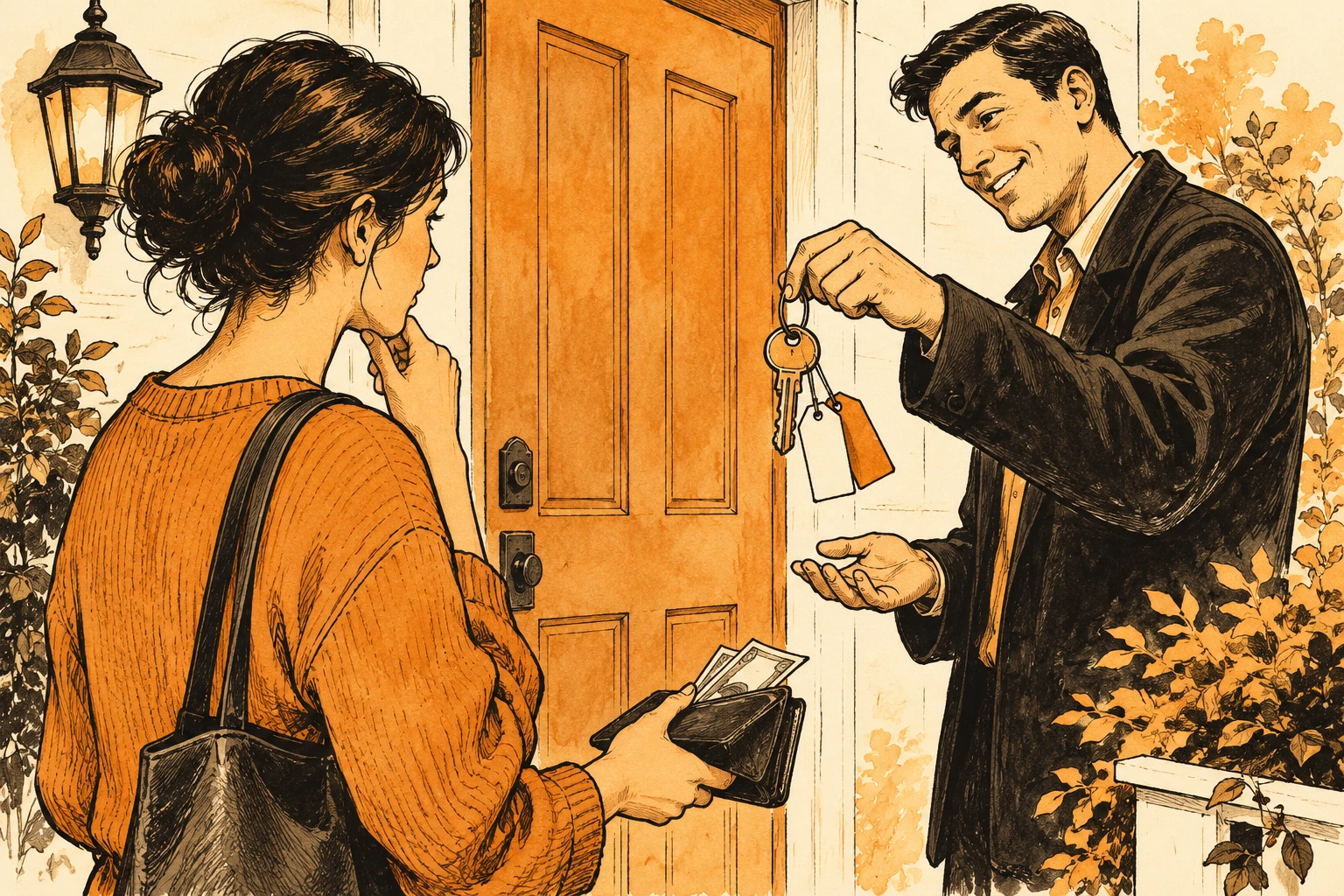
You are outside, your keys are inside, and your phone battery is disappearing. The first locksmith number promises a low starting price and a quick arrival. By the time the technician reaches you, leaving the conversation feels harder than making the call did.
That imbalance is the central problem. You need access immediately; the person selling the service controls both the explanation of the lock and the proposed solution. A useful response is to establish three things before work starts: who is doing the job, what they propose to do, and what you will be charged.
Not every expensive emergency visit is a scam. Out-of-hours work, travel, specialist locks, and replacement parts can cost more. The warning sign is an unexplained switch from an attractive offer to work or charges you did not meaningfully agree to.
If someone is threatening you, blocking you from leaving, or demanding money with intimidation, prioritize your safety and contact local emergency services when appropriate. Do not put yourself at risk to photograph an invoice or argue about a fee.
Before you call: look for an existing way in
Check whether a trusted household member, property manager, building concierge, roadside-assistance provider, or insurer already has an appropriate route for help. This is not an invitation to attempt dangerous entry or damage a door. It is a way to avoid treating the first search advertisement as your only option.
For a rented property, establish whether the landlord requires an approved contractor. For a vehicle, have the make, model, year, and your proof of entitlement available for a legitimate provider. A locksmith who checks whether you may access the property is doing something different from a caller who demands unrelated banking credentials.
Move to a safe, sheltered place if possible. A few minutes of physical comfort can make it easier to compare two providers instead of accepting an undefined price because you are cold or frightened.
The phone conversation should produce more than “from” pricing
Ask for the full business name, where it operates, and whether the person arriving works for that company or a subcontractor. A call center is not automatically fraudulent, but the handoff should be explainable. Write down the name and number you called.
The Minnesota Attorney General’s locksmith guidance describes misleading local identities and recommends a detailed estimate, identification, and an itemized receipt. It also illustrates why licensing claims need local context: requirements are not identical across jurisdictions. Verify the rules where the work will happen rather than assuming every legitimate locksmith must hold one universal license.
Ask what the initial price includes. Does it cover only attendance? Is labor extra? What are the possible charges for travel, emergency hours, parts, taxes, or cancellation? If the final amount cannot be known before inspection, ask for the inspection cost and the point at which you can decline further work.
Use a before-work checkpoint
| Question | Useful answer | Reason to pause |
|---|---|---|
| Who is the business billing me? | A name consistent with the booking and paperwork | The caller, technician, and invoice name cannot be reconciled |
| What work is proposed? | A clear description of entry, repair, or replacement | “Just sign and I will explain later” |
| What is the total or agreed limit? | Written charges and conditions for a revision | A low callout price presented as if it were the full job |
| Why is drilling proposed? | A specific explanation of the lock and alternatives | Destructive work begins before you consent |
| How can I pay? | Methods disclosed before the work | A last-minute demand for a personal transfer |
You do not need the technical skill to challenge every statement about a lock. You can still require an explanation before authorizing irreversible work. If the explanation changes the price substantially, asking for a second opinion is reasonable when the situation allows it.
The Better Business Bureau’s locksmith alert describes low-quote escalation and pressure for replacement work. Use that as a prompt to ask questions, not as proof that drilling is never necessary. Some locks or failures genuinely require destructive entry; the decision should be explained and agreed, not sprung on you.
What to say when the price changes
A short, neutral sentence is easier to use under pressure than an accusation: “That is different from the price I was given. Please write down the total and the work before you start.”
If work has not begun and you wish to decline, ask what previously disclosed callout charge applies. Do not assume you owe nothing, and do not accept an invented cancellation amount without asking where it was agreed. Your legal position depends on the agreement and local rules.
If work is underway, ask the technician to stop while the change is explained, where that can be done safely. Record what was completed and what new work is proposed. Avoid physically interfering with tools or standing in the technician’s way.
Having a trusted person on the phone can help you remember the facts and feel less isolated. They should help you ask clear questions, not escalate the confrontation. A remote friend cannot inspect the lock, but they can notice when the same question has repeatedly gone unanswered.
If you have already paid a disputed bill
Collect the advertisement, initial quote, messages, invoice, receipt, and photographs of the completed work. Make a timeline while the details are fresh. Separate the amount you agreed to from the amount demanded and explain when the difference appeared.
Ask the business for an itemized explanation in writing. If you paid by card, contact the issuer through its official channel and ask about the applicable dispute process. Describe the transaction honestly; poor service or an inflated charge is not automatically an unauthorized card transaction. Keep deadlines and evidence requirements in view.
Report suspected deceptive practices to the relevant consumer-protection office. Report threats, damage, or suspected criminal conduct to the appropriate local authorities. A consumer complaint and a police report serve different purposes, and neither automatically guarantees reimbursement.
If you are worried about the security of a lock that was installed or the keys supplied, arrange an assessment with an independently verified locksmith or property manager. Do not let the disputed provider’s warning force another immediate purchase from the same person.
Do the easy preparation when there is no emergency
Save a verified local provider and your building or roadside-assistance contact before you need them. Check how to prove access rights and whether someone trustworthy can hold a spare key securely. Avoid hiding keys in obvious outdoor locations as a substitute for a proper plan.
The same price-pressure problem appears in moving disputes after loading, where possession of goods changes the negotiation. Separately, an urgent home-warranty letter can make a sales offer resemble an obligation. In all three cases, the useful pause is the moment before a claimed necessity becomes a commitment.
You are buying a service, not surrendering the right to understand it. A clear business identity and a clear agreement matter most when you are least comfortable asking for them.
Found a factual error or a source that has changed?
Send a correction →