The investment group has a professor, winning trades, and a withdrawal problem
Separate an online group's performance theater from independent evidence about the professional, platform and destination of your money.
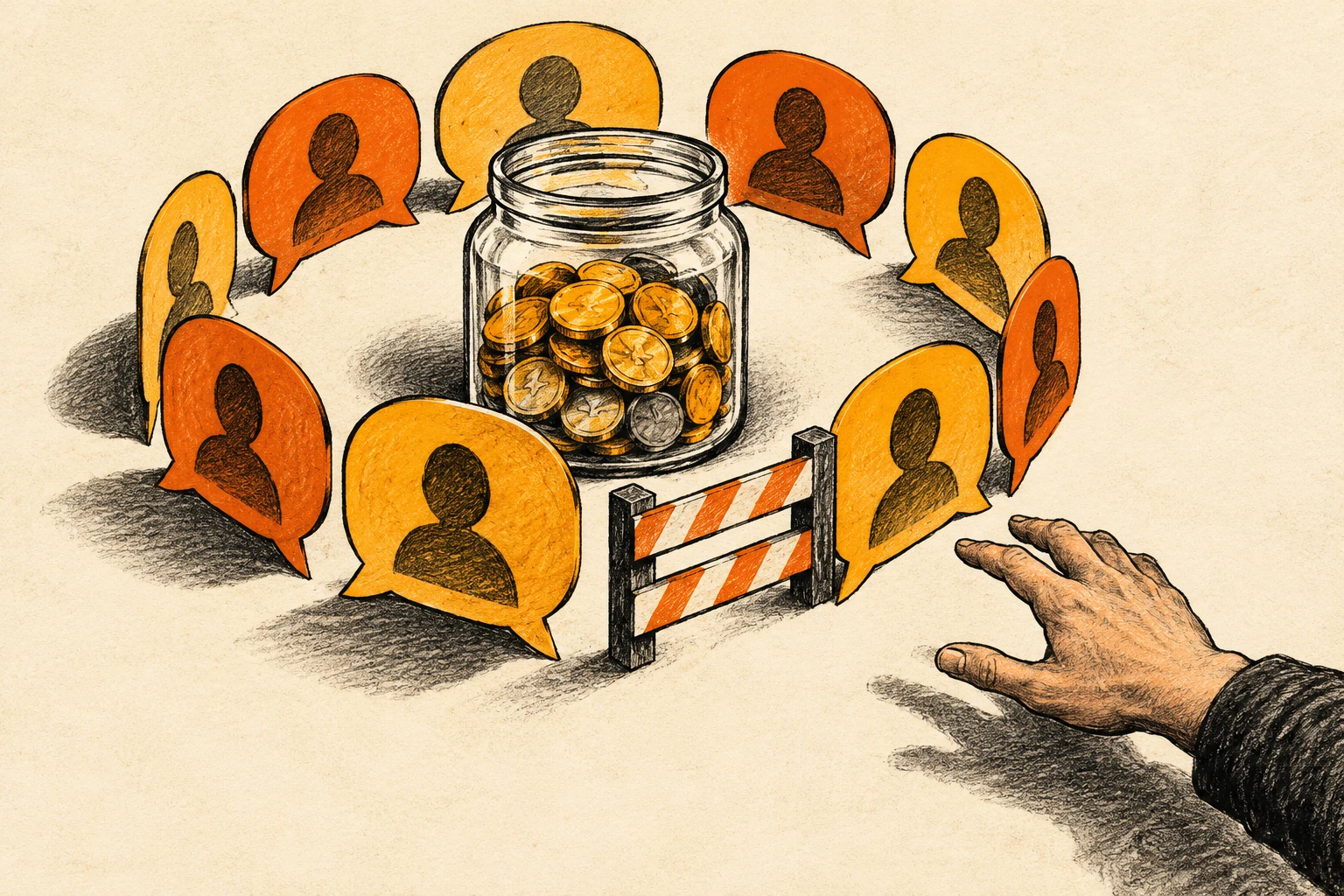
The group looks organized. A professor explains markets, an assistant handles questions, and members post screenshots of winning trades. You may even follow an early suggestion through your own broker and make money. Later, the group introduces a special platform or opportunity available only to committed members.
The shift is easy to miss: a useful-looking conversation is being treated as evidence that a new investment arrangement is legitimate. It is not. The people, professional status, platform, product and payment destination each require independent examination.
This article explains fraud warning signs, not whether you should buy a particular investment. Markets involve risk even when all parties are genuine. If you need advice about a significant financial decision, use an appropriately qualified professional whose identity and relationship you have verified independently.
The warning is about more than a fake app
The SEC’s December 22, 2025 investor alert describes group chats that impersonate experts, display supposed profits and demand additional payments when withdrawals are requested. It also discusses investment-professional impersonation and stock-tip schemes. These are related but not identical problems.
A fake trading interface can invent balances. A manipulation scheme can involve a real security and a real brokerage account. A copied professional identity can borrow a genuine registration record. Finding one real component therefore does not validate the entire arrangement.
FINRA’s January 2024 warning describes groups impersonating investment professionals and directing participants toward low-volume stocks. That distinction matters: “I used a legitimate broker” does not automatically establish that the group’s recommendations or motives were legitimate.
Five claims that need separate evidence
Is this the actual person or firm being named?
What are you buying, with what documented risks?
Who receives it, holds it and controls withdrawal?
Start by writing down the legal names of the person and firm, the platform’s operator, the proposed product and the intended recipient. If the group cannot provide a coherent explanation, do not fill the gaps with confidence borrowed from other members.
Then use official regulatory resources relevant to the claimed jurisdiction. Find the professional or firm independently and contact it through the details in the official record or verified company channel. Do not use a phone number the group supplies as proof that it represents the registered entity.
Registration is not a promise of profitable performance, nor does a copied registration number authenticate a messenger. The point of the check is to establish who you are dealing with before considering the merits of the investment.
Why early wins do not settle the question
A correct stock prediction can occur without special insight. A small set of highlighted successes can omit losses. A group can also recommend a widely followed asset before changing to a different, riskier arrangement. You should not infer the quality of a later investment from a selective account of earlier outcomes.
A small withdrawal from a suspicious platform is similarly limited evidence. It shows that a particular withdrawal was processed at that time. It does not establish the platform’s solvency, custody arrangements, regulatory status or willingness to return a larger balance later.
Avoid turning “test it with a small amount” into a verification strategy. The test itself can create sunk costs, emotional commitment and a channel for further persuasion. You may begin defending the platform because you want the initial decision to have been sensible.
| Reassuring sign | What it does not establish |
|---|---|
| A professor’s impressive biography | The chat is controlled by that person |
| A name appears on an official register | The contact and payment instructions are genuine |
| Members celebrate profits | Their independence or the completeness of the results |
| A small withdrawal succeeds | Future access to a larger balance |
| An app is in a familiar store | The underlying investment is legitimate |
| A real broker executes a trade | The recommendation is free of manipulation |
The withdrawal demand is a new decision
If a platform says you must pay a tax, security deposit, compliance fee or account-unfreezing charge before withdrawing, stop adding money and verify the claim outside the platform. A balance shown on its screen does not prove that the funds exist or that paying another amount will release them.
There can be legitimate fees and legal obligations in investing, but they should have a verifiable basis and an accountable recipient. An unknown chat administrator’s explanation is not a substitute for official documentation or independent professional advice.
Be particularly cautious if the explanation changes after each payment. A new reason why the previous fee was insufficient is not progress toward a known finish line. It may simply be another request built on the money already committed.
Do not borrow from friends, use emergency savings or take credit to satisfy an unverified release condition. That can turn an existing loss into additional financial pressure without improving the underlying evidence.
The group is not an independent review panel
When you ask whether a withdrawal fee is normal, the people answering may be participants, promoters, controlled accounts or genuine victims who have not yet encountered the same problem. You cannot establish their independence from the chat alone.
A flood of reassuring responses can create the impression of consensus. But ten messages inside one managed environment are not equivalent to ten independent investigations. Screenshots, testimonials and claims of successful withdrawals should be treated as claims, not as an audit.
Do not argue publicly with the group to prove the scheme. Preserve relevant records privately, stop further payments and seek outside advice. A confrontation can lead to deleted messages, pressure or removal before you have organized the evidence.
The broader relationship pattern is covered in our romance-investment guide, but a romantic connection is not required. A teacher-student relationship, professional ambition or desire to belong can provide similar pressure.
If you have only joined and read the messages
You can leave without explaining your finances or debating the professor. Do not upload identity documents, connect a wallet, install a special trading tool or grant remote access merely to continue observing.
Review what profile information the group can see and adjust privacy settings through the messaging service’s official interface. Block and report unwanted contacts where appropriate. A legitimate app does not make every group inside it legitimate.
If you followed a recommendation through your own established broker, do not make a rushed trade solely because this article raises concerns. Review the actual holding, its risks and your circumstances independently, with qualified advice where needed. Fraud prevention and investment decision-making are connected but distinct tasks.
If money is already involved
Contact the bank, brokerage, payment provider or exchange you used through its verified channel. Explain the suspected investment fraud and provide transaction details. Ask what protective action or investigation is available. Do not assume that a transfer can be reversed, but do not delay reporting while seeking certainty about the whole scheme.
Save the group name, administrator handles, platform address, account records, payment instructions, transaction references and the sequence of withdrawal demands. For cryptocurrency transfers, preserve the transaction identifiers and destination addresses without publicly disclosing private keys or recovery phrases.
Report suspected securities fraud to the relevant regulator and internet crime to the appropriate law-enforcement channel. Use the official sites independently. A person in the group claiming to be a regulator is not a reporting route.
If identity documents were submitted, consider that exposure separately. If remote-access software was installed, seek trusted technical assistance. The financial loss, identity risk and device access may require different responses.
The recovery promise can repeat the same mechanism
After leaving, you may be contacted by someone who knows the platform’s name and says they can recover the balance. They may display a supposed tracing report or claim access to a special regulator. The familiar details can make them feel independent of the original group.
Do not pay a new fee or disclose credentials on that basis. Our recovery-scam guide explains why public complaints and shared incident information can be used for follow-up targeting. A guarantee of recovery is not evidence of capability.
Be cautious about publishing the full story with amounts, contact details and personal documents. You can warn others while withholding information that makes you easier to target again.
Rebuild the decision outside the room
A useful pause means more than muting notifications for an hour while continuing to rely on the group’s explanations. Move the evaluation to independent records, verified professionals and institutions that did not receive their identity from the chat.
Ask yourself what evidence would remain if the screenshots, praise and professor’s messages disappeared. Could you still identify the firm, understand the product, verify the recipient and explain your withdrawal rights? If not, the group has supplied confidence where documentation should be.
You do not have to prove criminal intent before refusing another payment. Unverified authority plus controlled evidence is not a sound basis for sending more money. The safest next step may be to stop, document and obtain independent help.
Sources: SEC group-chat investor alert, December 2025 and FINRA’s investment-group impersonation warning, January 2024. This is general fraud education, not personalized investment, tax or legal advice.
Found a factual error or a source that has changed?
Send a correction →