“This is my new number”: check the person before paying the family emergency
A broken-phone explanation can remove the familiar contact route just before a money request arrives. Build the verification around an existing relationship, not the new chat.
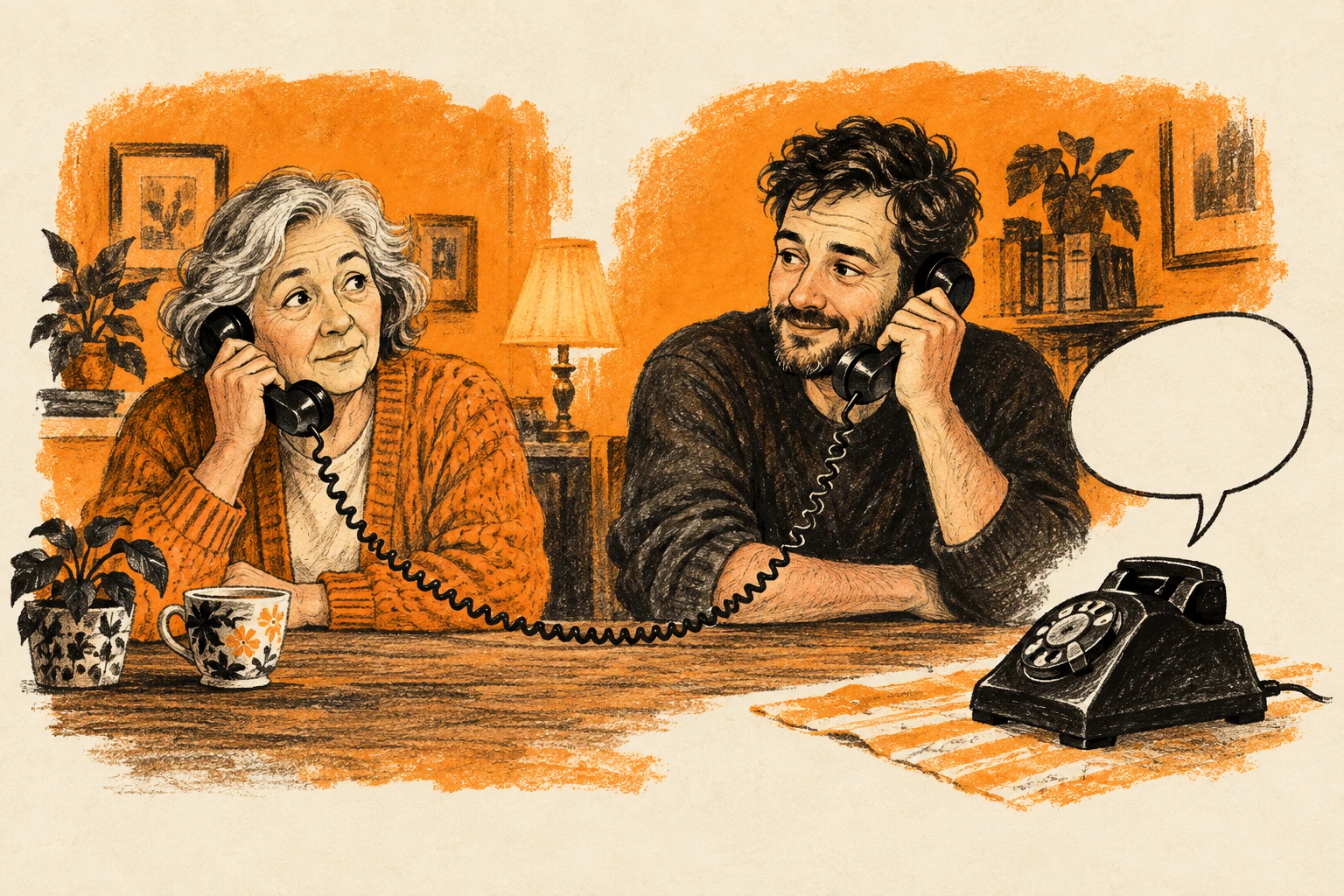
The message does not begin with an investment or a prize. It begins with family: a son, daughter, sibling or close friend says their phone is broken and asks you to save a new number. Later comes the bill they cannot pay from the replacement device.
It is an effective story because the explanation for the unfamiliar number also explains why your usual verification route supposedly will not work. Do not let the new contact decide which old ways of checking are unavailable. Try the established route yourself, or reach someone else who can independently confirm the situation.
You can care about a possible emergency without paying an unverified recipient. The next useful action is to establish who needs help and what help they actually need.
Before saving the new number
Keep the old contact. Do not delete or overwrite it just because the message asks you to. Call the number you already had, use an established family chat, or contact another trusted person through their existing details.
If the old number does not answer, that is not confirmation of the new one. People are busy, asleep, at work or without signal. An unanswered call creates uncertainty; it does not resolve it in favor of the stranger asking for money.
The Police Service of Northern Ireland’s family-impersonation guidance describes the “new number” pretext and advises checking the person’s identity. The City of London Police’s warning similarly documents messages claiming a lost or damaged phone followed by requests for money. Those are descriptions of a recurring method, not proof about every changed-number message.
The family knowledge trap
A familiar nickname, photograph or personal detail can feel decisive. But information shared publicly, mentioned in previous conversations or obtained through an account can be reused. A contact’s name in an app may be a display label, not a verified identity.
Do not volunteer the identity the sender has left vague. If a message says “Hi Mum” and you answer with your daughter’s name, you have supplied a detail rather than tested one. That does not mean you caused the scam; it simply means the subsequent use of the name is not independent evidence.
Questions about private family knowledge can sometimes help, but they should not become the only control. Answers may be guessable, shared or visible online. A real-time conversation through an established route is usually a more useful starting point than an improvised quiz inside the suspicious chat.
The old number and established contact routes.
The person separately from the payment request.
If the only confirmation comes from the new account.
Verification and payment are different decisions
Even after you establish that a relative is genuinely asking, check the payment details. A request to pay a third party, a newly supplied bank account or an unusual method still deserves clarification. Knowing the person does not automatically validate every destination attached to a message.
For example, a real family member might forward payment instructions from a compromised seller. Or a genuine account might be used by someone else. The safe question is specific: “What is this payment for, who is receiving it, and have we confirmed those details through our established conversation?”
| Situation | What remains to verify |
|---|---|
| New number claims to be a relative | Identity through an existing relationship |
| Familiar account asks for money | Whether the real person controls this request |
| Real person confirms an emergency | The recipient, purpose and payment method |
| A third party claims to act for them | The authority of that intermediary |
| A payment supposedly failed | The actual bank record before trying again |
The table is not a demand for suspicion in every family interaction. It is a way to avoid letting one reassuring fact answer every question at once.
The urgency may be real, but the route can still be wrong
Families do encounter urgent bills, lost phones and travel problems. A verification rule must work under those conditions or people will abandon it. Agree on a practical alternative: another family member, a known work number where appropriate, a prearranged contact method or direct contact with the relevant institution.
If the message claims an immediate physical emergency, contact local emergency services or the relevant institution through an independently obtained route as appropriate. Do not treat a bank transfer to a newly supplied account as a substitute for emergency assistance.
If the problem is a bill due today, a short pause to confirm the person is reasonable. Ask for the underlying bill only after identity is established, and verify the payee separately where necessary. Do not publish the document or send it around a large group without permission.
A request that forbids any outside contact is especially important to pause. Secrecy is not a normal prerequisite for helping someone pay an ordinary bill.
A worked example: the failed phone and the supplier
Imagine a message claiming to be from your adult son. His phone is damaged, his banking app is unavailable and a contractor needs payment before finishing a job. He asks you to transfer the amount directly to the contractor and promises to reimburse you later.
There are at least three claims: the sender is your son, the contractor and bill are genuine, and the account belongs to the intended recipient. A photo of your son answers none of them reliably. A correct description of his home may still leave the payment unverified.
The safer route is to call your son through an established contact or reach another trusted person who can connect you. Once the situation is independently confirmed, discuss the bill and recipient. If you cannot confirm it, do not make the transfer simply because the story sounds like something he might do.
This is an illustrative decision exercise, not a reconstructed victim account. Its purpose is to show where verification belongs before the emotional promise to help becomes a payment.
If you already sent money
Contact your bank or payment provider promptly through its official route. Explain that you suspect family impersonation, identify the recipient and transaction, and ask what intervention is available. Keep the messages and payment reference. Recovery is not guaranteed, but delay does not improve the options.
Do not send a second payment because the first supposedly failed. Check the bank’s actual record. If a caller says a new transfer is required to reverse the original one, end that contact and ask your own provider.
Contact the real relative through the old route and let them know that someone may be impersonating them. Avoid blaming them or asserting that their account was hacked without evidence. An impersonator can use a new number without controlling the relative’s existing account.
If you disclosed credentials, one-time codes or identity documents, treat that as an additional exposure. A payment report does not secure an account whose access information was shared.
If the person you are helping is embarrassed
Start with reassurance that the next step matters more than the earlier decision. “Let’s call the bank together” is useful. “You should have known” is not. Family impersonation targets the desire to help someone loved; it is not a reliable measure of intelligence or affection.
Ask permission before taking actions on their device. Help organize the evidence without sending yourself full bank details. If they are still in contact with the sender, offer to sit with them while they stop replying and reach official support.
Be careful about broadcasting the incident. A public post naming the relative, amount lost and current distress can invite recovery offers or further impersonation. Share only what is necessary with trusted people and official reporting channels.
For follow-up offers promising to retrieve the money, read our recovery-scam guide. Someone who knows the incident’s details still needs independent verification.
Set a family protocol before the next problem
Agree that a new number will be confirmed through an old route before money changes hands. Keep more than one trusted contact available so the rule does not fail when one person is unreachable. Review the arrangement after a genuine phone change.
A family code phrase can be an additional signal, but it should not become a permanent magic password shared widely or reused across accounts. If you use one, consider how it could be exposed and how to replace it. Do not rely on trivia that appears in social posts.
For larger or unusual transfers, confirm the amount and recipient in a separate conversation. That small habit helps even when everyone involved is genuine, because payment details can be mistyped or misunderstood.
The aim is not to make relatives prove themselves at every hello. It is to create a predictable pause at the point where a changed identity claim turns into a consequential action.
A short response, if you choose to send one
“I will contact you through the number or route I already have before making any payment.” That is enough. You do not need to explain which relative you think it is, identify everyone you are calling or debate the sender’s reason for being unavailable.
You can also stop responding without a closing message. A genuine relative can be reached and helped through the verification process. A stranger does not need a detailed account of your family’s safeguards.
The same freedom applies to wrong-number conversations: an initial reply does not commit you to the next request. Here, the added emotional pressure is family. The answer is not less care; it is care directed toward the actual person rather than an unverified account.
Sources: PSNI family-impersonation advice and City of London Police’s friend-in-need warning. Reporting and payment-recovery procedures differ by country and provider.
Found a factual error or a source that has changed?
Send a correction →