The car buyer insists on one history-report website. You can refuse the detour
A serious-sounding buyer can turn your vehicle listing into a sale for an unknown report site. Keep the inspection of the car separate from a stranger's payment link.
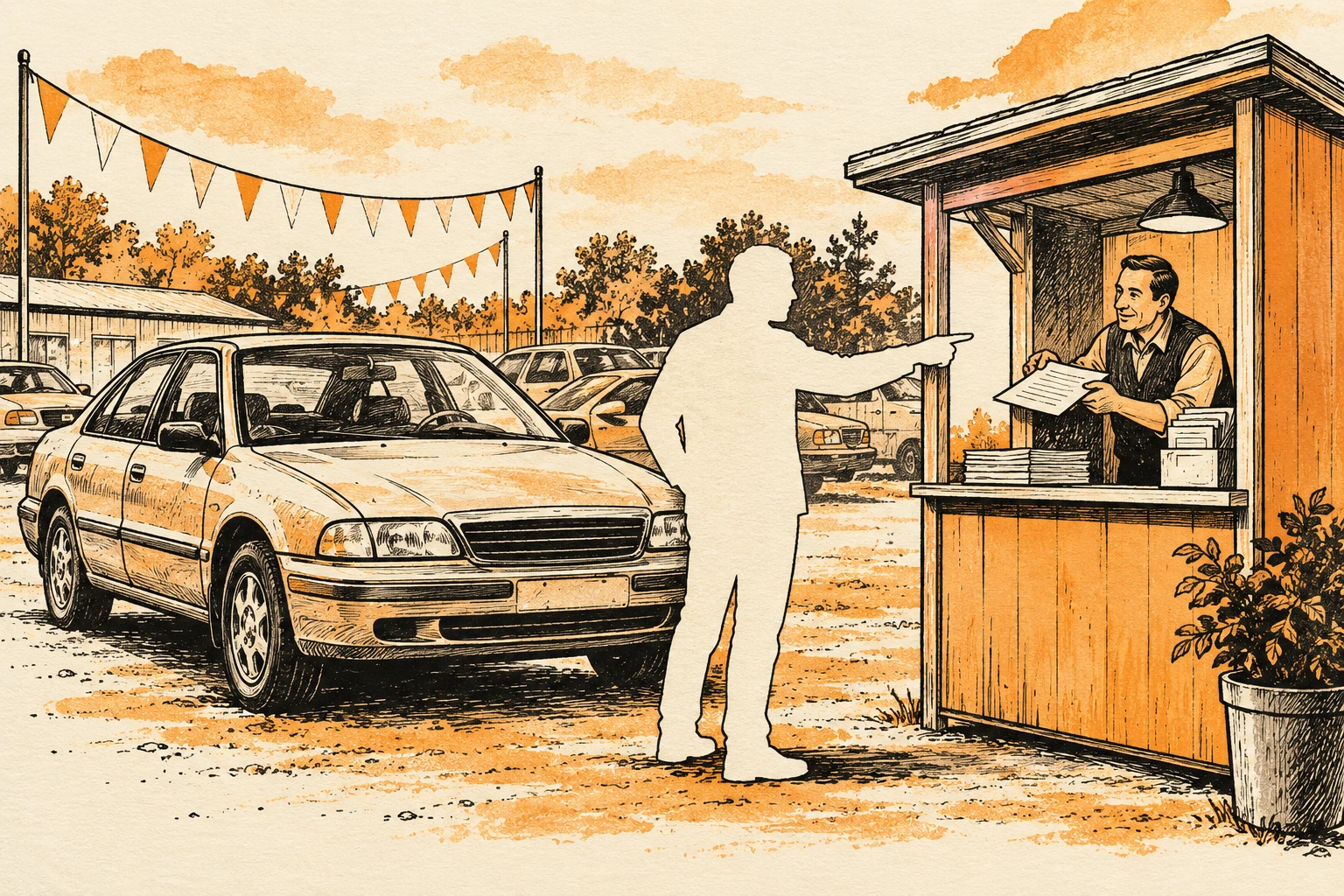
The buyer barely negotiates. They like the car, have cash ready, and can collect it soon. There is just one condition: you must buy a vehicle-history report from the website they specify. A report from another provider is apparently unacceptable.
That request reverses the transaction. You advertised something for sale, but now you are being directed to buy something from an unknown party before any buyer has inspected the vehicle. Interest in your car does not give the stranger authority to choose where you enter your card details.
Vehicle-history reports are useful. Buyers have legitimate reasons to ask about title history, mileage, accidents, and maintenance. The issue is not the existence of a report. It is the insistence on a particular unfamiliar paid site, especially when the buyer refuses reasonable alternatives.
A boundary you can use: “I can provide the vehicle information and arrange an inspection. I will not purchase a report through a link sent by a prospective buyer.”
A plausible request with an unusual dependency
Consider an illustrative exchange. You list a car, receive a friendly inquiry, and offer service records. The person says those are insufficient and names a report provider you have never heard of. They promise to reimburse the report cost at collection. When you offer an established alternative, they explain that their mechanic accepts only the original site.
The claimed mechanic gives the request a professional reason. The promised reimbursement makes the fee seem temporary. Neither establishes that the site is safe or that a buyer will arrive. If there is no independent reason to trust the service, the dependency remains unverified.
The FTC’s vehicle-history report warning describes this specific seller-targeted pattern. It is a longstanding tactic, not a newly discovered kind of report. Do not restrict your caution to a particular domain ending mentioned in an older example; unfamiliar services can use ordinary-looking addresses too.
What information is normal to discuss?
The vehicle identification number, condition, maintenance history, title status, and arrangements for a safe inspection are relevant to a sale. That does not mean every person asking for them is genuine, but it means the topic itself is not suspicious.
Your online-banking password, a one-time login code, an identity-document selfie for an unknown report site, or a fee to release the buyer’s payment are different requests. They do not become reasonable simply because they occur in a conversation that began with the car.
Share records thoughtfully. A service invoice may contain a home address or previous owner’s details that the buyer does not need. Keep unredacted originals privately, and remove unnecessary personal information from copies used in a public listing.
Compare the request, not the buyer’s enthusiasm
| Prospective buyer behavior | Sensible response | What it avoids |
|---|---|---|
| Requests the VIN and asks about maintenance | Provide appropriate vehicle information and discuss inspection | Treating all diligence as suspicious |
| Wants to buy a report themselves | Let them use a provider they independently choose | You funding their preferred service |
| Insists you pay one unfamiliar website | Decline and offer another way to inspect the vehicle | A purchase unrelated to selling the car |
| Promises to refund the fee later | Evaluate the present payment without counting that promise | Making an uncertain future payment justify a real current one |
| Abandons the sale when you refuse the link | End the exchange without chasing them | Paying to preserve an unverified buyer |
You do not need to prove which person operates the report website. You only need a policy that prevents an unknown buyer from choosing a new financial relationship for you.
How to select a report without the buyer’s link
For US vehicle-title research, the Department of Justice’s NMVTIS consumer page explains the National Motor Vehicle Title Information System and directs consumers to approved data providers. Start from that official page if you want a provider using that system.
A history report is not a mechanical inspection or a guarantee that every incident was recorded. Decide which question you are trying to answer before buying anything. Title information, repair condition, outstanding finance, and a physical inspection can involve different records and local procedures.
If you choose to purchase a report, navigate independently and read the price, subscription terms, and cancellation process. Do not assume a small advertised fee is the total commitment. Check what name should appear on the statement and keep the confirmation.
This is not an endorsement of a particular commercial report service. The important difference is that you choose it for a defined purpose, rather than because a stranger makes a sale depend on it.
If you entered your card details already
Save the website address, receipt, terms shown at checkout, and the conversation directing you there. Check your payment account through its real app or website. Contact the issuer if you suspect fraud, an undisclosed subscription, or charges you do not recognize, and ask what action is appropriate.
Describe the facts without exaggeration. If you knowingly paid for a report but believe the service was deceptive, say that. If additional charges were not authorized, explain those separately. The issuer’s dispute and card-replacement processes depend on the circumstances and payment method.
If you made an account using a password shared with other services, replace the reused passwords on those real services. Merely opening a report webpage does not establish that your whole phone is compromised. Installing an app, sharing a password, and supplying card details should be addressed as distinct actions.
Do not send more money to “cancel” an unexpected recurring payment until you have checked the terms and spoken to the payment provider. A refusal to stop billing unless you make another transfer is a new demand, not a solution.
Keeping the real sale moving
Return to the basics: accurate listing, appropriate vehicle records, safe meeting arrangements, verified payment, and the title-transfer requirements for your location. Do not allow report-site arguments to consume the time you would otherwise spend dealing with genuine buyers.
If a buyer sends a verification code and asks you to repeat it, see the marketplace code guide. If the transaction changes into an accidental overpayment, our unexpected payment guide explains why sending a fresh payment back is not the same as reversing the original transaction.
The most reassuring buyer is not necessarily the one who sounds most eager. It is the one willing to inspect the vehicle and complete an ordinary sale without first making you buy your way into their confidence.
Found a factual error or a source that has changed?
Send a correction →