A roofer says you booked a storm inspection you never requested: pause before signing
An October Reddit post describes roofers arriving as if a visit had been booked. Learn how to separate a sales approach from warning signs, verify contractors, and protect an insurance claim.
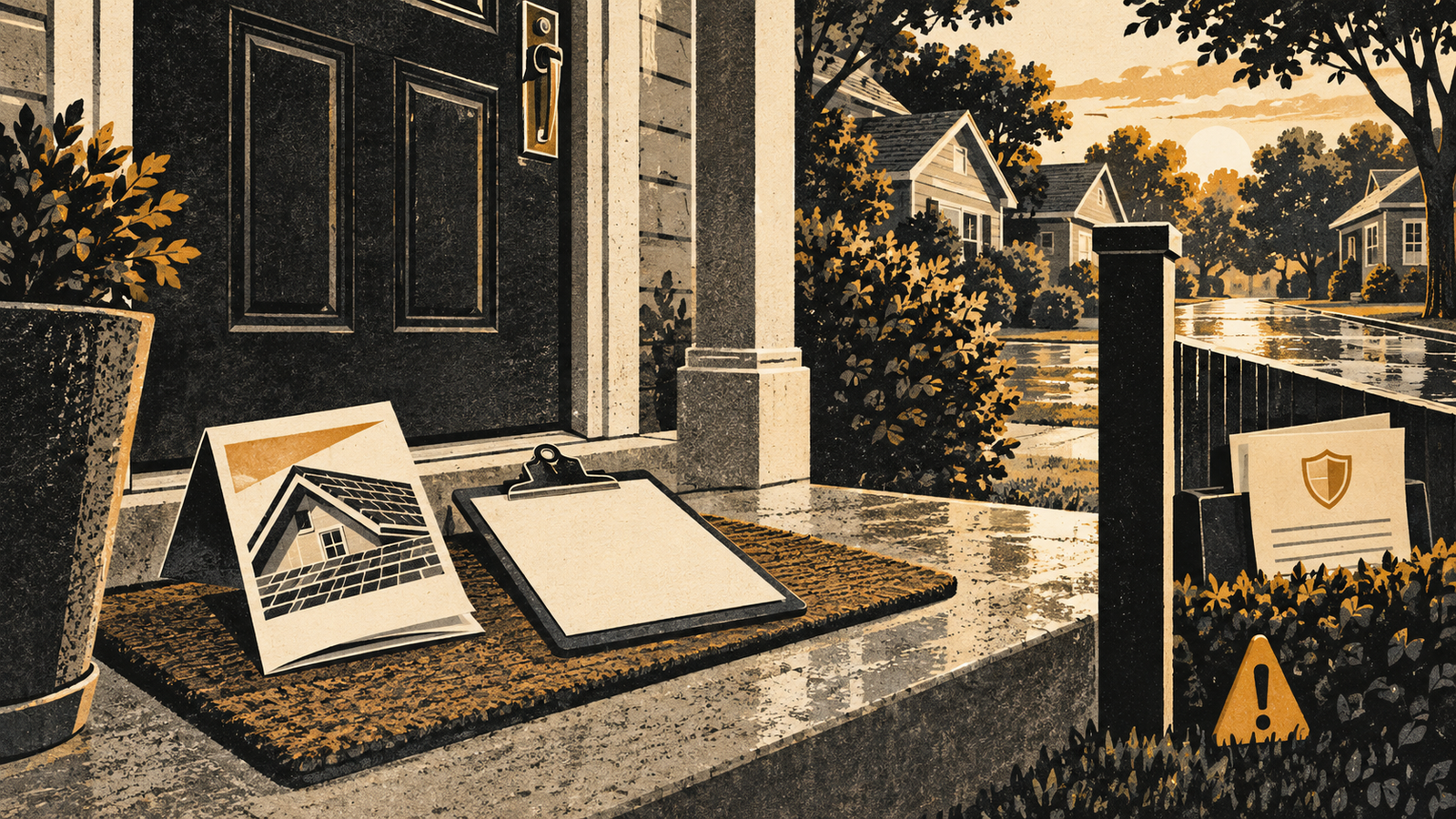
A recent Reddit thread describes roofers arriving at homes and saying a service visit had already been scheduled—even though the residents say they never requested one. That post is a local anecdote, not proof that a particular company committed fraud. It does capture a useful pressure point: when a stranger acts as if you already agreed, the easiest response can feel like going along with the story.
After a storm, a roofing company may legitimately canvass a neighborhood or advertise an inspection. A surprise visit is not automatically a scam. The warning sign is the combination of an unrequested appointment, a claim that your insurance will cover a “free roof,” pressure to sign now, or an offer to control your insurance claim. The Federal Trade Commission and several state insurance departments warn consumers about post-storm contractors who push immediate decisions, large deposits, assignment of claim rights, or promises to secure a bigger insurance payout.
In a Reddit discussion posted in October 2026, one homeowner said roofers came to homes in the area and claimed someone had booked the work, while naming people who were not associated with the property. Replies speculated about sales tactics, storm-related insurance leads, and other explanations. Those comments are not verified facts. Use them as an example of the question people are asking—not as evidence against a named contractor.
The social-engineering move: “We’re already expected”
“We have you down for today” borrows the feel of an appointment reminder. A person may worry they forgot a call, that a spouse or neighbor arranged the visit, or that refusing will create trouble. That small uncertainty gives a salesperson room to move the conversation from “Who are you?” to “Can you show me where the damage is?”
Once the visit feels routine, the next steps may seem like harmless favors: let the representative onto the roof, sign an inspection form, provide an insurance policy number, or sign a document to “let us speak to the adjuster.” Each step can carry consequences that are not obvious at the doorway. A document might authorize work, transfer rights to handle part of a claim, or create a payment obligation. The exact effect depends on the document and state law; never assume a form is merely permission to look.
Possible paths—and how to tell them apart
| What may be happening | Why it can feel believable | Safer next move |
|---|---|---|
| A legitimate company is canvassing after a storm | Several homes may have visible damage, and contractors sometimes advertise door-to-door. | Ask for company details and review them later; you are not obligated to book at the door. |
| A lead-generation or scheduling mix-up | A name, address, or online request may have been misattributed or passed between sales teams. | State clearly that you did not request service. Ask where the appointment came from and do not share personal details to “correct” it. |
| A high-pressure sales pitch | “Free roof,” “insurance will pay,” or “today only” can sound like help after a costly storm. | Call your insurer first and get a separate written estimate before agreeing to work. |
| A potentially deceptive claim or contract | The contractor may promise claim approval, ask you to sign over benefits, or request a large payment before work. | Do not sign on the spot. Have the insurer or a qualified local adviser review the document. |
| An unsafe or fraudulent visit | The person may refuse to leave, pressure an older resident, or try to enter or inspect without clear consent. | End the interaction, keep the door closed, and contact local authorities if you feel unsafe. |
A calm doorstep script
“I did not request an inspection. Please leave your company name and license details in writing. I will verify them and contact my insurer. I’m not signing anything or authorizing roof access today.”
You do not have to debate the visitor’s intentions or accuse them of fraud. A clear boundary gives you time to verify the company and lets a legitimate business leave information for later review. If they continue to insist that you scheduled the visit, repeat that you did not and end the conversation.
What to verify before hiring anyone
- Call your insurance company using a known number. Ask whether a claim exists, what inspection process applies, and whether the contractor is authorized to act in any way. Do not rely on a contractor to interpret your policy or promise coverage.
- Check the contractor’s license and insurance. Requirements vary by state and locality. Use the relevant government licensing database, not a QR code or phone number supplied at the door.
- Get more than one written estimate. A useful estimate describes the work, materials, approximate start and completion dates, cost, and payment schedule. A very low estimate can be as much a reason to ask questions as a high one.
- Read every page before signing. Look for authorization to communicate with the insurer, assignment-of-benefits language, financing terms, cancellation rights, and blank spaces. Ask for time to review the contract with someone you trust.
- Pay through a traceable method and by stages. The FTC warns against paying the full cost upfront or using cash, cryptocurrency, gift cards, wire transfers, or payment apps for disaster repairs.
- Document the condition independently. Photograph visible damage from a safe place before cleanup or repairs, but do not climb onto the roof. Contact a qualified inspector or your insurer if an inspection is needed.
“The insurance will cover it” is not a coverage decision
A contractor can explain a proposed repair and provide an estimate; an insurer decides coverage under the policy. A promise that the roof will be free, that a deductible can be waived, or that the contractor can guarantee claim approval should make you slow down. Connecticut’s Insurance Department specifically warns about offers to handle claims before damage has been fully assessed, waived deductibles, and pressure to sign. Maryland’s Insurance Administration warns that some “free roof” pitches may misrepresent wear and tear as storm damage. Those state notices illustrate risks, but rules differ around the country.
Do not sign your insurance check over to a contractor without independent advice. The FTC notes that a bank or credit union may be able to arrange staged payments after you approve completed work. Ask your insurer and financial institution what controls are available in your location.
If someone has already inspected or signed paperwork
Write down what happened while you remember it: who visited, what they said, what was inspected, and what you signed or shared. Photograph any documents and ask for a complete copy. Contact your insurance carrier using the number on your policy and ask whether a claim, authorization, or contractor representation has been recorded. If you signed a contract at home, cancellation rights and deadlines can depend on the type of sale and local law; read the document and contact your state consumer-protection office or a qualified local adviser promptly.
If you provided your policy number, ask the insurer whether additional account protections or notes are appropriate. If a contractor entered the roof or caused damage, document the condition from a safe location and tell the insurer what happened. Avoid paying an additional “release,” “claim opening,” or “inspection” fee demanded later by an unknown caller until the insurer confirms the request independently.
When to involve a family member or neighbor
High-pressure visits can be especially difficult for someone who is alone, recovering from storm damage, or unsure about insurance documents. A simple household rule can help: no one signs a home-repair agreement during an unsolicited visit. Ask a trusted person to join any later meeting, and agree on a known contractor shortlist before the next storm. This is not about taking away a homeowner’s choice; it creates a pause so that the decision is made with the full paperwork in view.
Bottom line
A roofer saying “you booked us” does not prove a scam—but it also does not create an appointment or authorize access. Treat the visit as unsolicited unless you can confirm otherwise. Verify the business independently, call the insurer first, insist on written terms, and take time to review every document. If the visitor pressures you to sign, pay a large deposit, or surrender control of your claim, end the conversation and get advice through channels you chose.
Related reads: how an upfront fee turns a promise into a scam and why a small payment request still deserves independent verification.
Sources
- Reddit discussion, October 2026: an unsolicited visit presented as a scheduled roofing appointment (anecdotal report; the thread does not establish a finding of fraud)
- FTC: avoiding scams after weather emergencies and natural disasters
- Connecticut Insurance Department, July 17, 2026: protect yourself from post-storm scams
- Maryland Insurance Administration: beware of roofing scams disguised as free-roof offers
Found a factual error or a source that has changed?
Send a correction →