A Debt Collector Threatens Arrest Today. How to Verify the Debt Without Ignoring a Real Case
A threat, a caller ID, or an old account number does not prove a debt is yours—or that the call is legitimate. Ask for validation, verify the collector independently, and do not ignore actual court papers.
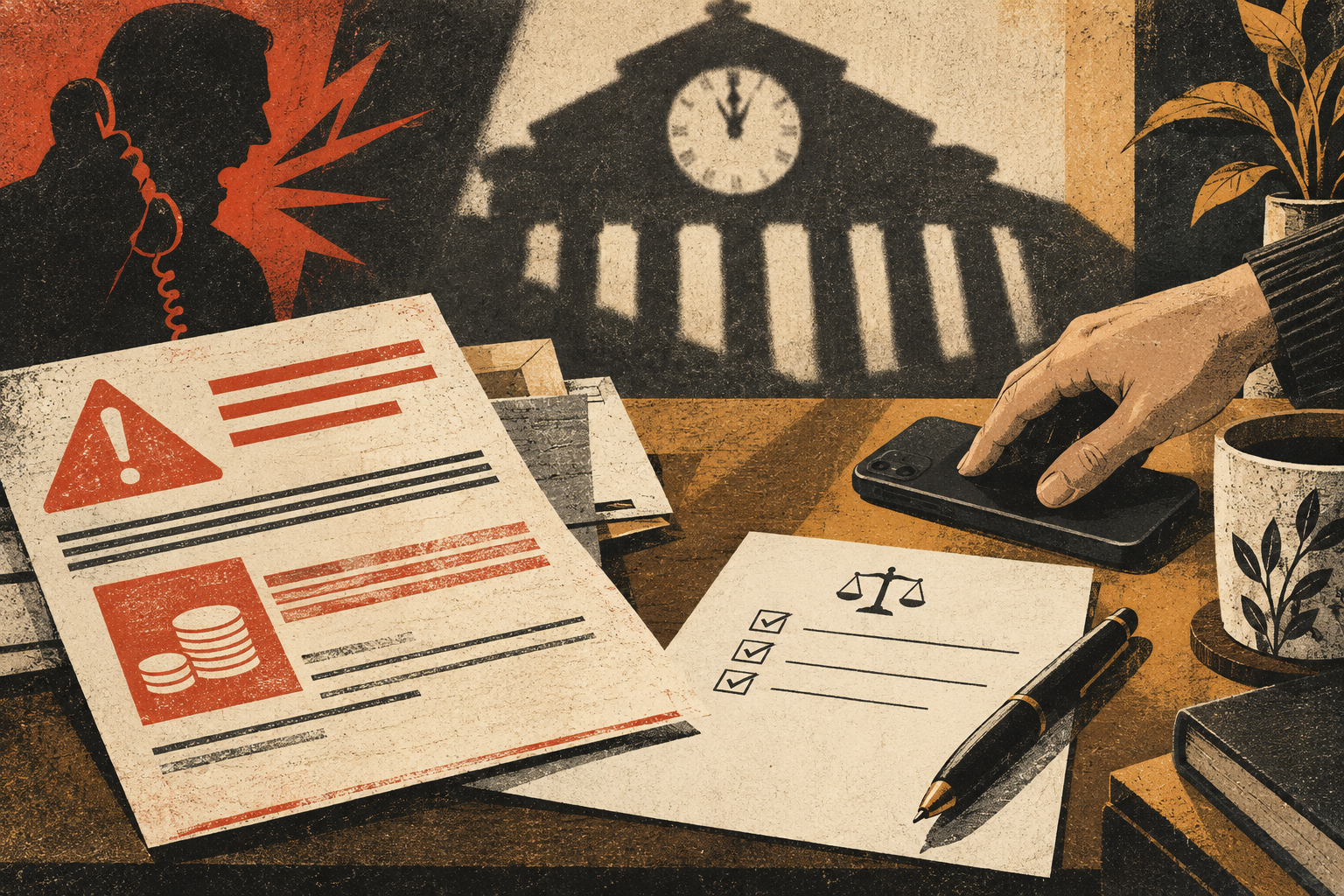
A caller says you owe money for an account you barely recognize. They know your name, an old address, or part of an account number. Then the pressure escalates: pay today or you will be arrested, lose your driver’s license, have wages seized, or be served at work. They may offer to “close the case” if you pay by gift card, wire transfer, cryptocurrency, or a payment app before the end of the call.
Do not assume the debt is yours because the caller sounds official. Do not assume it is fake because the caller is aggressive. The safest response is to separate three questions: who is contacting you, whether the debt is yours, and whether any real legal papers or deadlines exist.
Start here: Do not pay during an unexpected pressured call. Ask for the collector’s legal name and mailing address, the creditor, the amount claimed, and the written validation information required for many covered debt collectors. Verify the company through a channel you find independently. If a court document actually arrives, confirm it with the court using its official public contact information and respond by the deadline on the papers. A scam call should not make you ignore a real lawsuit.
Why this situation is so difficult
Debt is personal, and old accounts can be hard to recognize. A debt may have been sold, a collector may use a different company name, or a record may contain an error. Scammers take advantage of that uncertainty by mixing real-sounding details with a threat and a short deadline. A caller may have obtained an old balance from exposed data or simply guessed that you have a bill.
In February 2026, the FTC reminded consumers that legitimate debt collectors have to provide information that helps you check whether the debt is yours. The FTC also notes that some fake or abusive collectors threaten arrest or refuse to provide a mailing address. A real collector can still be firm about a debt, but a threat does not prove the debt, and a caller’s claim that they are “with the court” does not make them court staff.
| What arrived | What it may mean | How to handle it |
|---|---|---|
| Unexpected phone call with an arrest threat | Threats of arrest for ordinary consumer debt are a major warning sign. | End the pressured call; verify the company separately and request written information. |
| Written collection notice with creditor and amount | It may be a legitimate collection contact, an error, or a fake notice. | Check the validation information and dispute an unfamiliar debt in writing. |
| Document that appears to come from a court | A real lawsuit or court deadline may require a response even if the debt is disputed. | Contact the court using independently found official details; do not ignore the deadline. |
| Demand for gift cards, crypto, or a “processing fee” | Unusual payment demands are consistent with fraud and difficult-to-reverse transfers. | Do not pay through that method; contact the creditor using a known route. |
Ask for validation, then review it carefully
For debt collectors covered by the Fair Debt Collection Practices Act, the collector generally must give validation information in the first communication or within five days after the first communication, unless an exception applies. The information should identify the collector and creditor, the person they say owes the debt, the amount, and how to dispute it. Exact rights can depend on the type of debt, who is collecting, and state law.
Do not give a stranger your Social Security number, full bank details, date of birth, or security code just because they say they need it to locate a file. Ask the caller to send the validation information to the address already associated with the account, or verify the collector through the creditor’s official website. If you need to communicate in writing, keep a copy and use a trackable delivery method where practical.
Compare the notice with your own records. Does the creditor name look familiar? Does the amount include fees or payments you do not recognize? Is the account already paid, too old, or possibly connected to identity theft? A mismatch is a reason to ask questions, not to pay quickly in order to make the conversation end.
If you do not recognize the debt
- Do not confirm guesses. A caller may ask “You opened this account in 2018, correct?” You can say you do not recognize it and want the required information in writing.
- Use the dispute instructions in the notice. The FTC says that if you dispute a debt within 30 days after receiving validation information, the collector generally must stop collection on the disputed amount until it sends verification. Check the notice for instructions and applicable timing; state protections may differ.
- Contact the original creditor independently. Use a number on an old statement or the company’s official website, not the number in the unexpected message. Ask whether the account exists and whether it was referred or sold to the named collector.
- Check for identity-theft signs. Look at your credit reports through the official AnnualCreditReport.com route. If an account was opened with your information, use IdentityTheft.gov for a tailored recovery plan.
- Keep the record. Save envelopes, emails, text messages, voicemail, payment instructions, and call dates. Do not edit screenshots or delete the messages before you decide whether to report them.
If you believe the debt is real, you still have choices: ask questions, review the account, and contact the creditor about options. You do not have to make a decision while an unknown caller is keeping you on the line. But do not use uncertainty as a reason to ignore a genuine court summons or legal notice.
When a caller says a lawsuit or arrest is imminent
Debt collectors generally cannot threaten to arrest you for failing to pay an ordinary consumer debt, claim they are law enforcement when they are not, or threaten legal action they do not intend or cannot lawfully take. A caller demanding immediate payment to stop arrest is not a substitute for a court. Do not trust a badge image, case number, or caller ID by itself.
At the same time, a genuine court case can have a short response window. If papers are delivered or mailed from a court, look up that court’s official contact details and ask how to confirm the case number and response deadline. Do not call a number printed only on an unverified text or email. If the case is real, consider contacting a consumer-law attorney, legal aid organization, or your state’s consumer protection office quickly. This guide is not a legal opinion, and deadlines vary by jurisdiction.
If the caller claims to be from a government agency, remember that real agencies do not demand that you buy gift cards or send cryptocurrency to avoid arrest. Our guide to a benefit-related government impersonation pitch covers a different script that uses official-sounding language to seek personal information and money.
Payment methods that should make you stop
A caller who says you must pay by gift card, cryptocurrency, wire transfer, payment app, or cash courier is asking for a route that can be hard to reverse. The FTC’s 2026 scam guidance says payment method is one of the clearest warning signs: a legitimate bill should not require you to pay only through an unusual method selected by an unexpected caller. If you do owe a debt, verify it and use a payment route on the creditor’s or collector’s independently verified website or written notice.
Do not send a “good faith” payment to make the caller stop if you have not verified the debt. A small transfer can expose your payment account, confirm that you respond to pressure, or be used to demand more. If the person refuses to send information and keeps insisting on secrecy, end the conversation and report it.
If you already paid or shared personal information
Contact the bank, gift-card company, wire service, crypto exchange, or payment app immediately. Tell it the transfer was induced by a suspected impersonation or debt-collection scam and ask what can still be stopped or disputed. Save receipts, transaction IDs, wallet addresses, phone numbers, email addresses, and the exact payment instructions.
If you shared a bank password or one-time code, call the bank using its official number and secure the account. If you shared identity information, use IdentityTheft.gov, consider a credit freeze, and review your credit reports. Report suspected fraud to the FTC, your state attorney general, and—if there is a credible threat or financial crime—the relevant law-enforcement agency. The FTC notes that consumers can also report fake or abusive debt collectors to the CFPB.
For the next steps after a payment or account was exposed, use our first-steps guide. It sorts actions by what happened, rather than assuming every case requires the same response.
A short script you can use
“I’m not making a payment during an unexpected call. Please send the required validation information in writing, including the creditor, amount, and mailing address. I will verify it independently.” You can then end the call. You do not need to argue, reveal private information, or answer repeated questions to prove that you are cooperative.
If the caller is legitimate, a request for written information should not make your account disappear. If the caller is fraudulent, declining to stay on the phone removes the pressure advantage. Your next step is a calm check of the paperwork and, if necessary, advice from a qualified legal professional in your state.
Sources and further reading
- FTC (February 2026): Debt collection—know your rights, avoid scams — validation information and what to do if you do not recognize a debt.
- FTC: Fake and abusive debt collectors — warning signs and reporting routes.
- FTC: What to do if a debt collector sues you — explains why actual court papers should not be ignored.
- CFPB: What is a debt collection validation notice? — explains the notice and dispute process.
Found a factual error or a source that has changed?
Send a correction →