Your hotel booking asks for card verification: separate the reservation from the request
Correct stay dates and a familiar booking thread can make an unexpected payment demand feel safe. Check the original terms and use an independent support route.
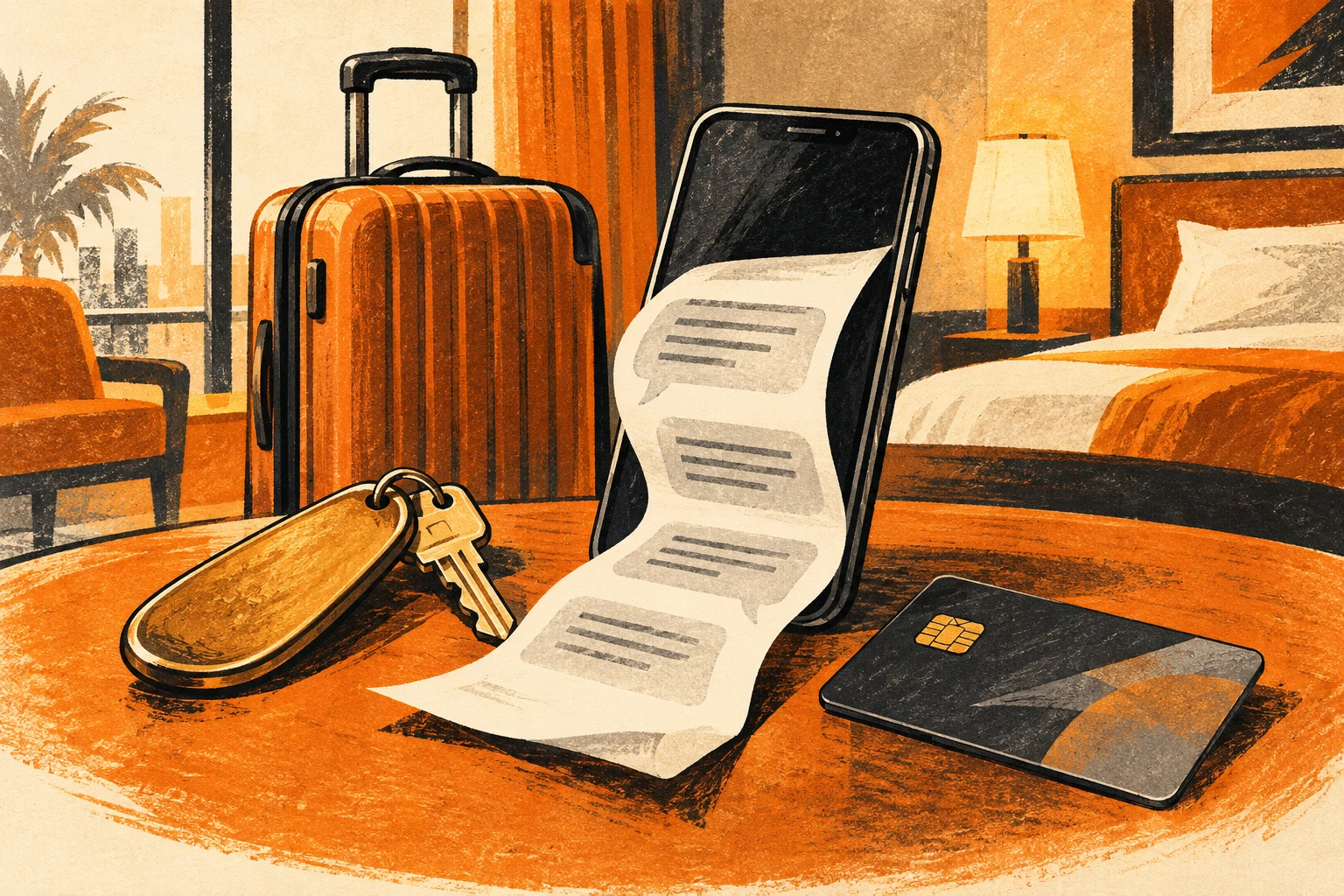
Your reservation is genuine. The message knows the hotel, arrival date and price. It may even appear in a conversation you associate with the property. Then it asks you to verify a card through a new link before a short deadline, warning that the room will otherwise be cancelled.
The unsettling part is that the reassuring details may be accurate. A genuine reservation and an accurate message do not automatically make a new payment request authorized. You need to verify the requested action, not merely recognize the surrounding story.
Do not cancel a valuable reservation or pay a new charge just to make the uncertainty disappear. First separate the booking’s actual status, its agreed payment terms, and the origin of the new request. Those are related questions, but they can have different answers.
Put the original confirmation beside the new request
Find the confirmation you already had before the suspicious message. Read the payment policy, prepayment terms, cancellation conditions, taxes and any deposit information. Do not use a newly supplied “updated confirmation” as the only record of what you agreed to.
Compare the requested amount, recipient, deadline and method. A property may have a legitimate prepayment policy, but an unexpected change still needs checking. A message calling itself “verification” may be asking you to authorize a payment, disclose a full card or sign in somewhere unrelated to the booking.
Is the reservation active in the platform’s own record?
What payment was described when you booked?
Who is asking for what, through which route?
A useful verification conversation starts with those differences. “This message asks for a new card authorization not described in my confirmation” is clearer than “Is this link safe?” The support team can inspect the reservation and payment process rather than guessing from a screenshot.
What Booking.com’s current guidance says
Booking.com’s traveler-safety page warns about phishing messages that contain convincing stay details and urgent requests to reshare payment information. It directs travelers to compare requests with the booking confirmation and contact customer service when uncertain. It also states that its customer service should not ask for an account password or sensitive card information.
Those statements do not mean every hotel preauthorization or deposit is illegitimate. Accommodation payment arrangements differ. The relevant test is whether the action matches the verified reservation policy and comes through an authorized route.
The Karasuma Kyoto Hotel’s May 2026 notice provides a property-specific example of warnings about impersonating messages and card confirmation. It is evidence that such requests deserve scrutiny, not proof that your hotel has suffered the same event or that every booking platform is compromised.
Why “it came through the platform” is not the final check
People reasonably trust familiar interfaces more than unknown text messages. That is useful, but it can become too broad. A platform may deliver content written by another party. The platform’s presence does not necessarily certify every instruction inside that content.
There are several possible explanations for a suspicious message: an external impersonator, misuse of an account, an unauthorized instruction or a genuine but confusing payment request. You cannot determine which explanation applies solely from the message’s polish. Avoid announcing that the platform or hotel has been hacked unless a reliable source establishes it.
Instead, create a separate route for verification. Open the platform’s app or site independently and use its customer-service channel. If contacting the property, obtain its established contact information from an independent source and explain the exact request. Do not rely only on the phone number contained in the suspicious message.
If you are already exchanging messages in a possibly affected thread, asking “Was your previous message real?” in that same thread may not be independent confirmation. The person controlling the conversation can answer yes.
The “temporary charge” explanation
A request may claim that the card will be charged briefly and immediately refunded, that no payment will be taken, or that a verification amount merely protects the booking. Those labels are not a guarantee of the bank-side action.
Read any banking authorization prompt on its own terms. What merchant, amount and action does the issuer display? If it differs from what you expected, stop and contact the issuer or verified booking support. Do not approve first and ask for clarification afterward because a countdown is running.
| Message language | Question worth asking |
|---|---|
| “Verify your card to retain the room” | Where is that requirement in the original payment policy? |
| “This is not a charge” | What action does the issuer’s actual prompt describe? |
| “The amount will be refunded” | Who authorizes that payment and where is the refund policy documented? |
| “Support cannot help with this” | Why is independent verification being discouraged? |
| “Use a different card if it fails” | Why should more payment details be exposed before the request is verified? |
The table is not a list of phrases that always prove fraud. It is a way to identify the decisions a reassuring label can hide.
If travel is imminent
A message arriving the night before departure has unusual leverage. You may have flights, family plans and nonrefundable arrangements depending on the room. Take a few minutes to write down what would actually happen if you paused: can verified support confirm the reservation, can the hotel confirm arrival arrangements, and is there a legitimate payment deadline in the original record?
Keep the original reservation reference handy, but do not post it publicly. Contact support through the established platform route and explain that an unexpected payment request threatens cancellation. Ask for a clear statement of current booking status and the authorized next step.
If the situation remains unresolved, consider practical contingency plans without making another unverified transfer. A backup option may be inconvenient or costly, but it should be evaluated separately from the suspicious demand. Panic can make the demand appear to be the only available choice when it is not.
Do not cancel through the suspicious link. A genuine cancellation can have consequences under your booking terms. Obtain verified guidance before making an irreversible change.
If you entered a card or approved a payment
Contact the card issuer promptly using its own app or the number on the card. Explain that the details were entered in response to a suspected hotel-booking phishing request. Include any card that the page claimed was declined and any authentication prompt you approved.
Ask about restricting or replacing the card and handling the specific transaction. A temporary lock may help where available, but it is not a complete response on its own. Monitor account activity according to the issuer’s advice and keep support references.
Report the message to the booking platform through its official customer-service route. This can help it investigate the reservation context and warn the relevant property. Do not assume that a platform report automatically creates a bank dispute or that a bank dispute changes the reservation’s status.
If you entered an account password, secure that account through the genuine site and review recovery information and active sessions where available. If you installed anything, describe that separately when seeking technical assistance. A card problem and a device problem are different tasks.
What to preserve for a dispute
Keep the original confirmation, the suspicious request, the address of the page you visited, payment records and your support chronology. Note when the request first appeared and what it claimed would happen if you did not comply.
Redact full card details and sensitive booking identifiers before sharing screenshots outside official support. A public warning should explain the pattern, not expose the information another impersonator could reuse.
Distinguish facts from conclusions. “The message appeared in this thread and asked for this payment” is a fact you can document. “The hotel employee stole my money” is a claim about identity and responsibility that the same evidence may not establish.
Recovery rights depend on the transaction, provider terms and local law. Neither a reassuring chat message nor this guide can guarantee reimbursement. Prompt, accurate reporting gives the relevant institutions the best chance to assess what happened.
Questions to carry into the next trip
Before departure, know where the booking record lives, how the property expects payment, and how to reach platform support independently. Save the property’s established contact details rather than waiting until an urgent message chooses a number for you.
If traveling as a group, agree who will handle payment requests. Otherwise, two people may independently respond to the same alarming message, exposing multiple cards or making duplicate payments. Share the verified answer, not the suspicious link.
The broader pattern also appears in parcel redelivery messages: a real expected event makes an unrelated payment request feel timely. And if a later caller offers a refund, consult our refund-impersonation guide before following a new set of instructions.
The useful standard
You do not need to decide whether a hotel, platform or message thread is trustworthy forever. You need a narrower answer: is this particular action consistent with the verified booking and authorized by the relevant provider? If that answer is unclear, pause the action and change the verification channel.
Sources: Booking.com traveler safety and Karasuma Kyoto Hotel’s card-verification warning. The comparisons and travel workflow are editorial guidance, not findings about an individual reservation.
Found a factual error or a source that has changed?
Send a correction →