A utility shutoff threat is not a reason to pay a stranger at a checkout
A real overdue bill can make a fake caller believable. Check the account separately, especially when the caller sends a barcode or demands a new payment route.
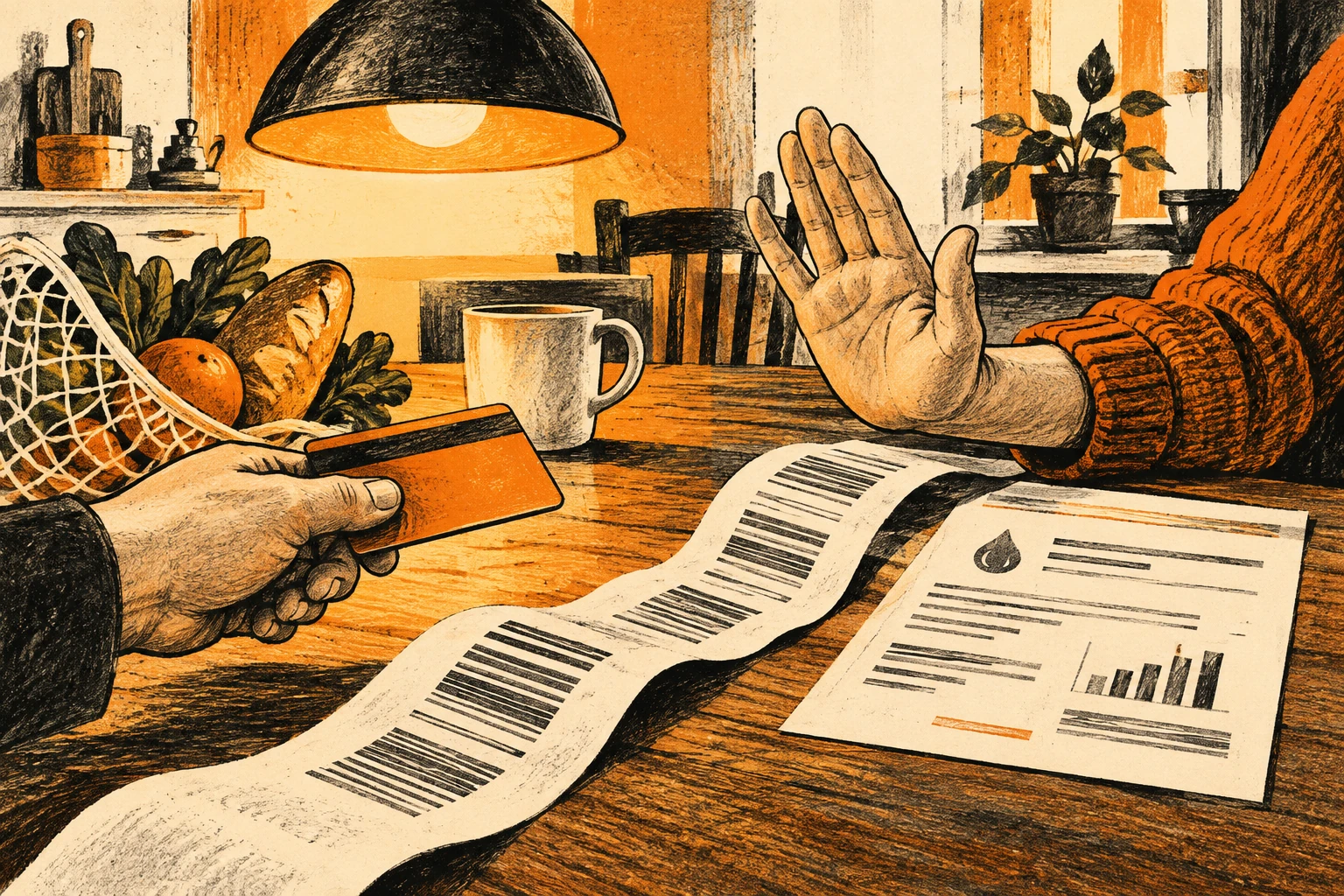
The electricity bill really is late. That makes the call harder to dismiss. Someone says a disconnection crew is on its way and offers a last chance to pay. When your card supposedly fails, they direct you to a nearby shop with a barcode on your phone. A familiar checkout and printed receipt make the payment feel official.
But a retailer processing a barcode does not authenticate the story that brought you there. The cash register can complete a transaction without establishing that the money will reach your utility account. The important check is the recipient and the account record, not the respectability of the shop.
This is a U.S.-focused guide to utility impersonation. Shutoff protections, billing disputes and assistance programs depend on the provider and jurisdiction. If your service is genuinely at risk, contact the actual utility promptly; do not use this article as a reason to ignore a verified notice.
Split the emergency into two questions
First: does the utility’s own record show an overdue balance or pending service action? Second: is this caller authorized to collect it in this way? A real balance does not validate the caller. A fake caller does not eliminate the balance.
That separation matters for people juggling several accounts, a recent move or a small business. You may know that one bill is outstanding without remembering which one. A confident caller can exploit the uncertainty by filling in the missing details.
Use a bill you already have, the utility’s established app or its independently opened website. Check the account number, balance, due date, recent payments and any official notices. If the record is unclear, contact customer service through that route rather than accepting the incoming caller’s explanation.
Use a bill or established utility app.
Confirm the payment method with the actual provider.
A receipt identifies a transaction, not necessarily a utility payment.
What the FTC warning covers
The FTC’s utility-scam guidance describes impersonators demanding immediate payment under a threat of shutoff. It advises contacting the provider independently and warns about payment methods that make recovery difficult. Its guidance is particularly relevant when an unsolicited caller insists on payment immediately rather than letting you verify the account.
A separate Military Consumer warning about utility-payment barcodes addresses the retail-checkout variant. The trusted surroundings of a shop do not establish who benefits from the barcode.
Do not overgeneralize those warnings into “no legitimate utility ever accepts cash through a retail partner.” Providers can have authorized payment networks. The question is whether you independently confirmed this specific route with your actual provider, not whether a barcode payment is technically possible.
How the pressure changes your normal behavior
A shutoff threat targets something concrete: refrigeration, heating, cooling, medical equipment, work or a household with children. The caller does not need to persuade you that electricity matters. They need to persuade you that independent checking is too slow.
An illustrative shop owner might be preparing for the evening rush when a caller threatens immediate disconnection. The owner knows a recent payment was delayed and sends a staff member to a nearby retailer. The staff member sees a normal cashier, completes the transaction and brings back a receipt. Every person has behaved reasonably within the task as presented, yet no one verified the utility account or recipient.
This is not a reported case. It is a workflow example showing why the answer is not simply “be less trusting.” The missing step is an independent account check before someone is delegated to pay.
Before you hand cash to a cashier
Ask what the receipt will identify: utility account credit, payment-network transaction, prepaid balance, gift-card load or something else. If the cashier cannot verify that the payment goes to your utility account, do not treat the barcode’s label as sufficient.
Stop if the caller instructs you to hide the reason for payment, describe it as a personal purchase, avoid mentioning the utility or keep the call connected throughout. Those instructions interfere with other people understanding the transaction. You do not owe the caller secrecy.
| Payment setting | What feels reassuring | What still needs checking |
|---|---|---|
| Familiar retail shop | The cashier and receipt are real | The recipient and purpose of the transaction |
| Utility-branded web page | The colors and logo look right | Whether it is the provider’s authorized site |
| Caller knows your address | The account seems recognized | How the caller obtained the information |
| Card appears to fail | A different payment seems necessary | Whether any real utility payment was attempted |
| Countdown to disconnection | Delay seems dangerous | The actual provider’s account status and process |
If you have a genuine urgent service issue, explain it to the real utility. Ask about its authorized payment methods and any assistance or dispute route that applies. A difficult account situation should be handled with the institution, not through a stranger’s improvised checkout instructions.
If you paid through the barcode
Keep the receipt. It may contain the information needed to identify the payment network or recipient. Contact the retailer’s official customer-service route and the payment provider listed on the genuine receipt, explaining that the payment was induced by utility impersonation.
Ask whether the transaction can be stopped, investigated or disputed. Do not assume that a receipt guarantees a refund, and do not assume that nothing can be done before asking. Timing and payment type matter. Avoid calling a “refund department” number sent by the same caller.
Contact your actual utility separately to confirm whether any payment reached the account. If none did, ask how to address the real balance and preserve the record of your report. Do not let the fraud investigation cause you to miss a genuine account deadline without speaking to the provider.
If the caller also collected card details before sending you to the shop, report that exposure to the card issuer. The retail payment and the card attempt are separate pieces of the incident. A successful cash payment does not mean the earlier card details are safe.
If you only spoke to the caller
Write down what you disclosed. Account number, address, card details, online-account password and one-time banking code have different implications. Give the utility or bank a specific description rather than saying only that you “answered some questions.”
A caller knowing your address does not by itself show that your utility account has been compromised. Nor does the call prove that the provider sold or leaked your data. Avoid turning an unexplained detail into a definite breach claim. Let the institution examine actual account activity.
If you did not provide sensitive information or make a payment, the main tasks may be reporting, blocking the contact and checking the genuine account where needed. You do not need to continue the conversation to gather stronger proof.
A household rule that works under stress
Choose one verified place for utility information: a folder of bills, a bookmarked account page or an established app. Make sure the person who usually answers the phone knows where it is. A safety plan that depends on one unavailable family member is fragile.
Agree that no incoming caller can require a new payment method before the account is checked. This does not prevent genuine bill payment. It simply moves the decision into the provider’s known process.
For relatives who find online accounts difficult, write down the official customer-service contact from a bill and keep it somewhere accessible. Review it when providers change. Avoid giving them a long list of scam scripts to memorize; the scripts can change faster than a simple verification habit.
For a small business, specify who may approve urgent utility payments and how another employee checks the account. If the owner is busy, the default should not be that a junior employee follows an unfamiliar caller’s instructions with company cash.
Do not let a refund story reopen the door
After you challenge the payment, the caller may apologize and offer to refund it. That can feel like progress. Yet a refund that requires another payment, a remote-access session or disclosure of a banking code is a new request requiring independent verification.
Use the provider handling the original transaction, not the person who directed it. Our fake support and refund guide explains how an apparent correction can become another payment. If someone promises to recover all the money for an upfront fee, consult the recovery-scam guide before engaging.
You can cooperate with a legitimate investigation without cooperating with every person who knows the story. Case details are not authentication.
What a useful report contains
Include the time, displayed caller information, claimed utility, account details the caller appeared to know, instructions given, payment location and transaction reference. Keep full financial details out of public posts. If you warn neighbors, describe the request and verification route rather than circulating a working barcode.
Report the impersonation to the utility and relevant consumer-protection or law-enforcement channels. In the United States, the FTC accepts fraud reports. A report helps document the pattern; it does not automatically settle your bill or recover a payment.
The practical finish line is clear: the actual utility account has been checked, exposed payment information has been addressed, and the suspicious caller no longer controls the next action. You may still have a bill to resolve, but you can resolve it with the organization that actually supplies the service.
Sources: FTC utility impersonation guidance and Military Consumer’s barcode-payment warning. The decision tables and household workflow are editorial tools, not promises about refund or shutoff rights.
Found a factual error or a source that has changed?
Send a correction →