Missed jury duty, an arrest threat, and a caller who will not let you hang up
A caller may know the courthouse and sound official. The important check is outside the call, especially when payment is presented as the only way to avoid arrest.
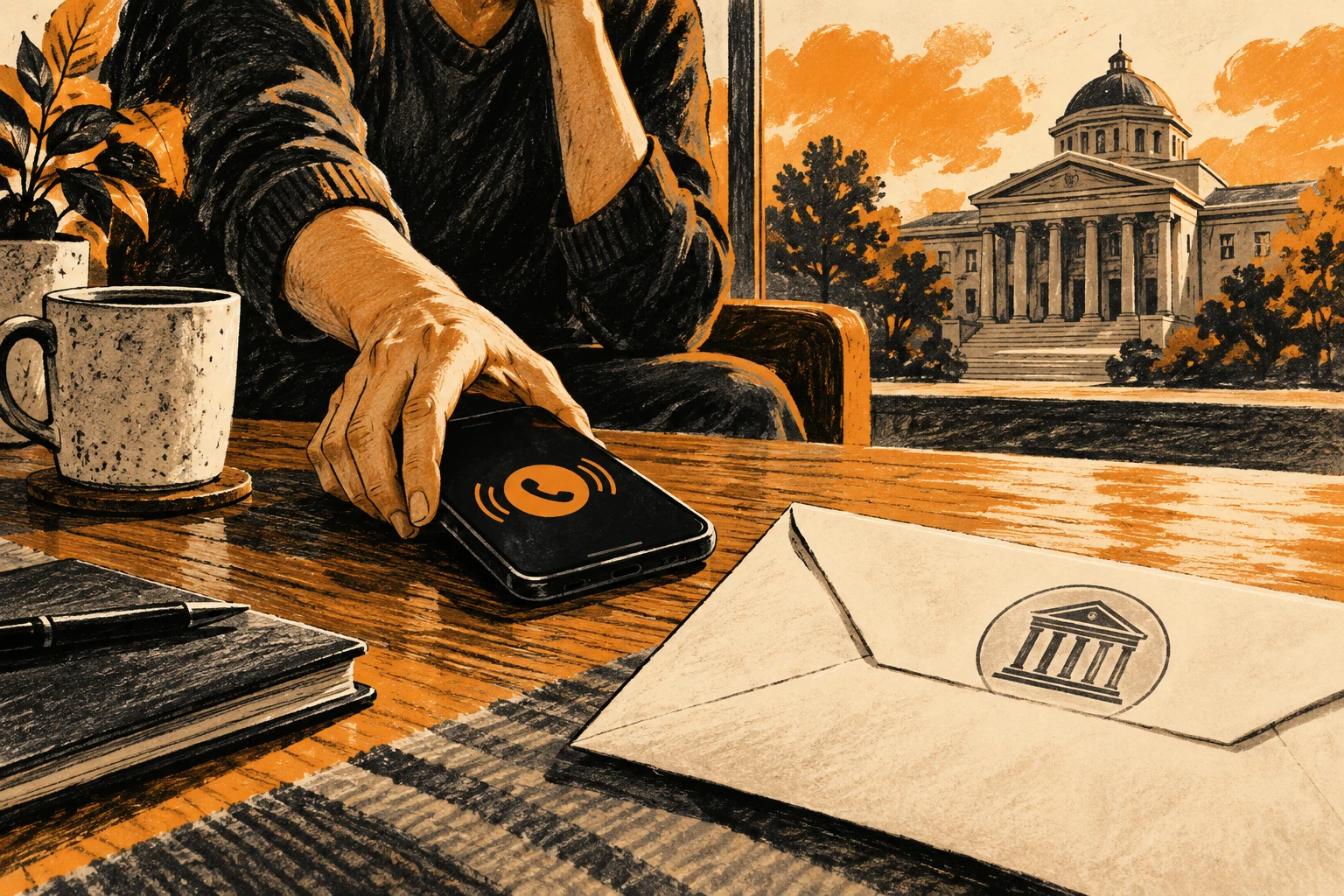
A stranger says you missed jury duty. They know your name, describe a local courthouse and warn that an arrest warrant is already in motion. When you say you never received a summons, they offer a way to fix the problem immediately. You must stay on the line, follow their instructions and pay.
The situation is designed to make hanging up feel like disobeying a court. Ending an unverified call and contacting the actual court is a verification step, not an admission of wrongdoing. A caller’s instructions do not acquire legal authority because they are delivered in an official tone.
If there is a genuine jury-service issue, the court’s independently located clerk or jury office can explain the proper process. This guide does not tell you to ignore real court correspondence. It tells you not to let a threatening caller become your only source of information about it.
The current warning behind this guide
The U.S. District Court for the Eastern District of Texas published a June 2026 warning about renewed jury-duty scam calls. It described spoofed caller identification, threats of arrest and pressure to pay. The court stated that federal courts do not take payment in lieu of arrest and do not serve arrest warrants over the phone.
That is a primary-source warning from a specific federal court. It is not evidence that every suspicious call nationwide comes from the same people. It also does not replace local advice about an actual summons. The practical implication is narrower and stronger: verify the claimed court matter directly rather than paying through the caller’s improvised process.
The U.S. Courts’ 2017 report on false jury-service claims shows that similar authority-and-payment pretexts are longstanding. The older warning is historical context, not a new September 2026 incident.
What to do while the caller is still talking
You do not need to debate the law, expose the caller or obtain permission to leave. A short statement is enough: “I will contact the court directly.” End the call. If you feel too frightened to do that alone, ask a trusted person to sit with you while you use a separate, verified contact route.
Do not follow instructions to drive to a store, cash machine or payment kiosk. Do not read out a code, photograph a payment receipt for the caller, or install an app to complete an alleged court procedure. The fact that you have already answered questions does not oblige you to finish the sequence.
If someone is physically present or you face an immediate threat, prioritize personal safety and contact local emergency services as appropriate. An article cannot assess an unfolding emergency. For an ordinary suspicious phone call, the objective is to regain an independent information channel.
Why accurate details are not authentication
Courthouse addresses, officials’ names and general jury procedures may be publicly available. Personal information can also circulate through directories, social profiles or earlier data exposure. A caller repeating something true about you does not prove that the rest of the story is true.
Caller ID is another weak substitute for independent contact. The displayed number or label may be spoofed. Calling back the number from the recent-call list simply follows the same route the caller presented. Instead, locate the court through its official website or a genuine summons you already had.
Even an apparent coincidence with real jury service does not settle the matter. You might actually have received a summons, recently moved or asked for a postponement. Those facts make it more important to check the official record, not less. A scam can attach itself to a real concern without becoming part of the real process.
Turn the call into a set of checkable claims
| Caller claims | Independent question |
|---|---|
| You missed a summons | Does the court’s jury office have a matter involving you? |
| A named official authorized the call | Can the official office confirm that contact and process? |
| Payment prevents immediate arrest | What does the actual court say about the alleged obligation? |
| You cannot hang up or tell anyone | Is that instruction coming from a verified legal authority or only the caller? |
| A retailer or crypto transfer is required | Is this a recognized court payment route, confirmed independently? |
Do not supply the answers the caller lacks while trying to prove innocence. For example, you need not list every recent address, employer or identity-document number in response to an unverified demand. The genuine court can tell you what information it requires when you reach it through the proper route.
Write down what the caller claimed if you can do so safely. You are recording a story to verify, not agreeing that the story is accurate. That small change in language can reduce the pressure to comply.
The stay-on-the-line instruction matters
Keeping you connected limits the chance to consult another person or check the court. It also lets the caller reinterpret every hesitation: a bank employee’s question becomes an obstacle, a store’s refusal becomes a reason to try another location, and a family member’s concern becomes interference with an official matter.
You can interrupt that sequence without having solved the entire case. Hang up, put the phone down and take a moment to write the next independent action. A caller may ring repeatedly or send messages claiming that disconnection has made things worse. Those messages are still part of the unverified contact, not a new source of authority.
The same control pattern appears in utility shutoff threats and bank safe-account calls. The subject changes, but the practical move is similar: leave the person-controlled channel before deciding about money.
If you actually missed jury duty
Take the real matter seriously. Use the court named on a genuine summons or independently identify the appropriate court for your location. Explain that you received a suspicious call and want to verify your status. Ask about the official procedure, any required documents and how written instructions will be provided.
Do not assume an internet article can tell you the consequences of nonattendance in your jurisdiction. Federal and state systems differ, and individual circumstances matter. If legal advice is needed, use a qualified local professional rather than a referral supplied by the suspicious caller.
Keep the verified conversation separate from the scam report. Record the official contact, date and instructions. If you later receive another threatening call, you can compare its claims with the actual record instead of starting again from panic.
A real administrative problem is often stressful enough to make a quick-payment offer attractive. That emotional relief is exactly why independent checking needs to come first.
If money or identity information already changed hands
Contact the relevant bank or payment provider immediately through its established route. Describe the payment method accurately: card purchase, bank transfer, cash deposit, gift card or cryptocurrency are not interchangeable. Ask what intervention or dispute options exist. Preserve receipts and references, but do not expect a guaranteed reversal.
If you gave identity information, list the types of data disclosed. A name and phone number are different from a Social Security number or an image of an identity document. Seek the appropriate identity-protection guidance and ask affected institutions what action is warranted.
Do not make another payment to obtain a refund, close the supposed warrant or pay a recovery specialist. A person who contacts you afterward and accurately describes the incident may be using information from the same interaction. Familiarity with the story is not proof of official involvement.
If embarrassment is delaying the report, use one factual sentence: “I made a payment after a caller falsely claimed court authority.” The institution needs the transaction details and timing, not a defense of why the call sounded convincing.
Helping a parent, partner or colleague
Start by creating space to stop. “We can check the court together” is more useful than “That is obviously fake.” Someone who feels judged may defend the caller because accepting the alternative means admitting an upsetting loss.
Ask whether payment has occurred, which method was used and whether the caller still has contact. Help find the official court and bank routes. Avoid taking control of the person’s credentials or spreading screenshots containing sensitive details in a family chat.
If the person insists that secrecy is legally required, distinguish the caller’s claim from a verified instruction. You are not encouraging them to ignore a court order; you are helping establish whether an order exists and who issued it.
What to save and where to report
Keep a private chronology with the time, displayed number, claimed office, demanded amount, payment destination and your actions. Do not add conclusions about the caller’s real identity unless you have evidence. A spoofed number may belong to an innocent organization or person.
The Eastern District of Texas warning directs readers to the FTC and local FBI office and provides a route to verify with the clerk. Elsewhere, use the relevant court’s current scam-reporting guidance and appropriate law-enforcement channels. Reporting does not replace the urgent call to a payment provider when money has moved.
The lasting rule is simple: official-sounding pressure is not an official process. Verify the process through the institution itself, then deal with any genuine obligation on its terms—not on a stranger’s countdown.
Found a factual error or a source that has changed?
Send a correction →