A ticket screenshot is not a ticket transfer: buying resale without guessing
Separate proof that a ticket exists from proof that it has reached your account, and check the protections before paying a stranger.
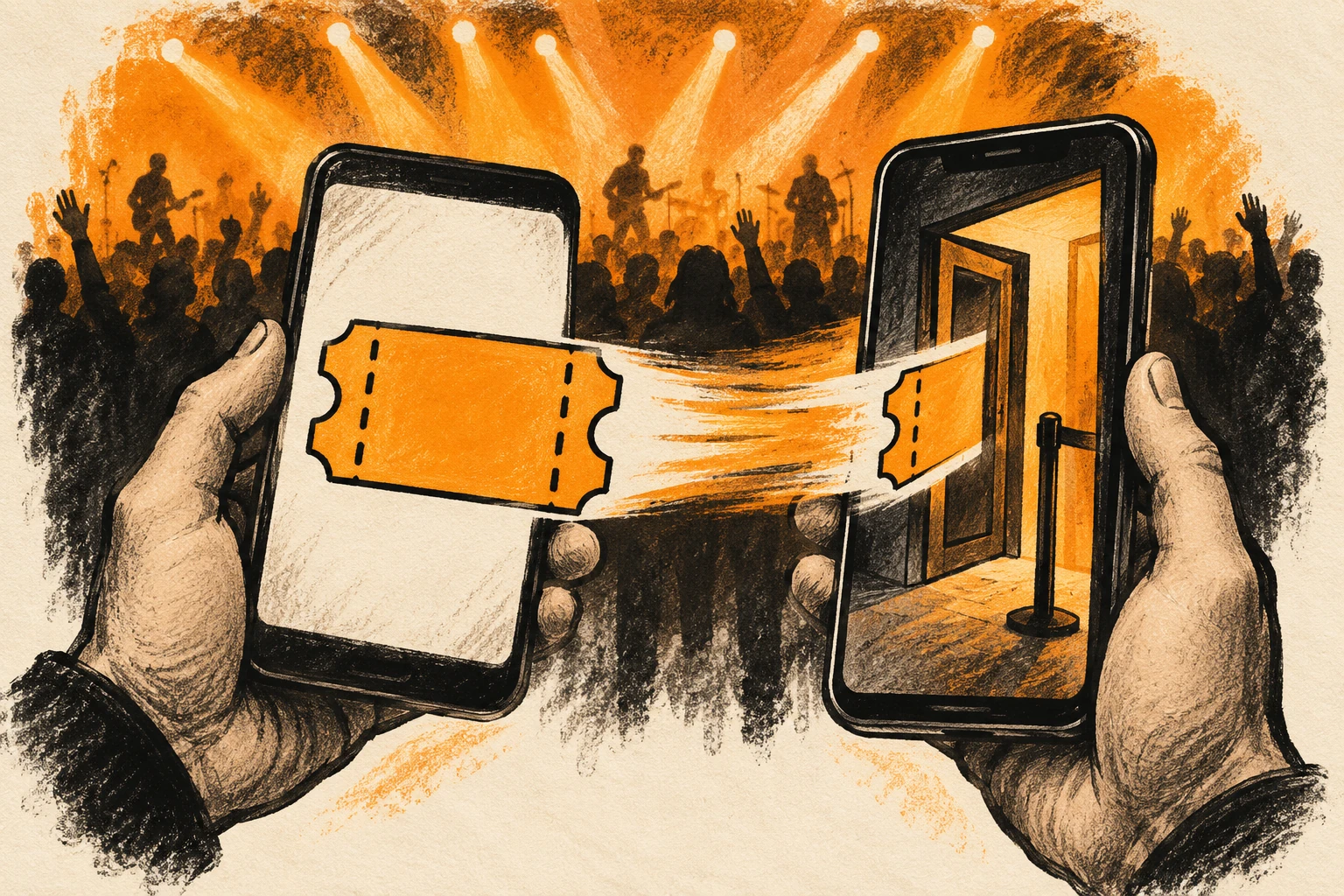
The seller has everything you expected to see: a seat number, an order confirmation and a screenshot with the right artist’s name. They are friendly, apparently disappointed to miss the show, and willing to send a screen recording if that helps. What they have not done is put a usable ticket into the account or delivery method the venue recognizes.
Evidence that somebody can display a ticket is not the same as ownership, transfer or valid entry. Those are separate stages. A good buying decision follows the actual ticketing system rather than collecting increasingly elaborate pictures of a seller’s phone.
This guide uses Ticketmaster’s mobile-ticket documentation as a concrete example. Other ticketing companies, venues and events have different rules, including restrictions on transfer. Check the issuer for your exact event. Do not apply one platform’s mobile-ticket instructions to every paper ticket, PDF or festival wristband.
Three things you are trying to establish
Does the issuer recognize this ticket and delivery format?
Has the ticket reached the account you control?
What happens if the transaction goes wrong?
A screenshot mainly addresses appearance. A transfer through the issuer addresses control in that issuer’s system. Purchase protection addresses some potential failures, subject to terms, exclusions and deadlines. None should be substituted for another.
A legitimate seller may be unable to transfer a ticket until the event opens that feature. That limitation does not make the seller a criminal. It also does not make an advance payment safe. You still have to decide whether the transaction’s protections are adequate while delivery remains uncertain.
The useful question is therefore not “Can you prove you are a nice person?” It is “What documented process moves this specific ticket to me, and what recourse exists if that process fails?”
Why a moving picture is still not a completed transfer
A screen recording may feel stronger than a static screenshot because it shows someone navigating an account. But you are still observing a representation supplied by the seller. You cannot establish from the recording alone that the account belongs to them, that the ticket remains valid, or that it will be transferred exclusively to you.
Ticketmaster’s mobile-ticket guidance describes transfer as an account-based process in which the recipient accepts the ticket. Its instructions say screenshots are not a replacement for presenting the supported mobile ticket at entry. That is a platform rule, not an invitation to judge authenticity by visual animation.
Ticketmaster also explains that some mobile barcodes refresh. A captured image therefore cannot be assumed to preserve a usable credential. You do not need to reverse-engineer the barcode. You need to use the delivery and entry methods the issuer actually supports.
A seller offering more and more screenshots can distract from the missing transaction. The right response is not to request a fourth version with today’s date written beside it. It is to return to the official transfer process and the purchase protections.
A pre-payment checklist that changes the decision
Before discussing payment, identify the official ticketing provider from the venue or event’s own site. Confirm the date, location, ticket type and whether the proposed resale or transfer is permitted. A valid ticket for the wrong date or a restricted category can still be unusable for your plans.
Next, read the resale platform’s applicable guarantee, if there is one. Does it cover the event, delivery method and payment route you are considering? What evidence would you need, and what are the deadlines? A seller’s statement that “you can dispute it” is not a substitute for the provider’s actual terms.
Then keep the transaction inside the protected process you chose. Moving to an unrelated chat or payment method can change the protections even if the conversation began on a reputable marketplace. The marketplace’s logo does not travel with your money.
| Seller’s evidence | What it may show | What remains unresolved |
|---|---|---|
| Order email | Someone has access to a confirmation | Current validity and authority to resell |
| Ticket screenshot | The appearance of a ticket | A supported entry credential |
| Screen recording | A displayed account or image sequence | Exclusive delivery and continuing validity |
| Accepted issuer transfer | A ticket record in your own account | Event restrictions and the transaction’s dispute terms |
| Marketplace guarantee | Defined contractual protections | Whether your purchase follows all required conditions |
Do not send identity documents to a stranger as a substitute for this process. Exchanging passport pictures can expose both parties, and a copied document is not reliable proof that the person in the conversation owns the ticket.
Accepting a transfer without following a fake login
A transfer notification can itself be imitated. When possible, open the issuer’s known app or website independently and inspect your account there. Follow the issuer’s official instructions for accepting the transfer. If you need to resolve a problem, contact the issuer through its help center rather than a number embedded in a seller’s screenshot.
Check the event and seats after acceptance. If multiple tickets are involved, count them. A seller may have sent only one of the pair you discussed, or the tickets may be for another session. Save the order and transfer records privately.
Do not publish barcodes, full order references or personal account details when asking a forum for help. A public post should describe the issue without exposing an entry credential or information that could support impersonation. If the platform needs the record, provide it through its verified support channel.
A ticket visible in your account is more meaningful than a screenshot, but avoid turning that into an unlimited promise. Event rules, cancellations, fraud investigations and platform terms can still matter. For an expensive purchase, the transaction’s official protections remain important.
The urgency problem near showtime
Last-minute buyers face real constraints: friends are already traveling, nearby hotels are booked, and prices may rise. A scammer does not need to invent urgency when the event supplies it. That is why deciding your payment boundary before entering a resale chat helps.
Consider an illustrative buyer whose friends are inside the venue. A seller says the transfer button will work after a small “release fee.” The buyer has already paid, so the extra amount feels like the fastest way to rescue the evening. But the new charge is a new decision, not an obligation created by the first payment.
Pause and verify the claimed fee with the issuer or marketplace. Do not keep paying because you have already invested time or money. A legitimate problem should be explainable through the official service, not only by the person demanding the next transfer.
If verification cannot be completed, walking away may mean missing the show. That is disappointing, but it is a different loss from sending additional money without improving the evidence.
If you paid and nothing arrived
Contact the payment provider and marketplace promptly through their official routes. Describe what was promised, how payment was made, what was delivered and whether a transfer appears in your issuer account. Ask about the relevant dispute process; do not assume that every payment type has the same protection.
Save the listing, messages, recipient details, receipt and any promised delivery deadline. Keep the evidence in chronological order. If the seller changes the story from “instant transfer” to “pay another fee,” preserve that change as well.
Do not threaten to expose private information or recruit strangers to confront the seller. You may not know whether the displayed account or identity belongs to the person taking the money. Accurate reports to the platform and appropriate authorities are more useful than public accusations based on a profile picture.
Be especially cautious of people who appear after you post about the loss and offer special access to ticket support or guaranteed recovery. Our recovery-scam guide explains why a second payment can follow the first disappointment.
Buying for a group adds a practical check
Agree before purchase who is paying, which seats are acceptable and where the tickets will be held. Do not let one person’s optimistic reading of a chat become the whole group’s verification process. Ask them to show the supported ticket record, not to circulate the barcode.
Use the issuer’s official transfer feature when individual group members need their own tickets. If someone arrives separately, plan that handoff before the crowd and weak connectivity make account access difficult. Follow the venue’s guidance for offline access or wallet storage rather than improvising with screenshots.
A dead phone, delayed barcode or unavailable transfer button can be a genuine technical or event-policy issue. The distinction is whether the solution comes through the issuer’s documented process, not whether a seller can explain it confidently in a message.
The decision in one sentence
Buy the recognized delivery process and its protections, not the seller’s collection of reassuring images. That principle also appears in rental-deposit fraud, where photographs and documents can describe a real property without proving the sender’s authority over it.
Sources: Ticketmaster mobile tickets and transfer guidance and its explanation of moving barcodes. Check the current event-specific rules before purchase; this article does not guarantee entry or reimbursement.
Found a factual error or a source that has changed?
Send a correction →