Before you send a rental deposit, verify who can actually rent you the home
A real address, a polished lease and even a viewing can leave the central question unanswered: does this person have authority to rent the property?
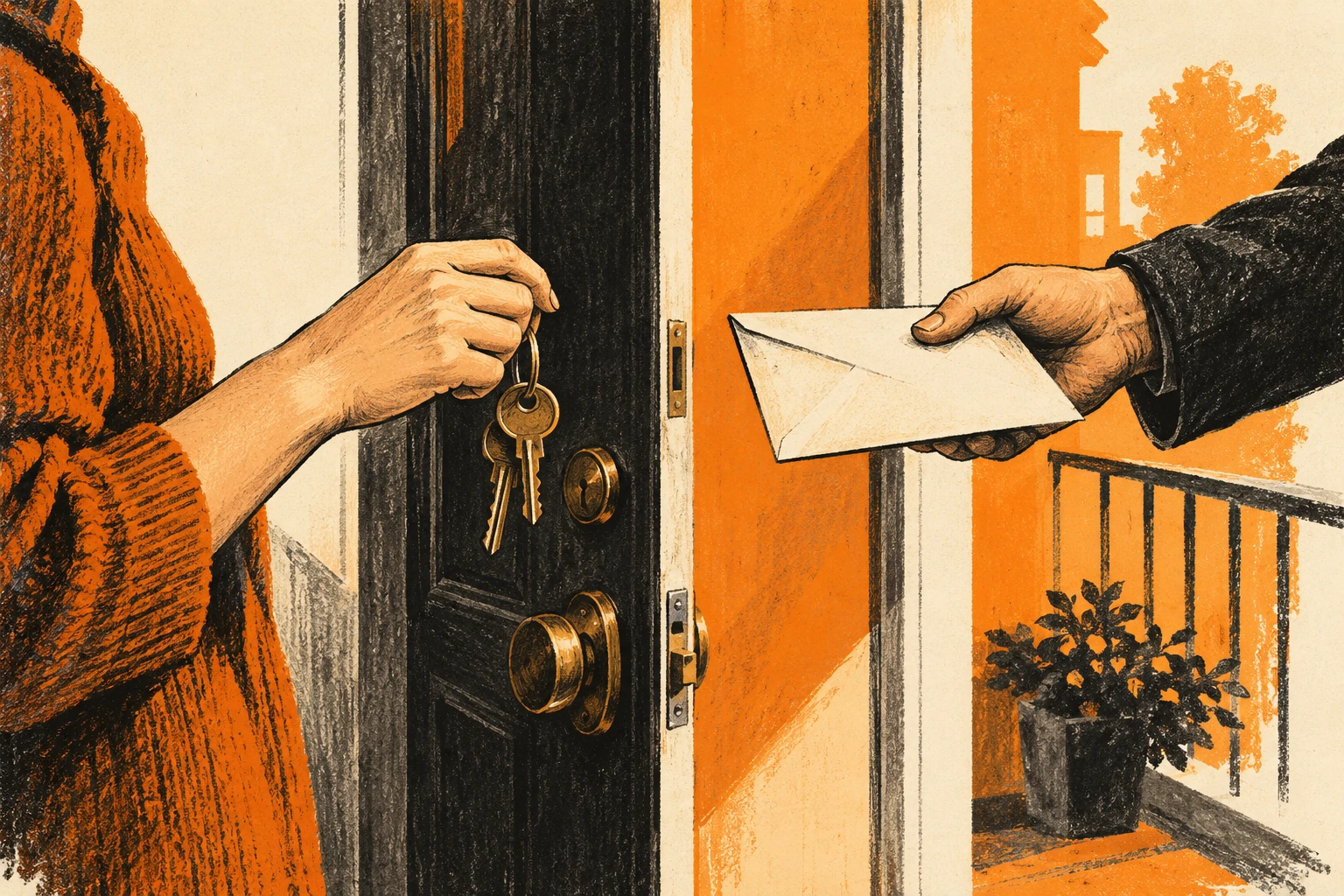
An apartment can be real while the offer is not. The photographs may belong to the actual home. The address may appear in public records. You might even be able to see inside. None of those facts, on its own, establishes that the person collecting a deposit is entitled to rent it to you.
That is the central problem in rental impersonation: evidence about a property is quietly substituted for evidence about the person controlling the transaction. A renter under pressure understandably focuses on price, location and availability. The missing question is who has authority to accept an application, sign the lease and receive the money.
This guide is a verification workflow, not a statement about which fees are lawful in your area. Application charges, deposits, tenant protections and required disclosures vary. Check local rules through a housing authority, consumer agency or qualified adviser when those rights matter.
Four claims hidden inside one listing
A rental advertisement usually asks you to accept several propositions at once. The property exists. It is available for rent. The person speaking to you represents the owner or authorized manager. The payment destination belongs to that legitimate transaction. A convincing answer to one does not settle the others.
Does the home exist and match the description?
Who is entitled to offer it?
Why is this recipient collecting this charge?
Imagine an illustrative renter who finds a desirable flat at a competitive price. The contact sends a real floor plan and a professional lease. A self-guided viewing works. When the deposit request arrives, the renter feels the difficult checks are finished. Yet the showing could have been arranged through another service, the lease copied, and the recipient unrelated to the owner. The walkthrough answered “what is inside?” but not “who may rent it?”
The FTC’s rental-listing guidance explicitly describes copied listings and warns that even a tour does not guarantee the legitimacy or availability of a rental. That warning supports a more useful test than simply demanding a video call: independently connect the person, the property and the payment.
Build that connection before sending a deposit
Start by identifying the management company or owner through a route outside the conversation. A management company’s established website, a building’s independently sourced contact information or relevant property records can provide leads. Public ownership records are not a complete answer: authorized agents, company structures and record delays can complicate them. Use them to ask better questions, not to make unsupported accusations.
Contact the independently identified organization and ask whether the specific unit is available, whether the named person represents it, and how applications and payments are normally handled. Do not use a phone number supplied only by the person whose authority you are checking. That would create a circular test.
If there is an agent, verify the relationship rather than just the agent’s name. An identity document image can be stolen. A business registration can describe a real company that the sender does not represent. A professional-looking email signature can be typed by anyone. The meaningful evidence is confirmation through the organization you reached independently.
For a private landlord, ask how their authority can be checked in the local system and review the proposed agreement carefully. If you are uncertain about the documentation, seek local tenant advice before transferring a substantial sum. The answer should not depend on accepting “trust me” under a deadline.
A useful document review, not a font inspection
| Item | What to compare | What it cannot prove alone |
|---|---|---|
| Listing | Address, unit, terms and contact details against independent records | The advertiser controls the property |
| Lease | Parties, exact premises, dates, charges and payment instructions | The signer is who they claim to be |
| Viewing | Actual condition and access, plus who arranged it | The viewer’s contact has rental authority |
| Payment request | Recipient, amount, purpose and documented terms | The transaction is safe because the bank accepts it |
Look for inconsistencies, but avoid treating grammatical quality as a security test. A legitimate small landlord may have an imperfect document; a scammer can copy a polished one. What matters is whether the facts join up and whether an independent party can confirm the authority behind the offer.
If the recipient name differs from the lease party, ask why and verify the explanation separately. There may be a legitimate managing entity, but a plausible explanation in the same chat is not independent confirmation. Do not let a person turn your reasonable question into proof that you are a difficult applicant.
The remote renter’s problem
Moving across the country creates a genuine disadvantage: you cannot easily visit, the start date is fixed, and temporary accommodation may be expensive. A scammer can exploit those constraints without inventing them. “Someone else will take it tonight” works because losing an apartment really can disrupt a move.
Where possible, ask a trusted local person to view and verify through the genuine manager. If that is not possible, a live viewing can help assess the property, but it should be combined with independent authority checks. A video alone cannot establish legal control, and a recorded tour offers even less certainty.
Consider whether a short, verified temporary stay gives you a safer route to a longer lease. That option has a real cost and will not fit everyone. The point is to compare it with the cost of losing a deposit and arriving without accommodation, rather than treating immediate transfer as the only possible path.
Write your non-negotiable checks before you start messaging listings. Under pressure, a prewritten rule such as “I will not send a deposit until the manager confirms the recipient through its established contact route” is easier to follow than improvising a judgment while someone counts down a deadline.
Applications can expose more than money
Rental screening legitimately involves sensitive information in many places. That does not mean every person who advertises a room should receive your identity documents, bank statements and employment records immediately. Verify who will process the application, why the data is required and which submission channel is official.
Be especially careful when the contact directs you to an unfamiliar credit-report or identity-check site as a condition of viewing. Check the service and the arrangement independently. A subscription or data-collection trap can exist even if no deposit is requested. The FTC’s July 2024 rental-scam advice is a useful starting point for examining pressure to pay before meaningful verification.
Send only information required for the legitimate process. Ask whether unnecessary fields can be redacted and use the approved secure channel. Do not publish documents in a community group to ask whether a landlord looks suspicious; those documents may expose you or an unrelated person whose identity has been copied.
If you have already paid
Contact the payment provider promptly through its official route. State that you suspect rental fraud, provide the recipient and transaction details, and ask what options exist. Do not promise yourself or a family member that a recall, dispute or police report guarantees recovery. The available remedies depend on the payment method and circumstances.
Preserve the listing, conversation, lease, payment instructions and any viewing details. Note when the advertisement disappeared or the contact changed, but do not keep sending money to maintain communication. A new “key release,” “insurance” or “refund processing” charge should not be accepted merely because you already paid the first amount.
If identity documents were shared, treat that exposure separately from the lost deposit. Seek the relevant identity-protection guidance for your jurisdiction and document which records were sent. Replacing a card will not address a copied passport or national identification number.
Report the listing to the platform and, where appropriate, local law enforcement or the consumer authority. Use accurate language: “I paid this recipient after this representation” is stronger than an unsupported claim about who owns a social profile. Be cautious of strangers who contact you afterward offering to retrieve the money. See our recovery-scam guide before engaging with any such offer.
A message you can send without negotiating away the check
“Before I transfer a deposit, I need to confirm the unit, your authority to rent it, the agreement and the payment recipient through the property’s independently verified contact route. Please send the written terms. I will not use a payment method or verification service until that check is complete.”
This is an editorial example, not a legal notice. A legitimate landlord may have their own process and may not reserve the property for you. The value of the message is that it makes your boundary clear without arguing about whether the person sounds trustworthy.
The final decision
Do not ask only whether the apartment is attractive or the contact is friendly. Ask whether you can explain the chain from property to authorized representative to agreement to recipient using evidence that did not all come from the same stranger. If a link is missing, the next step is verification, not payment.
For another situation where an authentic-looking record fails to prove ownership, read ticket screenshots versus ticket transfers. Sources for this guide are the FTC’s rental-listing overview and its advice on avoiding rental scams. Local housing law and the specific contract remain essential to any individual dispute.
Found a factual error or a source that has changed?
Send a correction →