An unpaid toll text when you have no toll account: what to check before paying
Separate a possible road charge from an unverified text, then respond according to what you actually shared.
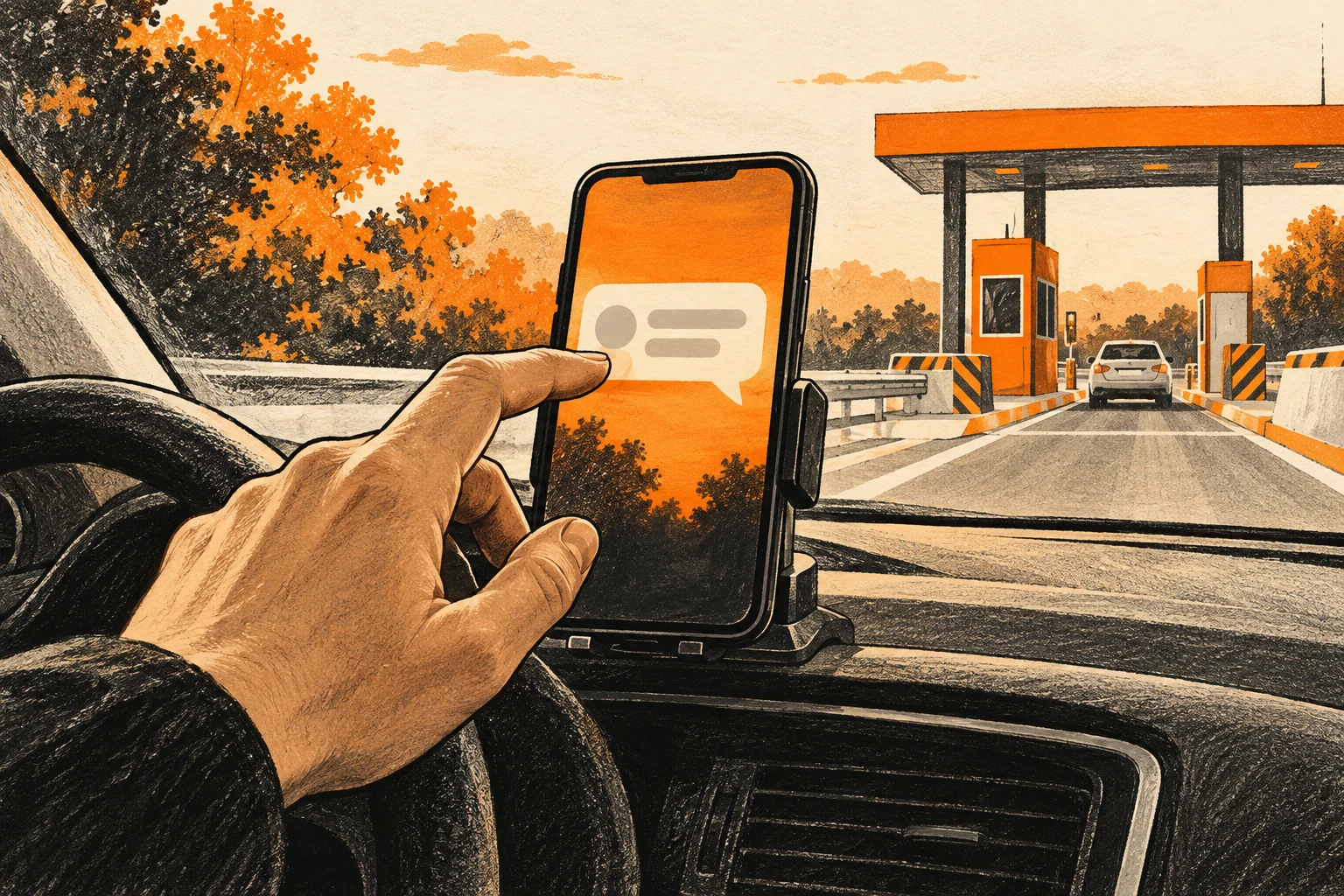
The text arrives while you are doing something else. A small toll balance has supposedly become urgent, and a link promises to settle it before another fee appears. You do not remember using that road. Perhaps you have never opened a toll account. Yet the amount is small enough that paying feels easier than investigating.
You have two separate questions: whether a real road charge exists, and whether this sender is entitled to collect it. A yes to the first does not answer the second. Equally, a fraudulent text does not erase a genuine bill that happens to exist elsewhere. Keeping those questions apart is the most useful starting point.
You owe a road charge and must act now.
Entering payment or identity details through the message.
Find the actual road operator independently.
First, decide what actually happened
There is an important difference between receiving a message, visiting a page, entering information, and approving a transaction. Do not compress all four into “I got hacked.” That description makes it harder to choose a proportionate response, especially when you are anxious.
Write down your last action in ordinary language. For example: “I opened the link, saw a payment form, and closed it,” or “I entered my debit card and then typed a code from my bank.” These are different incidents. You do not need to understand the website’s technical design to tell a bank or support team which one happened.
| Your last action | What to do next | What not to assume |
|---|---|---|
| Received or read the text | Check any plausible charge independently; report the message | Receiving it proves an account exists |
| Opened a page only | Close it; check whether anything downloaded or requested permission | A click alone proves all passwords were stolen |
| Entered a card or bank login | Contact the relevant institution through its own app or known number | A failed payment means the details were not captured |
| Entered an identity document number | Explain exactly what was exposed and consider identity-protection steps | Card replacement resolves identity exposure |
| Approved a code or banking prompt | Tell the institution the prompt’s wording and time | The code necessarily related to the tiny displayed toll |
This is a triage tool, not a remote diagnosis. Unexpected downloads, newly installed apps, account alerts or unfamiliar transactions are additional facts worth reporting. Conversely, an alarming message from the suspicious site is not independent evidence about the state of your phone.
No toll account does not settle the question
Not having an account is a useful clue, but it is not a universal test. Some roads use plate-based billing. A borrowed vehicle, rental car, recent move or trip can also complicate your recollection. The right response is not to invent a rule that every genuine toll requires a pre-existing account. It is to check the actual operator’s process.
Start with the location the text claims, then compare it with your recent travel. A road hundreds of miles away that you have never visited gives you little reason to engage. If you did drive there, use an established app, a previous legitimate statement, or the transport authority’s official website. Avoid treating a sponsored search result as confirmation merely because it repeats the operator’s name.
For a rental vehicle, check your rental agreement and contact the rental company through the booking record you already have. Administrative charges and toll collection arrangements vary. Do not pay an unfamiliar collector merely because the text supplies a vehicle description that sounds plausible. Ask the verified company to explain the billing route and the specific journey.
The FTC’s January 2025 toll-text warning describes messages impersonating toll agencies and directing people toward payment-information collection. Its practical distinction is independent contact: checking the operator through a known route, not through the supplied message. That warning is background evidence of the pattern, not confirmation that any particular text you received belongs to a named campaign.
What the small amount is doing
A modest balance lowers the perceived cost of being wrong. You may think, “Even if I cannot remember the trip, a few dollars will make this disappear.” But the decision is not limited to those few dollars. A form can ask for a complete card, billing address, date of birth or additional authentication.
Consider an illustrative example. A driver sees a charge smaller than the price of lunch. The first card appears to fail, so they try a second. A verification prompt follows. The driver now thinks they have made repeated attempts to pay one tiny bill, while the information exposed may involve two cards and a separate account authorization. This example is not a reported case; it shows why the visible price is a poor measure of the exposure.
That same low-friction logic appears in parcel redelivery fee messages. The question to ask is not “Can I afford the fee?” but “Why am I handing this particular site these particular details?” A real obligation should remain verifiable when you leave the sender’s path.
If you already entered payment information
Use your bank’s own app, the number printed on your card, or another established contact route. Describe the exposure plainly. If you have a temporary card-lock control, it can be a useful immediate precaution while you contact the issuer, but it is not a substitute for that conversation. Ask what protection or replacement is appropriate for the actual account and transaction.
Do not wait for the fake site to show a successful payment. Information typed into a page can potentially be collected before a final confirmation. You cannot determine from a spinner, error message or declined screen whether the details were retained. Tell the issuer which cards you entered, including cards that appeared to fail.
If you used online-banking credentials, explain that separately. If you approved an authentication message, preserve its exact wording without sharing the secret code publicly. It may help the institution distinguish an attempted purchase from another action. Do not authorize a second prompt because an incoming caller says the first one needs to be cancelled.
An unsolicited “fraud team” call after the incident deserves its own verification. A caller who knows the fake toll amount may simply know what you typed. Our guide to safe-account bank calls explains why moving money at a caller’s direction is not a normal way to make an account safe.
Check the real bill without extending the incident
Once payment exposure is being addressed, return to the possible road charge through an independent channel. Record the operator’s answer, any legitimate reference number and the date. If a balance exists, resolve it only through the operator’s verified payment options. Keep the real receipt separate from screenshots of the suspicious message.
You do not need to prove the sender’s identity before protecting yourself. Investigating phone-number ownership, replying to challenge the sender, or following the link again to gather screenshots can consume attention without answering the practical questions. Save what you already have. Avoid further interaction with the suspicious page.
The FBI’s April 2024 IC3 advisory documents toll-related smishing and recommends checking the legitimate toll service. The date matters: this is an established pattern, not evidence that a specific operator suffered a new breach today. A message can be broadly distributed without the sender knowing that you recently drove anywhere.
A short record that will actually help
Create one note containing the sender as displayed, the time received, the claimed agency, the amount, and what you entered. Add the bank’s case reference if one is created. Keep screenshots private because they may contain personal details or a live malicious link. If you share a warning with relatives, obscure those details and describe the behavior instead of forwarding the clickable message.
For U.S. reporting, you can use your messaging app’s spam-report option and, where supported, forward the text to 7726. Fraud reports can also go through the FTC or IC3. Reporting helps document the pattern; it does not replace contacting the institution that can restrict a card or examine a payment.
If someone else in your household received the text, begin with what they did, not why they believed it. “Which information did the page ask for?” produces a more useful answer than “How could you fall for that?” Shame delays the conversation that could limit the damage.
The rule to keep for the next message
You do not have to memorize every toll agency’s wording. Use a simpler boundary: an unsolicited demand may tell you what to check, but it does not get to choose where you pay. That works whether the text is clumsy or polished, whether the amount is tiny or frightening, and whether a genuine toll happens to be outstanding.
Before returning to your day, confirm that the message is no longer your route into the account, any exposed payment details have been discussed with the issuer, and the real road charge has been checked where necessary. Those are observable actions. They are more useful than trying to feel completely certain about the sender.
Sources and scope
This guide focuses on U.S. toll-text scenarios. Operator billing rules, dispute rights and reporting arrangements differ by location. The decision table and worked example are editorial explanations, not a finding about an individual account.
Found a factual error or a source that has changed?
Send a correction →