A ‘Customs Fee’ Text for Your Holiday Order: Who Really Collects
A text says your overseas package is held at customs until you pay. How real duties reach you, how to check the order, and what to do if you paid the fee.

A text says your overseas holiday order is held at customs until you pay a small fee. Real duties exist, which is why this works. The question is who actually collects them, and the answer is never a link in a message from a number you do not know.
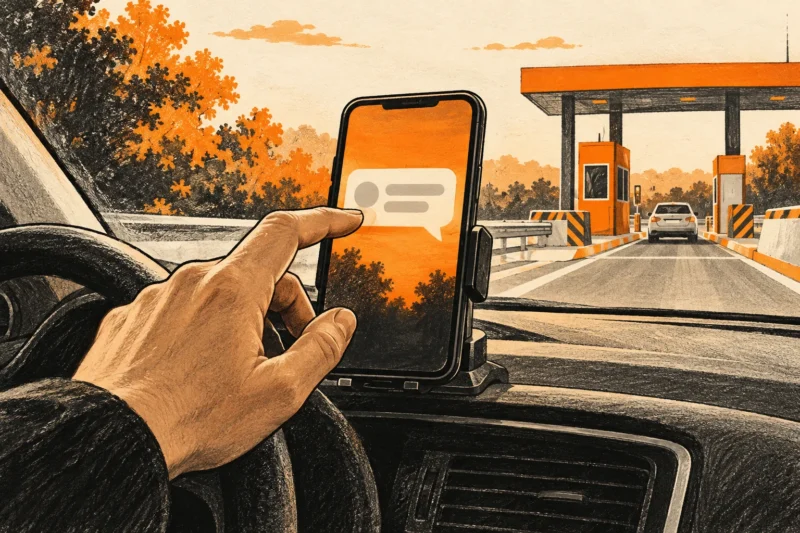
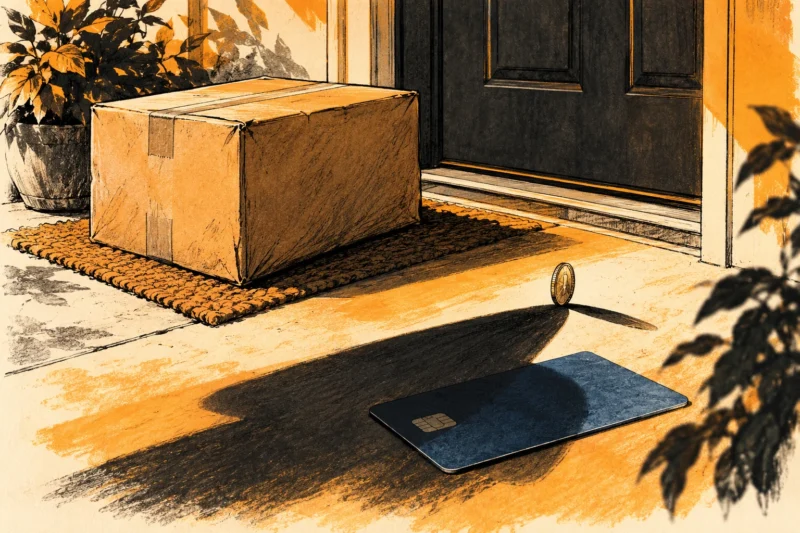
You ordered a gift from abroad, or you think you did. Then: “Your parcel is held by customs. Pay $2.99 to release it.” The amount is low enough to pay without thinking, and the payment page asks for a card number and a billing address, sometimes more.
Duties on imports are real. That is the problem with dismissing every such message at a glance. What helps is knowing how duties actually reach you, so that the route in the message can be compared to the real ones.
How real duties and fees reach you
| How the package traveled | How duty is collected | Source |
|---|---|---|
| International mail (postal service) | You pay when the package arrives at your local post office, to the mail carrier and/or at the post office. CBP charges a processing fee only if duty is owed. The addressee is told about dutiable mail on a delivery notice, and the delivery employee collects duty and gives a receipt | CBP, USPS International Mail Manual |
| Express carrier (courier) | The carrier’s broker handles the paperwork and either bills you for duty it paid on your behalf or requires payment on delivery | CBP |
| Seller included duties at checkout | Nothing more should be due, but only your order confirmation can show whether the price included duty. A price with shipping and handling generally does not include duty | CBP |
The CBP page on internet purchases says the importer is responsible for paying duty owed, and that CBP holds the importer, not the seller, liable. That is why a legitimate charge can arrive after an order, and why a small fee is not automatically fake.
What those sources do not describe is a government agency texting you a payment link. The USPS manual’s section on dutiable mail at delivery describes a paper notice and collection by the delivery employee, with a receipt on CBP Form 3419ALT. A CBP bulletin from April 3, 2024 says plainly: “CBP will never solicit payment by phone.” We did not find a CBP statement that addresses text messages specifically, so we do not claim one; we rely on the described process.
Find the tracking number from your order confirmation, and enter it on the carrier’s own website (typed in, not tapped from the text). The FTC’s advice on delivery texts is to verify delivery information independently, through the website or account where you placed the order.
What the text is built to do
The FTC’s alert on texts that appear to be from USPS says such messages usually contain a link to a look-alike site that asks for personal or financial information, which goes straight to the scammer. A customs fee is a variation: a plausible reason, a trivial amount and an urgent deadline.
The amount is a feature. A $2.99 fee is not worth a phone call, but the card and address entered to pay it are worth more. If you want the longer treatment of small delivery fees, our guides on the delivery voicemail fee and the redelivery fee and card details cover the domestic versions.
If you paid
- Call the card issuer now, using the number on the back. Say that you paid a fee on a page reached from a text, and ask for the card to be replaced. Ask about the charge.
- Watch the statement for the next weeks. A card entered on a copy site may be used again for other purchases; report any you do not recognize.
- Dispute the fee if you believe it was fraudulent. For a credit card, the CFPB says to send a written billing error notice within 60 calendar days after the charge appeared on your statement, in addition to calling.
- Check whether there is a real package. If your order is genuine, track it through the seller and carrier, because a real duty bill can coexist with the fake text.
If you entered a password, change it and any reuse. If you gave an ID number or Social Security number, use IdentityTheft.gov for the steps matched to that exposure.
If you did not order anything
Then no customs fee is owed by you. Do not tap the link, do not reply, and use your phone’s report-junk option or forward the text to 7726, as the FTC suggests, then report it at ReportFraud.ftc.gov.
If the duty is real but the amount surprises you
Ask the carrier or post office what the charge covers and for the paperwork. CBP’s page warns that giving misleading information about an item’s nature or value is illegal and that the importer bears the consequences, so do not agree to a seller’s offer to understate a value to cut duty. If a surprise bill is large, compare it with your order total before paying.
Three messages, three checks
| The message says | The check |
|---|---|
| “Your parcel is held by customs, pay $2.99.” You did order from abroad | Look up the tracking number on the carrier’s site. If duty is owed, the carrier or post office will show it or collect it in the ways described above |
| Same text, but you ordered nothing from abroad | No fee is owed by you. It may be a gift someone else sent; ask them, rather than the text |
| A call, not a text, from “CBP” about a package in your name | CBP’s bulletin says it will never solicit payment by phone and advises hanging up and not calling back a number from caller ID or a message |
If someone else ordered for you
Holiday gifts are often ordered by family members who list your address. A text about “your” parcel might genuinely be tied to something you did not order. Ask the sender for the tracking number and check it on the carrier’s website yourself, rather than forwarding the text or tapping the link to see what it is.
Sources
- CBP, Internet purchases
- USPS International Mail Manual, 713 Treatment of Dutiable Mail at Delivery Office
- CBP Cargo Systems Messaging Service bulletin on scammers impersonating CBP (April 3, 2024)
- FTC consumer alert, “Think that text message is from USPS? It could be a scam” (April 23, 2025)
Found a factual error or a source that has changed?
Send a correction →