Someone Threatens to Share Your Intimate Images? A Safe Sextortion Response Plan
A threat to expose private images can make everything feel urgent. This calm, practical guide explains what to preserve, how to report the account, what image-removal tools can and cannot do, and when to involve a trusted person or law enforcement.
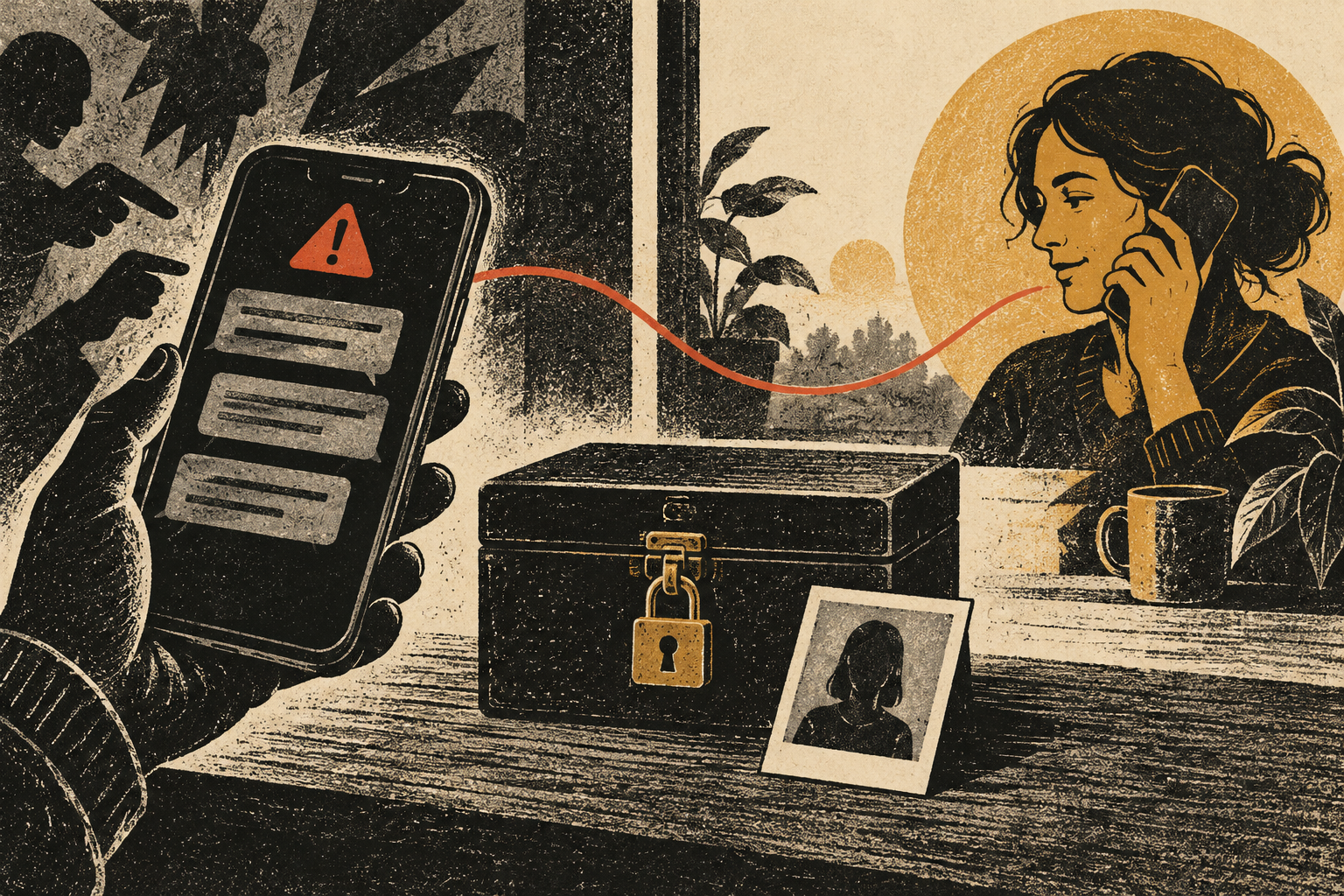
A message says a private photo will be sent to your family, classmates, colleagues, or followers unless you pay. The sender may show a screenshot, a contact list, or an image that looks real. They may give you minutes to decide. That pressure is part of the threat: fear and isolation make it harder to pause and ask for help.
If this is happening now: do not pay or send more images. Preserve the message and account details without forwarding intimate material, report the account to the platform, and tell one trusted person. If you are under 18—or any image was made when you were under 18—tell a trusted adult immediately and use the child-safety reporting route described below. You do not have to handle this alone.
“Sextortion” is a form of blackmail involving actual or threatened intimate images. The image might have been shared consensually with one person, stolen from an account, altered, generated, or never existed at all. A threat can still be frightening and serious even when the sender is bluffing. This guide focuses on protecting the person being targeted, not on judging how an image was created or shared.
The first 15 minutes: make the next move safer
- Pause the conversation. Do not bargain, pay, threaten the sender, or send another image to “prove” anything. Payment does not guarantee deletion; the sender can demand more or continue contacting you. If you have already paid, do not blame yourself. Save the transaction details and contact the payment provider promptly to ask whether the transfer can be stopped or disputed.
- Preserve evidence safely. Save the account username, profile URL, phone number or email, timestamps, payment instructions, and the exact threat. Use the platform’s report flow and, where safe, capture the text of the conversation. Do not repost, forward, or upload intimate imagery as evidence. If the threatened image depicts a minor, do not download, copy, or circulate it; ask a trusted adult or law enforcement how to preserve the report safely.
- Bring in a person you trust. Tell a parent or guardian, trusted friend, school counselor, workplace support contact, or another person who will stay calm. You can use a short sentence: “Someone is threatening to share a private image. I need help reporting it and securing my accounts.” If the first person dismisses you, choose another.
- Report the account, then limit contact. Report the profile and messages to the platform for blackmail or non-consensual intimate imagery. After preserving the relevant details, block or restrict the account if doing so feels safe. Avoid warning the sender about steps you are taking.
These steps are not a guarantee that an image will never be shared. They reduce the sender’s leverage, preserve useful details, and help you get support without escalating the exchange.
What the sender may be trying to make you believe
| Pressure tactic | What it means—and does not mean | Safer response |
|---|---|---|
| “I have your contacts and will send it now.” | A contact list can be copied or guessed; it does not prove a message has been sent. | Do not pay to stop an unverified countdown. Ask a trusted person to help secure accounts and report the threat. |
| A screenshot of an image, profile, or video call | It may be authentic, edited, or fabricated. A convincing screenshot is not proof that the sender controls every account shown. | Record the sender’s account and threat. Do not send more material to test them. |
| “Pay and I will delete everything.” | There is no reliable way to confirm deletion, and payment can invite another demand. | Do not send money if you can avoid it. If already paid, preserve receipts and ask the provider about options. |
| “You will be arrested / expelled / fired unless you obey.” | Scammers use shame and invented authority to isolate targets. This message is not a legal notice. | Verify any real-world claim through a known official contact, not a link or number supplied by the sender. |
If an image exists: removal tools have limits
For adults, StopNCII.org offers a way to create a digital fingerprint, or hash, of an intimate image on your device. Participating platforms can use that fingerprint to help detect and stop matching uploads. The service says the image itself does not leave your device. Check its current eligibility rules and participating platforms before relying on it: it cannot search every website, remove every copy, or guarantee that content will never be reposted.
If an image was created when the person depicted was under 18, NCMEC’s Take It Down is designed for that situation. Its process creates a hash on the device so participating platforms can look for a match. A young person should ask a trusted adult to help with the process where possible. Do not send the image to someone else, attach it to an email, or make a new copy just to submit a report. If you are unsure which tool applies, use the organization’s official instructions and ask a trusted adult or law enforcement for help.
Removal tools generally work with participating services and matching copies. They do not erase the original file from another person’s phone, locate every private group, or promise a complete takedown from the whole internet. That limitation is not a reason to give up: report the specific content to the platform hosting it, keep the URL and account details, and ask the tool’s support or a trusted advocate what options fit the case.
Secure the accounts the sender may know about
Once the immediate threat is reported, use a device and connection you trust to review your email, social, cloud-storage, and messaging accounts. Change passwords that were reused or exposed, starting with the email account used to reset other logins. Use a unique password for each important account and turn on multifactor authentication where available. Review active sessions, recovery email addresses and phone numbers, forwarding rules, linked devices, and apps with access. Sign out sessions you do not recognize.
Make profiles private temporarily if that helps, limit who can view your friends or followers, and tell close contacts not to open unexpected links or accept unusual requests in your name. Do not delete an account in a hurry if it contains evidence you may need; first save relevant message text and profile details, then ask the platform how to preserve or export the account safely. If someone may have access to your device, use another trusted device to change credentials.
If the sender is impersonating you or has taken over an account, use the platform’s official recovery page reached independently—not a recovery link in the threat. A separate guide on recognizing pressure-based scam tactics can help you identify the urgency and isolation tactics at work, but your immediate priority is a trusted person, account security, and the platform’s report process.
When the person targeted is a minor
Take the threat seriously and keep blame out of the conversation. A young person may fear losing their phone, being punished, or having a parent discover the image. Start with reassurance: “I’m glad you told me. You are not in trouble with me. We will work out the next step together.” Do not demand to see, receive, or forward the image. Do not ask the child to negotiate with the sender.
In the United States, NCMEC’s Take It Down and CyberTipline provide child-safety reporting options; the FBI also explains financially motivated sextortion and how to report it. If a threat includes an imminent physical danger, contact local emergency services. Outside the United States, use the national child-protection reporting service and local law enforcement. Keep the young person involved in decisions where safe, and seek support from a trusted adult, counselor, or victim-support organization.
If the threatened person is an adult, they still deserve support and options. Contact local police or a victim-support organization if you want help documenting threats, dealing with repeated contact, or addressing a risk of physical harm. In the United States, suspected internet-enabled crime can also be reported to the FBI’s Internet Crime Complaint Center. Reporting is not a promise of investigation or immediate removal, but the report can give authorities a record of the conduct.
Should you tell people before the sender does?
There is no single correct choice. Some people prefer to tell a small number of trusted contacts so a surprise message has less power; others want privacy while they report and secure accounts. If you choose to alert someone, keep it brief and do not attach the image: “Someone is trying to blackmail me with private material. Please don’t open or forward anything from an unfamiliar account; report it and tell me.” You do not owe a public explanation.
Do not post the sender’s profile publicly or organize others to confront them. Public confrontation can expose more personal details, encourage harassment, or complicate evidence collection. Ask the platform to remove material and use official reporting routes instead.
What to do over the next day
- Save the sender’s identifiers and the threat text; record dates and any payment request.
- Report each threatening message and each posted copy to the platform that hosts it.
- Secure email and social accounts, review sessions and recovery details, and stop password reuse.
- Tell at least one trusted person what is happening; arrange a check-in if you feel overwhelmed.
- Use StopNCII for eligible adult imagery or Take It Down for imagery made when the person was under 18, following the official instructions.
- Contact law enforcement or a victim-support service if there is a physical threat, persistent stalking, or a need for help with evidence and safety.
If panic is making it hard to think, put the phone down for a few minutes and sit with someone you trust. The person making the threat is responsible for the blackmail. You do not need to solve every platform, legal, or family question before taking the first safe step.
Reliable sources and support
- Federal Trade Commission: Image-based abuse—what to know and do — practical reporting and response guidance.
- FBI: Financially motivated sextortion — warning signs and reporting information, including guidance for young people and families.
- StopNCII: How it works — explains on-device hashing and the service’s boundaries.
- NCMEC: Take It Down — tool and guidance for images made when a person was under 18.
- FBI IC3 — official US reporting portal for suspected internet-enabled crime.
This is general safety information, not legal advice. Laws and reporting services differ by location. If you are in immediate danger, contact local emergency services.
Found a factual error or a source that has changed?
Send a correction →