A bank caller wants a courier to collect your card. Keep the card and end the call
A fraud investigation should not require handing your card, cash, or valuables to an unexpected visitor. Break the caller's control before checking the story.
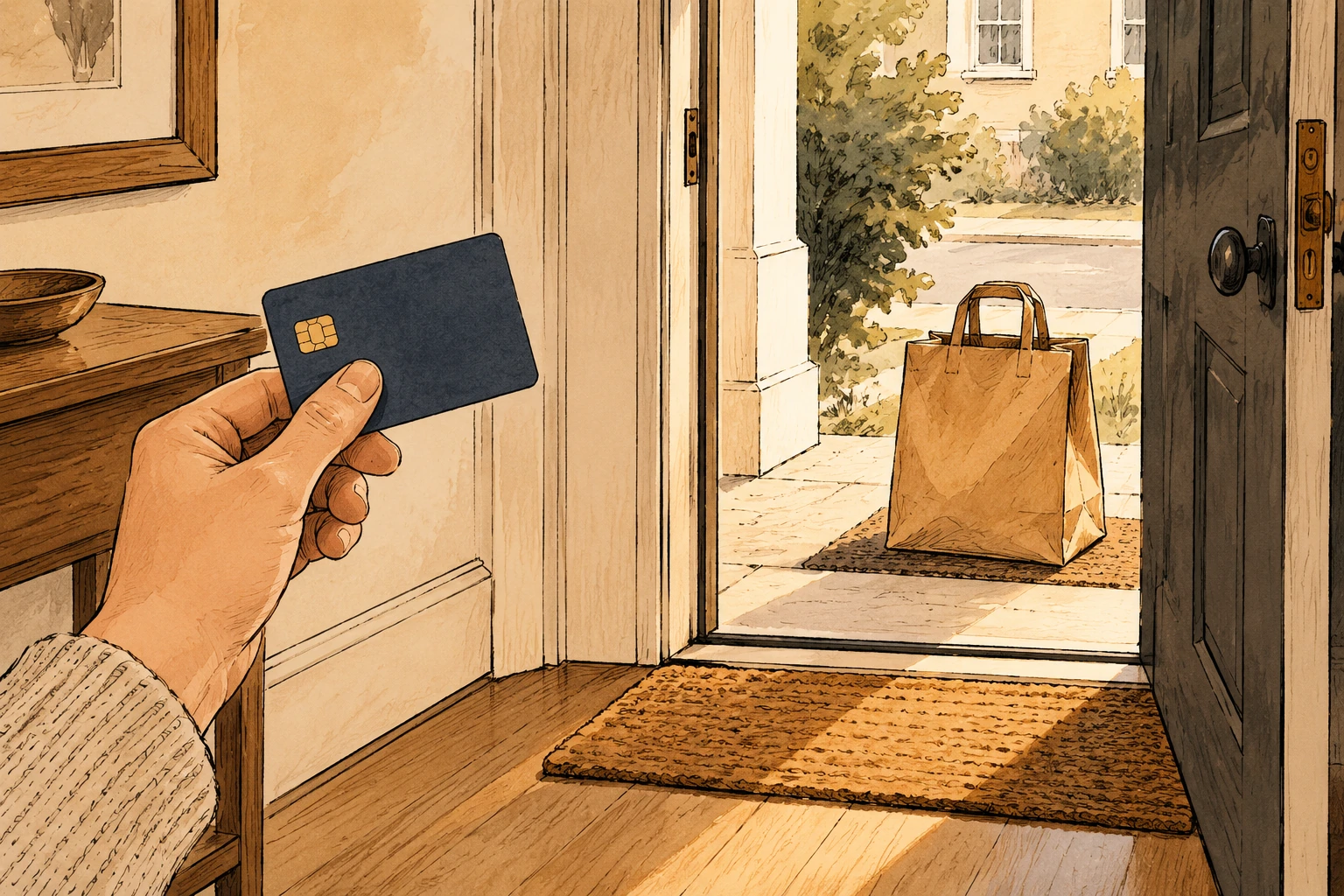
The caller says your card has been used fraudulently. They sound calm and official. A replacement is being arranged, but first a courier must collect the compromised card for investigation. You may be told to cut it up, seal it in an envelope, and tell nobody because bank staff are under suspicion.
Do not hand over the card, its pieces, your PIN, cash, or valuables. End the call and contact your bank independently. An unexpected collection is not a safe way to resolve a banking alert.
This guide uses UK police guidance because courier fraud is specifically addressed there. The underlying verification principle applies elsewhere, but emergency numbers and reporting routes differ. Use the official services for your location.
The courier is the final step, not the whole scheme
By the time someone reaches the door, the caller may already have established a story about authority, urgency, and secrecy. The visitor appears to confirm that story: a real person arriving at the promised time makes the investigation feel real too.
The Metropolitan Police’s courier-fraud guidance describes impersonated bank or police officials arranging collection of cards, cash, or expensive goods. It also notes that a courier may not know they are being used in a crime. Do not assume the person at the door can explain or resolve the full situation.
A collection reference, envelope, badge, or taxi booking demonstrates that someone arranged a collection. It does not establish that your bank authorized it. The important check must happen outside the caller’s chain of instructions.
If a visitor is already at your door, keep the door closed and do not confront or follow them. If a crime is in progress or you feel in immediate danger, contact local emergency services.
Four instructions that should stop the process
| Instruction from the caller | Why it is dangerous | Safer response |
|---|---|---|
| Read out or enter your PIN | Gives away a secret used to authorize access or transactions | Refuse and contact the bank independently |
| Give the card to a courier | Transfers possession to an unverified party | Keep it and ask the actual bank how to secure it |
| Withdraw money for an investigation | Turns a banking story into a real loss of cash | Do not withdraw or buy goods on the caller’s behalf |
| Hide the reason from bank staff | Prevents an independent person from checking the story | Tell the real bank exactly what you were asked to do |
An instruction to cut the card first does not make handing it over safe. Follow your bank’s own disposal advice after contacting it through a trusted route. Do not let a stranger define which parts of a card are harmless to release.
Make the callback genuinely separate
Use the number printed on your card or an established bank statement, or the bank’s official app. Do not call a number the suspicious caller dictates. Caller ID and a familiar-looking number are not sufficient verification.
The Met’s prevention advice warns that a criminal may remain connected on some landline calls. It recommends waiting before calling back or using a different phone line. Where possible, use a separate trusted device so the original conversation cannot simply pretend to become the bank switchboard.
Tell the bank the action requested, not only that you received a strange call: “Someone claiming to be your fraud team asked for my PIN and arranged collection of my card.” That gives staff a concrete situation to assess.
If the caller told you bank employees are involved, say so. The accusation is designed to make the legitimate verification route seem unsafe. A stranger does not become more trustworthy by warning you not to trust anyone else.
If the card has already left your home
Contact the bank immediately and explain what was handed over and whether the PIN or other information was disclosed. Ask it to secure the affected card and review transactions. Do not wait for the supposed replacement to arrive.
Keep the call times, numbers displayed, messages, collection details, and any existing door-camera footage. Do not put yourself at risk to obtain more evidence. A description from memory is better than following a vehicle or arranging another meeting.
The Met’s reporting guidance provides routes for police and fraud reports, alongside immediate bank contact. The right route depends on whether a crime is underway, whether there is danger, and where you are. Reporting is important, but it does not guarantee that a payment will be recovered.
If the story involved a transfer instead of a courier, our safe-account bank-call guide addresses that variation. The authority claim may be identical even though the method of taking the money changes.
Helping someone who is still on the call
Stay calm and focus on one action: create a pause. You might say, “Let us check with the bank on another phone before anything leaves the house.” A direct accusation that the person has been fooled can make them defend the caller, especially after a long, reassuring conversation.
Ask whether a collection is scheduled and whether anyone is expected at the door. Keep children or other household members from unknowingly handing over an envelope. Do not arrange a trap for the courier or attempt to detain anyone.
Help make a factual record after the immediate danger is addressed. The person may remember instructions in a different order or feel embarrassed about what they disclosed. Your role is to support an accurate account, not to test their memory or assign blame.
What happens after the first attempt
The caller may return under a new identity, claiming to be the real investigator who has discovered the earlier fraud. Knowledge of the first incident can make the second call convincing. Treat it as a fresh claim and verify it through the police or bank contact you established independently.
Do not pay for recovery or hand over more valuables to help catch the original offender. Our second-payment recovery guide explains why the promise of rescue can reproduce the same pressure.
Consider agreeing on a household rule: no card, cash, or valuable leaves with an unexpected visitor because of a telephone instruction. The rule is useful precisely because it does not require deciding, under pressure, whether a caller sounds official enough.
The most important interruption happens before the envelope crosses the threshold. You do not need the caller’s permission to end the investigation they invented and contact the institution you actually trust.
Found a factual error or a source that has changed?
Send a correction →